
North Coast Brewing Company Unveils Chill Rasputin, a New Take on the Legendary Old Rasputin
Source: PR Newswire
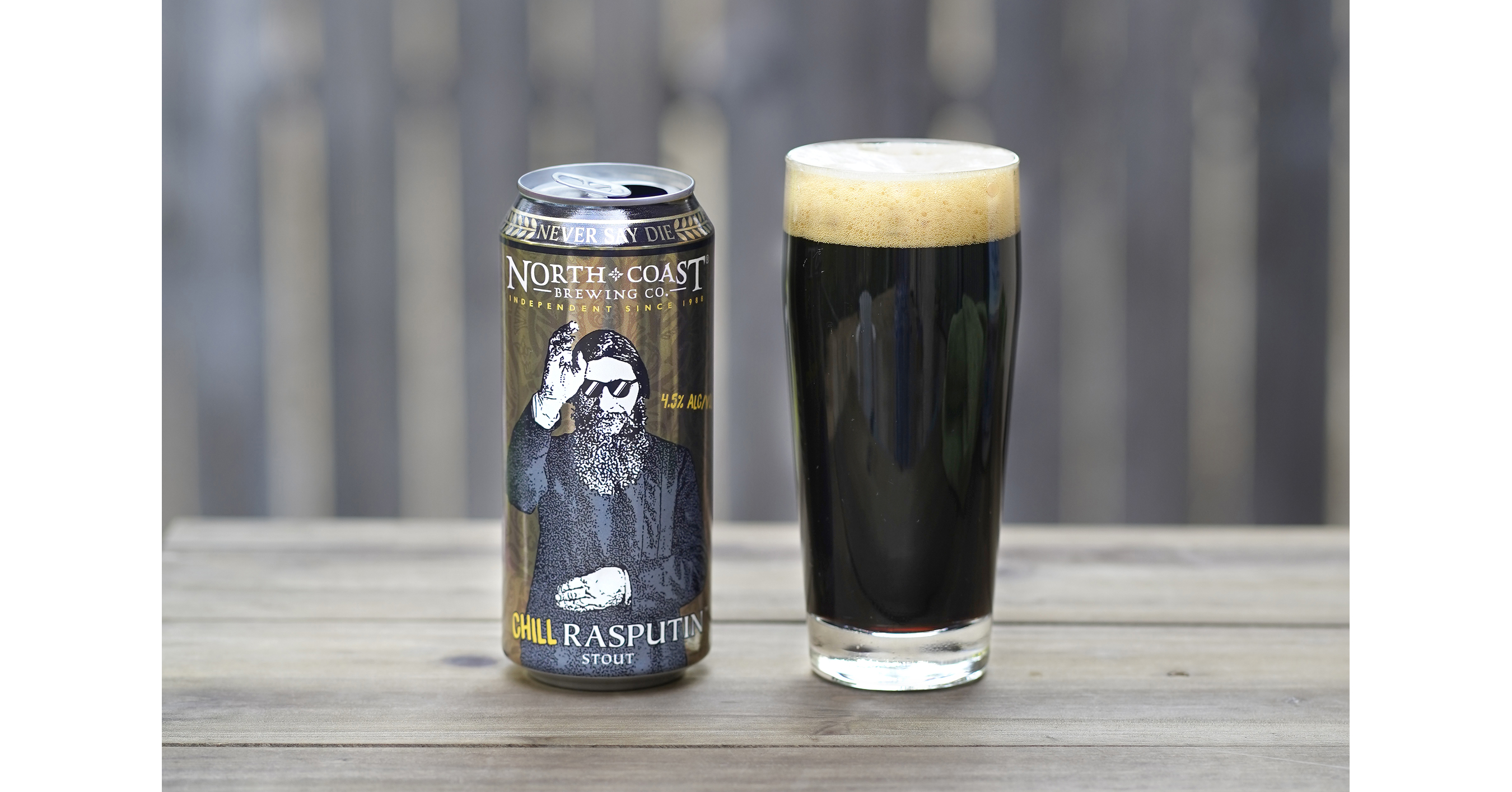
North Coast Brewing Company will launch Chill Rasputin, a 4.5% ABV sessionable stout extension of its Old Rasputin brand, at select retailers in early October. The 16-ounce four-packs will use 100% compostable Eco-Rings can holders, aligning the product launch with the brewery's sustainability initiatives. The release broadens NCBC's offering toward lower-alcohol, more approachable craft-beer occasions but is unlikely to have material market impact.
Analysis
This is not independently investable news: North Coast is private, the launch is geographically limited, and no distribution, velocity, pricing, or retailer-door data are provided. The immediate read-through for public beverage equities is therefore negligible; a single extension within craft beer is unlikely to alter category pricing, aluminum demand, or retail shelf allocation.
The more relevant structural signal is that craft brewers are using lower-ABV line extensions to defend occasions increasingly captured by hard seltzer, RTD cocktails, non-alcoholic beer, and premium light lager. If this format gains traction, it modestly favors scaled brewers with established dark-beer brands and broad route-to-market—Boston Beer (SAM), Molson Coors (TAP), and Constellation Brands (STZ)—because they can test adjacent offerings without absorbing disproportionate SKU, promotional, and distributor costs. Small independent brewers face the opposite risk: additional shelf fragmentation raises the cost of maintaining velocity and can increase discounting.
Eco-packaging is not a near-term ESG catalyst for public packaging names. Compostable holders can create a procurement niche, but adoption will remain constrained by unit economics, municipal composting infrastructure, and retailer handling requirements; it should not be extrapolated into a volume thesis for Ball (BALL) or Crown Holdings (CCK). Over the next 6-18 months, the investable category question is whether sessionable craft can expand total beer occasions rather than cannibalize higher-margin craft SKUs; scanner-data evidence of sustained premium pricing and repeat purchase would be required before assigning a positive sector read-through.
Contrarian view: lower alcohol alone does not solve craft beer’s distribution problem. A familiar brand may earn initial trial, but if retailers replace a faster-turning SKU rather than add shelf space, the launch is principally a share shift inside a pressured craft set. Watch Circana/NielsenIQ craft-dollar trends, chain-door expansion, and promotional intensity through the first post-launch reset cycle; weak velocity would reinforce that brand extension is defensive rather than incremental.
AllMind Terminal
AI-powered research, real-time alerts, and portfolio analytics for institutional investors.
Request TrialMarket Sentiment
Overall Sentiment
mildly positive
Sentiment Score
0.28
Key Decisions for Investors
- No standalone trade: do not position in BALL, CCK, SAM, TAP, or STZ on this announcement; the financial transmission mechanism is too small and unsupported by verifiable volume or distribution data.
- Set a 1-3 month watch item on SAM and TAP: consider a relative long only if scanner data show sessionable craft/low-ABV beer growing faster than total craft while maintaining price realization; falsify on accelerating promotional discounts or continued craft-dollar-share losses.
- Maintain preference for STZ over small-cap craft exposure over 6-18 months: scale distribution and premium brand architecture better absorb shelf-space competition. Reassess if U.S. beer depletion growth decelerates materially or distributor inventory rises.
- Monitor Eco-Rings adoption only as a private-market/packaging-input signal, not an ESG trade. Require disclosed multi-chain rollout, cost parity, and repeat orders before considering any read-through to packaging suppliers.
More News
- How record diesel prices will rip through the U.S. economy. Trucks and rails are only the start
- Waymo to launch robotaxis in Singapore, its first Southeast Asia market, by 2028
- Waymo to bring autonomous ride-hailing to Singapore in 2028
- Rising oil, rates and yields brew up stagflation cocktail for markets
- ‘Stronger together’: Carney welcomes EU invite for Canada to become first-ever associate member
- Waymo says Singapore will be its next international robotaxi city
From AllMind Research
- Anthropic IPO Preview: Valuation, Timing, and What to Watch
- Shein After the IPO: Venue, Valuation, and What Must Be Proved
- What AI Research Tools Should a Small Hedge Fund Buy First?
- AllMind's Data Standardization Methodology: Our Approach to Fundamentals
- What Makes Financial Data Ready for AI Research?