
Lieutenant Governor Kim Driscoll, Archbishop Richard G. Henning and Mayor Michelle Wu Join St. Francis House and the Planning Office for Urban Affairs to Celebrate Completion of 19-Story Residential Tower with 126 Mixed-Income Rental Units on LaGrange Street in Downtown Boston
Source: PR Newswire
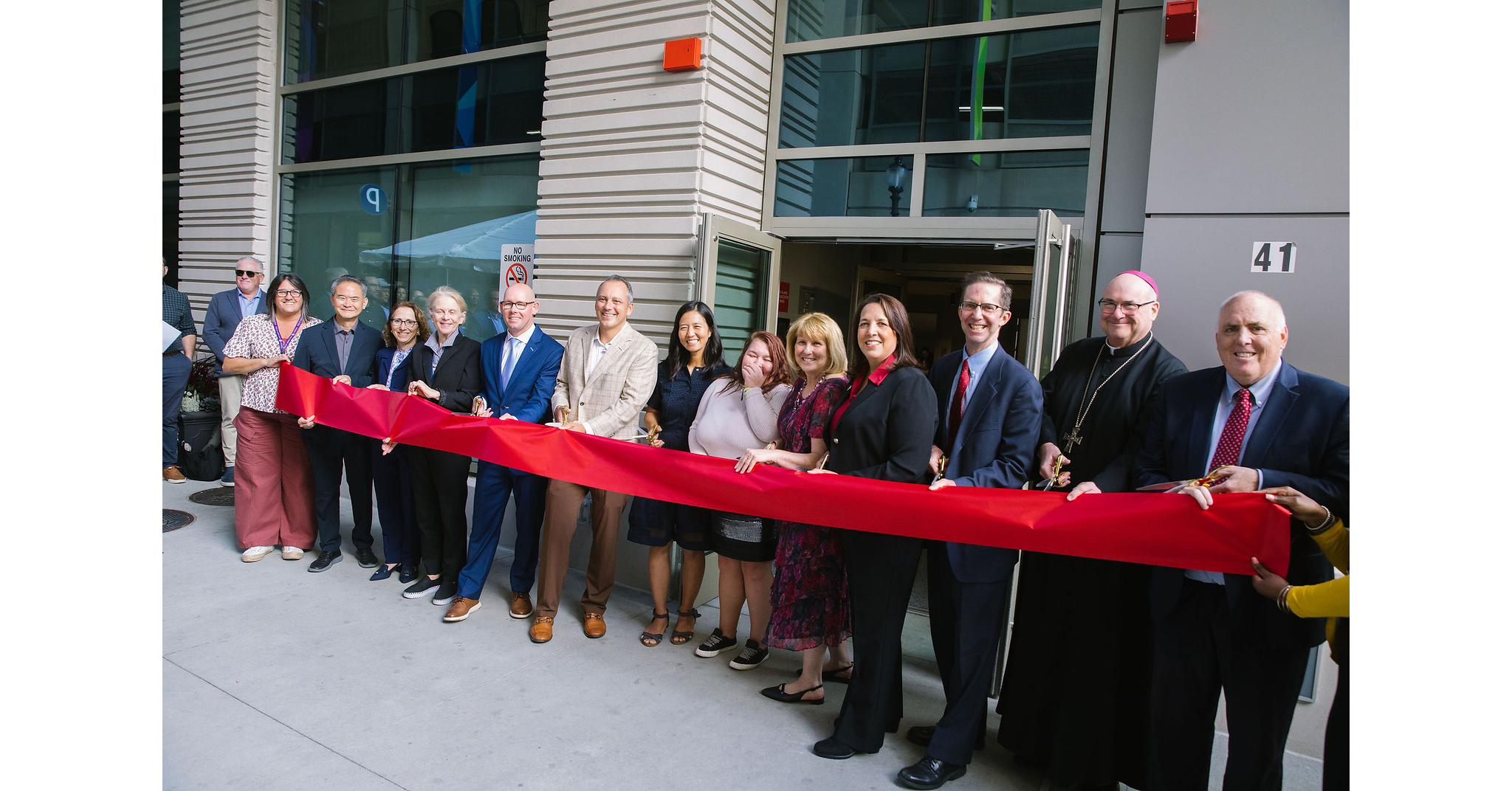
St. Francis House and the Planning Office for Urban Affairs completed 41 LaGrange Street, a 19-story, 126-unit mixed-income rental tower in downtown Boston. The development reserves 70 units for permanent supportive housing for people exiting homelessness and 56 units for workforce and low-income households, with rents restricted across thresholds below 30%, 50%, 60% and 80% of area median income.
Analysis
This is not a material earnings catalyst for BAC: the bank’s participation is more likely community-reinvestment and relationship-banking activity than a balance-sheet deployment large enough to affect NII, credit costs, or capital returns. The relevant near-term implication is reputational and regulatory optionality—visible affordable-housing finance can support CRA positioning and municipal relationships—but neither is readily monetizable in the stock over the next 1-3 months.
The more investable read-through is policy rather than issuer-specific. Boston’s reliance on layered public, agency, and bank financing reinforces that new supply at deeply restricted rents remains subsidy-dependent; it does not alleviate the market-rate apartment shortage sufficiently to pressure rents or downtown multifamily valuations. Publicly traded apartment REIT exposure to Boston is limited, so the direct impact on AVB, EQR, and UDR is immaterial; however, repeated state/local funding commitments could incrementally benefit affordable-housing finance ecosystems over 6-18 months, including LIHTC syndication and construction-lending activity.
Contrarian view: investors should not extrapolate a single completion into a broad construction or regional-bank lending recovery. High-cost urban projects can be economically viable only with unusually dense subsidy stacks, meaning the policy signal may actually underscore weak private development feasibility. A meaningful tradable catalyst would require evidence of a larger Massachusetts housing appropriation, streamlined permitting, or a sustained decline in construction financing costs—not additional project announcements.
AllMind Terminal
AI-powered research, real-time alerts, and portfolio analytics for institutional investors.
Request TrialMarket Sentiment
Overall Sentiment
mildly positive
Sentiment Score
0.35
Ticker Sentiment
Key Decisions for Investors
- No directional trade in BAC on this item; treat it as a low-signal ESG/CRA datapoint. Reassess only if disclosures show a broader affordable-housing lending commitment large enough to affect commercial-real-estate exposure, fee income, or capital allocation.
- Maintain any Boston multifamily REIT exposure based on market-rate supply, job growth, and financing conditions rather than subsidized-unit completions; this project is too small and rent-restricted to alter AVB/EQR/UDR operating assumptions over 12 months.
- Set a Massachusetts policy alert for a material housing-bond authorization, LIHTC expansion, or permitting reform. A coordinated package could improve 6-18 month construction volumes and selectively support lenders with demonstrated multifamily origination capacity; absent that, do not position for a housing-finance upcycle.
More News
- ‘Nobody prepared them’: The ultrawealthy worry wealth will dull their heirs’ ‘drive and desire’ and so some aren’t telling them how much there is
- The PHP Meltdown Shows How AI Makes Bugs More Exploitable
- Is Berkshire Bending the Rules With Bending Spoons?
- ROSEN, RECOGNIZED INVESTOR COUNSEL, Encourages Bank of America Corporation Investors to Secure Counsel Before Important Deadline in Securities Class Action
- France’s latest debt warning describes a country where governance is breaking down — and even doing too little, too late is barely possible
- France Faces New Protests After Week of Violence
From AllMind Research
- Anthropic IPO Preview: Valuation, Timing, and What to Watch
- Shein After the IPO: Venue, Valuation, and What Must Be Proved
- What AI Research Tools Should a Small Hedge Fund Buy First?
- Weekly Update: Sector Analysis, Improvements on Research Data, and Performance Enhancements
- Choosing an AI Copilot for Equity Research