
Private Capital is Returning to the Maritime Industrial Base
Source: PR Newswire
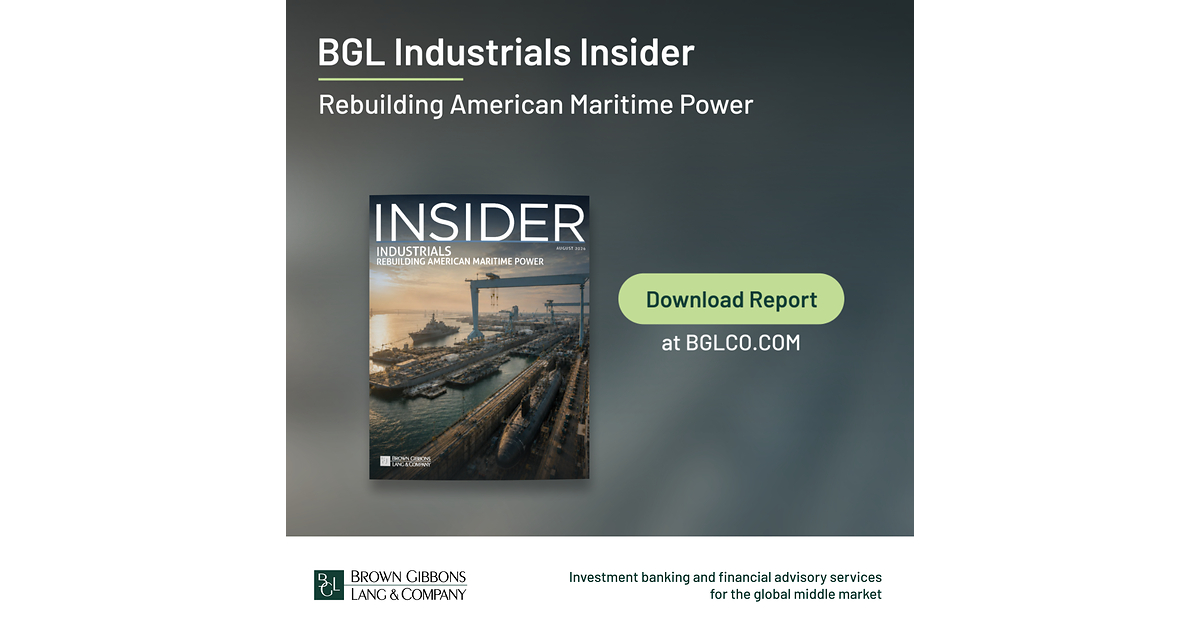
The article argues the U.S. is entering a multi-decade maritime industrial super cycle driven by geopolitical competition and renewed undersea priorities. It highlights investor opportunities for private equity/infrastructure in shipyards, dry docks, and port facilities, citing durable federal demand, large prime-contractor backlogs, and skilled-labor/supply scarcity, with venture funding focused on autonomous systems, sensing, advanced manufacturing, and maritime software. Overall, it frames improved long-duration investment visibility and consolidation-driven value creation as modestly supportive for the maritime defense ecosystem, though it does not provide specific financial metrics or deal values.
Analysis
The investable edge is not in headline ship counts; it is in bottleneck control. In maritime, capacity scarcity usually accrues more margin to owners of dry docks, certified repair slots, and nuclear/mission-critical trades than to pure platform OEMs, because pricing power shifts to whoever can shorten downtime. That favors HII and select service-heavy defense names more than broad industrials, and it also raises the odds of a private-market roll-up in fragmented repair and specialty subcontracting.
The second-order effect is labor inflation and schedule risk. Once capital starts chasing yards, wage pressure and certification constraints can compress near-term margins before any backlog benefit shows up, so the first earnings impact may be ugly even if the multi-year thesis is right. This is a 6-18 month story, not a day-trade; the near-term catalyst is M&A or budget language that explicitly funds readiness/repair capacity, while the main falsifier is a reallocation of defense spend toward munitions, unmanned systems, or other lower-capex priorities.
Contrarian view: consensus will likely overpay for the obvious shipbuilder names and underprice the enablers. The better risk/reward may sit in after-market, power, specialty components, and software that reduce turnaround time, because those assets scale without requiring another generation of welders and dock space. If institutional capital truly floods the sector, returns could be mediocre for new yard owners but excellent for the scarce suppliers that remain asset-light and qualification-rich.
AllMind Terminal
AI-powered research, real-time alerts, and portfolio analytics for institutional investors.
Request TrialMarket Sentiment
Overall Sentiment
mildly positive
Sentiment Score
0.15
Key Decisions for Investors
- Watchlist long HII on a material pullback; the cleaner thesis is not backlog growth but margin lift from repair/aftermarket mix. Falsifier: no evidence of margin improvement or order conversion within the next 2-3 quarters.
- Pair trade idea: long HII / short XLI as a way to express maritime scarcity versus the broader industrial complex. Time horizon: 6-12 months; invalidates if industrials reaccelerate while defense shipyard utilization stalls.
- Accumulate ITA or XAR only as a basket hedge, not as the primary expression. These ETFs capture some defense beta but will dilute the maritime-specific bottleneck premium; use them if you want low-idiosyncratic exposure while waiting for a better entry.
- Set an alert on GD and NOC if backlog-to-revenue conversion worsens while commentary on shipyard labor or dry-dock utilization improves. That would be a signal to rotate from platform names into repair/supply-chain beneficiaries.
- If a public yard-services or marine-infrastructure asset becomes available through M&A, prioritize the bid on scarcity rather than EBITDA quality. The first institutional owner of scarce certified capacity can re-rate faster than the incumbent OEMs.
More News
- US forces disable ship ‘attempting to run’ Iran blockade in Gulf of Oman
- Middle East war, high debt levels to dominate IMF-World Bank meetings in Bangkok
- Attack on Saudi airport kills 12 people and wounds more than 300—the deadliest strike in any Gulf Arab country since the start of the Iran war
- Musk says Terrafab chip factory could outperform rivals despite challenges
- Stocks saw new highs and big declines: How the volatile AI trade moved last week's market
- Will Warner Bros. kill Skydance — or will David Ellison kill Warner Bros?
From AllMind Research
- Anthropic IPO Preview: Valuation, Timing, and What to Watch
- Shein After the IPO: Venue, Valuation, and What Must Be Proved
- What AI Research Tools Should a Small Hedge Fund Buy First?
- AI Vendor Landscape for Institutional Investment Teams
- AllMind Fixed Income Compass for October 2025: Navigating Policy Divergence and Political Risk