
Harvard's Ken Rogoff on growing U.S. deficit: We will have some kind of debt crisis
Source: youtube.com
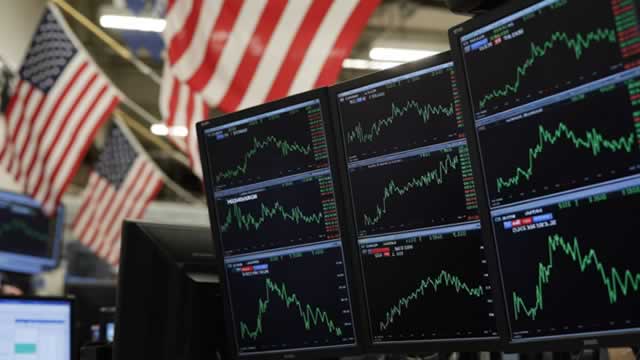
CNBC’s segment with Kenneth Rogoff covers the economy’s outlook, the Fed’s inflation-fighting efforts, and Treasury’s debt buyback program. It also flags key near-term catalysts from Fed Chairman Kevin Warsh’s remarks at Jackson Hole and discusses potential market sensitivity to rising U.S. debt levels, without citing specific new figures or policy actions.
Analysis
The real market variable here is not the commentary itself but the interaction between fiscal supply and rate volatility. Treasury buybacks can marginally improve off-the-run liquidity and smooth basis pressure, but they do not solve the term-premium problem; if anything, they may encourage the market to keep demanding compensation for longer-dated supply. That matters most for duration-heavy assets, mortgage assets, and any strategy that relies on stable dealer balance-sheet absorption rather than cleaner macro disinflation.
The second-order winner, if the buyback cadence is credible, is the plumbing complex: on-the-run Treasuries, Treasury futures basis, and large bank market-making franchises that benefit from tighter financing conditions. The loser is the long-end curve trade if investors conclude fiscal dominance is keeping 10-year and 30-year yields structurally sticky even as headline inflation cools. In that regime, the immediate reaction can be small, but over 1-3 months the knock-on effect is multiple compression for long-duration equities and wider spreads in rate-sensitive credit.
The contrarian risk is that the market overstates the significance of a buyback program as quasi-QE. If the Fed communication later today is even mildly dovish, the first move could be a rally in duration that masks the underlying fiscal overhang. That rally would likely fade unless auction demand, inflation data, and real-yield trends all improve together; otherwise the path of least resistance remains a higher term premium over 6-18 months.
Net: this is a watch item, not a clean directional macro signal. The best expression is relative value in rates, not an outright equity bet, and the thesis is falsified quickly if Jackson Hole messaging or a larger-than-expected buyback schedule pushes real yields materially lower.
AllMind Terminal
AI-powered research, real-time alerts, and portfolio analytics for institutional investors.
Request TrialMarket Sentiment
Overall Sentiment
neutral
Sentiment Score
-0.05
Key Decisions for Investors
- Stay tactically neutral on outright Treasury duration into Jackson Hole; avoid chasing a one-day rally or selloff until we see whether the market is pricing policy guidance or fiscal-term-premium pressure.
- Initiate a relative-value short TLT / long SHY position over the next 1-3 months if 10Y yields remain elevated after the event; risk/reward favors the long end underperforming if term premium, not growth, is the dominant driver.
- Buy a short-dated TLT straddle or 10Y futures strangle into the event only if implied volatility is not already fully rich; this is a cleaner expression than a directional bet when the distribution of outcomes is wide.
- Watch for weakness in duration-sensitive equities and REITs (for example XLRE, IWM growth, ARKK) if long-end yields back up after the symposium; that would confirm the fiscal-overhang thesis and offer a secondary short.
- Falsify the bearish duration view if 10-year yields fall sharply on softer inflation expectations or if Treasury buybacks are announced at materially larger size/cadence than the market expects; cover duration shorts on that signal.
More News
- Take Five: Bangkok blues
- RBI Tightens Rupee Defense as Pricey Crude, Foreign Outflows Bite: USD/INR
- Why is SK Hynix stock sliding today?
- For the first time ever, 10-year bond yields track diesel prices more closely than crude, and Trump’s fuel deal with Putin may be too little too late
- IIF CEO on Rising Global Debt
- The hawk Fed Chair who broke the bond market?