
Why Micron’s big earnings report isn’t lifting the stock
Source: MarketWatch
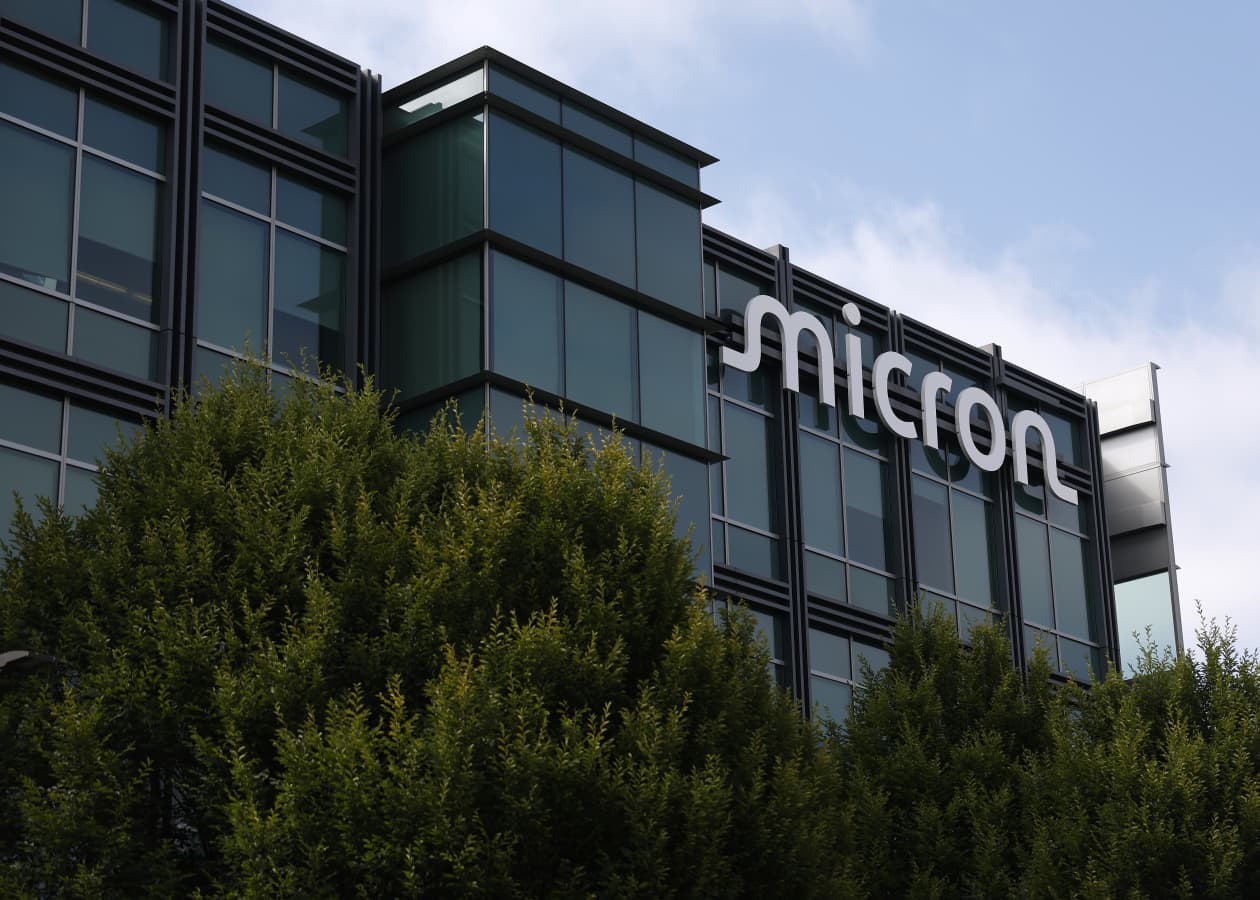
Micron shares fell 1% in premarket trading despite reporting better-than-expected earnings and issuing an upbeat outlook. Investor expectations appear elevated following Micron's AI-driven memory-chip recovery, with the company no longer exceeding consensus estimates by the magnitude investors had grown accustomed to.
Analysis
MU is transitioning from a revision-driven AI beneficiary to an execution-and-duration story, a regime that typically compresses the earnings-day upside even while fundamentals remain strong. The key question for the next 1-3 months is whether incremental HBM and high-density DRAM supply can clear at pricing sufficient to offset the broader commodity-memory cycle; a smaller-than-expected beat implies consensus has already capitalized much of that operating leverage. This raises downside asymmetry if analysts stop lifting FY estimates, since MU's multiple is more sensitive to forward EPS revisions than to reported-quarter results.
Competitive read-through is mixed. SK Hynix remains the most direct HBM share-gain risk, while Samsung's ability to qualify more advanced HBM products would create a second supply source and weaken the scarcity premium embedded in memory forecasts over the next 6-18 months. Conversely, NAND remains more exposed to normalization and pricing volatility, which favors a relative long in pure AI compute beneficiaries over a broad memory bet. A decisive catalyst would be evidence that HBM allocation is extending into calendar 2027; falsification would be a sequential decline in DRAM pricing commentary, inventory rebuilding at hyperscalers, or FY earnings estimates flattening materially after the next analyst update cycle.
Consensus may be treating a muted initial reaction as a fundamental warning rather than a positioning reset. If estimates continue to rise, the lack of an immediate rally can create a more attractive entry after post-earnings de-risking; however, this is not a clean chase setup because memory equities historically re-rate down quickly once supply discipline appears to weaken. The better risk-adjusted expression is relative exposure to AI memory scarcity rather than outright beta to the semiconductor cycle.
AllMind Terminal
AI-powered research, real-time alerts, and portfolio analytics for institutional investors.
Request TrialMarket Sentiment
Overall Sentiment
mildly negative
Sentiment Score
-0.18
Ticker Sentiment
Key Decisions for Investors
- Do not add outright MU on the first post-results dip; wait 5-10 trading days for estimate revisions and HBM pricing commentary. Initiate only if FY forward EPS consensus continues rising, with a 3-month target of prior relative-strength recovery versus SOXX and a stop if consensus FY EPS falls by more than 5%.
- Express the structural view as long MU / short WDC in equal dollar amounts over 3-6 months: MU has greater exposure to AI-driven DRAM/HBM mix, while WDC is more exposed to NAND pricing and a less differentiated supply-demand balance. Exit if NAND pricing improves faster than DRAM or if MU's HBM qualification cadence slips.
- For a lower-beta AI-memory trade, consider long MU versus short SOXX only after MU underperforms SOXX by an additional 5-7% following the earnings reset and estimates remain intact. The thesis is a delayed re-rating from continued forward revisions; invalidate on evidence of Samsung-driven HBM supply expansion or weakening hyperscaler demand.
- Monitor SK Hynix and Samsung HBM qualification announcements as a 6-18 month risk trigger. A credible volume ramp from either supplier is a reason to reduce MU exposure even if near-term DRAM pricing remains firm, as it would pressure the scarcity-driven terminal-margin assumption.
More News
- U.S. stock futures drift higher with nonfarm payrolls in focus
- US 10-Year Yield Hits 2002 High; Micron Gives Bullish Forecast
- One of our most recent defensive buys cleared a hurdle and its stock jumped
- Investors Are Driving Government Bond Yields Higher
- You think Nvidia's $235 billion buyback is big. Just wait and see what Micron might do
- Micron drops despite 'a great quarter.' Why Cramer is sticking with the stock
From AllMind Research
- Anthropic IPO Preview: Valuation, Timing, and What to Watch
- Shein After the IPO: Venue, Valuation, and What Must Be Proved
- What AI Research Tools Should a Small Hedge Fund Buy First?
- Choosing an AI Copilot for Equity Research
- Weekly Update: Advanced Search Filters, Redesigned Ticker Dashboard, and Improved Search Experience