
CVS Health Q3 Earnings Call Focuses on Planned Pharmacy Separation
Source: zacks.com
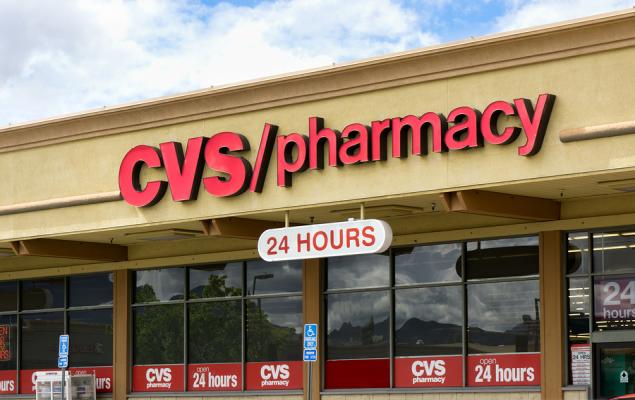
CVS beat Q3 consensus with adjusted EPS of $2.09 versus $1.62 and revenue of $108.40B versus $105.04B, and raised 2026 adjusted EPS guidance to at least $8.20 from $7.90-$8.10. Management plans to separate retail pharmacy into a standalone public company by the first half of 2028, while projecting 2027 adjusted EPS of at least $8.65 and planning to resume share repurchases in Q4. Aetna earnings improved and CVS cited 3.9% growth in same-store prescription volume, but elevated medical-cost trends and Caremark pressures remain.
Analysis
The near-term positive is improved earnings capacity, but the quality of the recovery matters more than the beat: Aetna’s progress is exposed to continued medical-cost pressure, while Health Services is explicitly expected to trough in 2027. If Aetna margin gains prove durable, CVS’s retained insurer/services business could earn a better multiple; if costs reaccelerate, those gains and the buyback support could unwind quickly.
The separation is a potential valuation catalyst, not yet a value-realization event. Retail may gain clearer capital priorities, but separating the pharmacy from Caremark also removes common ownership as a strategic option. Standalone costs, debt allocation, transition agreements and the economics of referrals between the businesses will determine whether focus benefits exceed lost coordination. PBM scrutiny and 340B changes remain risks to the retained business; store-level prescription growth alone does not establish durable retail profit growth.
Over the next days, guidance and repurchase resumption may support sentiment, though the call does not establish how much is already priced in. Over 1–3 months, test the thesis against Aetna medical-cost trends, membership retention and Health Services results. Over 6–18 months, execution and separation disclosures—not the 2028 target date itself—should drive rerating. Contrarian point: investors may overvalue the headline split while underweighting the possibility that both companies inherit less flexible economics and recurring standalone costs. Verify cash-flow seasonality and separation financing before treating repurchases or projected EPS growth as fully distributable.
AllMind Terminal
AI-powered research, real-time alerts, and portfolio analytics for institutional investors.
Request TrialMarket Sentiment
Overall Sentiment
moderately positive
Sentiment Score
0.55
Ticker Sentiment
Key Decisions for Investors
- Keep CVS as a measured, event-driven long rather than chase the earnings reaction. Add only if subsequent results confirm Aetna margin improvement without adverse medical-cost or membership surprises; thesis is falsified by renewed margin deterioration or a material guidance cut.
- Treat the separation as a watch catalyst, not a standalone buy signal. Reassess when CVS discloses debt allocation, tax and regulatory conditions, transition-service terms, recurring dis-synergies and capital plans for each company.
- Monitor Health Services against the 2027 trough framing: weaker membership or faster 340B contribution declines than management anticipates, without specialty-pharmacy offsets, would undermine the retained-business recovery case.
- Before assigning value to buybacks, verify full-year operating cash flow conversion and the timing of cash needs. A shortfall versus guidance or capital commitments that constrain repurchases would weaken the near-term support.
More News
- We're raising our price target on Cardinal Health after another stellar quarter of profits
- Magnificent 7 loses $1 trillion. The most eye-popping stats from Thursday's tech stock plunge
- Tech stocks are suffering their biggest selloff since Covid, as investors see premature end to AI datacenter boom
- Wall Street’s best post-midterm rally in 44 years lasted just one day—then $3 trillion vanished as chip stocks plunged over AI fears
- How Wall Street's postelection rally got obliterated — and what's next
- Elon Musk's Tesla and SpaceX lose over $420 billion in combined market cap after midterms