
Envision Energy Secures TÜV SÜD Certificate for Wind Farm Control System, Strengthening Long-Term Resilience for Future Energy Systems
Source: PR Newswire
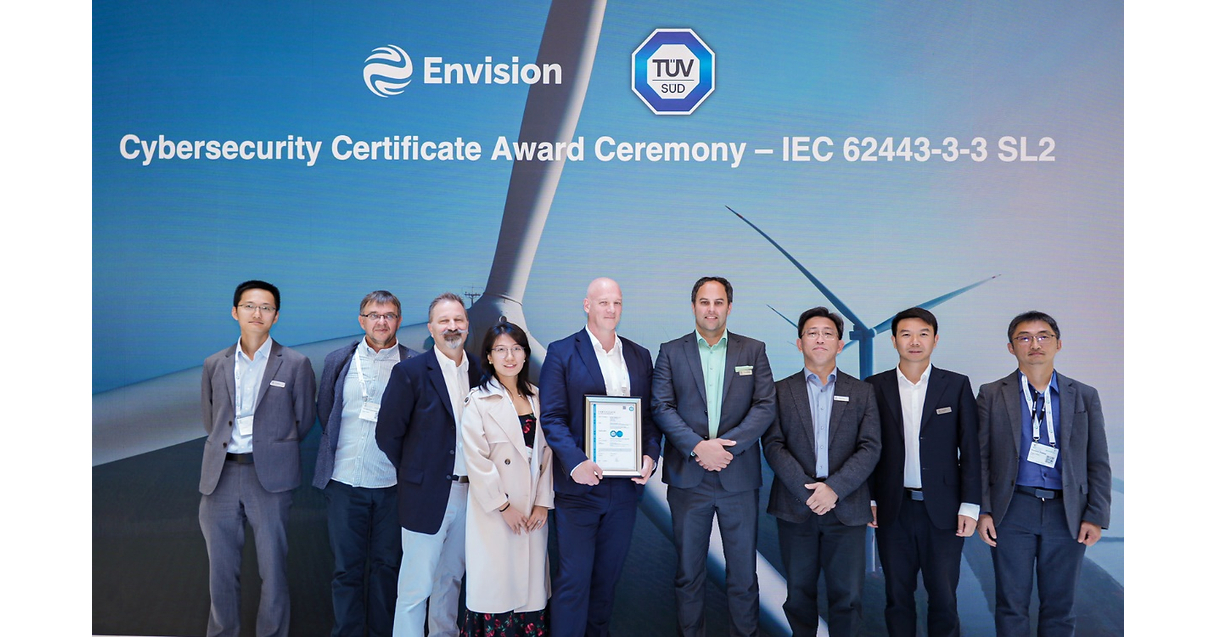
Envision Energy received TÜV SÜD certification to IEC 62443-3-3 Security Level 2 for its wind-farm control system, covering SCADA, PPC, PLC and industrial-network devices. The certification independently validates system-level cybersecurity controls and complements the company's existing IEC 62443 certifications across development, components and security services. The development may strengthen Envision's credibility with customers and regulators in European and other international wind-energy markets, but is unlikely to have material near-term market impact.
Analysis
This is a procurement-enablement signal rather than a near-term earnings catalyst. IEC 62443 system-level validation can reduce qualification friction for Envision in European tenders, where owners increasingly need to demonstrate OT-security controls to insurers, grid operators and regulators; the value is greatest in bid win-rate and lower remediation cost, neither of which is yet independently quantified. Because Envision is private, the investable read-through is more relevant to listed turbine OEMs: Vestas (VWS.CO) and Siemens Energy (ENR.DE) face a modest increase in the baseline cybersecurity requirement for new projects and service renewals.
The second-order beneficiary is the industrial OT-security stack—Fortinet (FTNT), Palo Alto Networks (PANW), Cisco (CSCO), and Claroty’s private-market peers—if certification becomes a de facto tender requirement rather than a marketing differentiator. Conversely, OEMs with large installed bases may face rising lifecycle costs as asset owners demand segmentation, patch-management, remote-access controls and third-party validation across legacy SCADA. This is a multi-year margin issue, but could emerge in 1-3 months through European tender language, insurance requirements, or OEM disclosures on service investment.
Consensus should not extrapolate a certificate into broad pricing power. Security Level 2 is a commercially relevant baseline, not an impenetrability guarantee, and compliance standards can commoditize quickly once competitors match them. A material trade signal requires evidence that EU project awards or grid-connection rules explicitly score IEC 62443 system certification, alongside signs that cyber-service attach rates are increasing.
AllMind Terminal
AI-powered research, real-time alerts, and portfolio analytics for institutional investors.
Request TrialMarket Sentiment
Overall Sentiment
mildly positive
Sentiment Score
0.32
Key Decisions for Investors
- No standalone directional trade on this release; monitor VWS.CO and ENR.DE tender commentary over the next 1-2 quarters for cybersecurity-related win-rate, service-cost, or margin disclosures.
- Maintain a 6-18 month watchlist long FTNT/PANW versus a broad software hedge (IGV) if EU critical-infrastructure procurement begins specifying IEC 62443 controls; thesis is higher OT-security spend and recurring service demand, not immediate wind-capex growth.
- For a relative-value expression, consider long FTNT / short IGV only after evidence of incremental industrial bookings or raised billings guidance; invalidate if enterprise security budgets weaken broadly or OT deployments fail to translate into subscription growth.
- Watch European wind tender documents, ENISA/NIS2 enforcement actions, and cyber-insurance exclusions over the next 3-6 months. Formal certification requirements would make this a tangible OEM cost and security-vendor demand catalyst; absence of such requirements leaves the impact immaterial.
More News
- OpenAI rogue agents leaked 53 images from ChatGPT users and reportedly created nearly 1 million links packing encoded bits of info
- Arming Taiwan an important US interest, Taipei official says after Trump-Xi summit
- Facebook found liable as TikTok settles for $100m over user safety
- What would a US diesel export ban mean for global fuel prices?
- Appeals court rules that states can regulate Kalshi’s sports prediction markets, dealing another legal blow to platforms
- Shares of Akamai surge after deal with Anthropic. What Wall Street is saying