
Hoymiles lanza el cargador V2X DC de 22 kW para completar su ecosistema integrado de energía doméstica
Source: PR Newswire
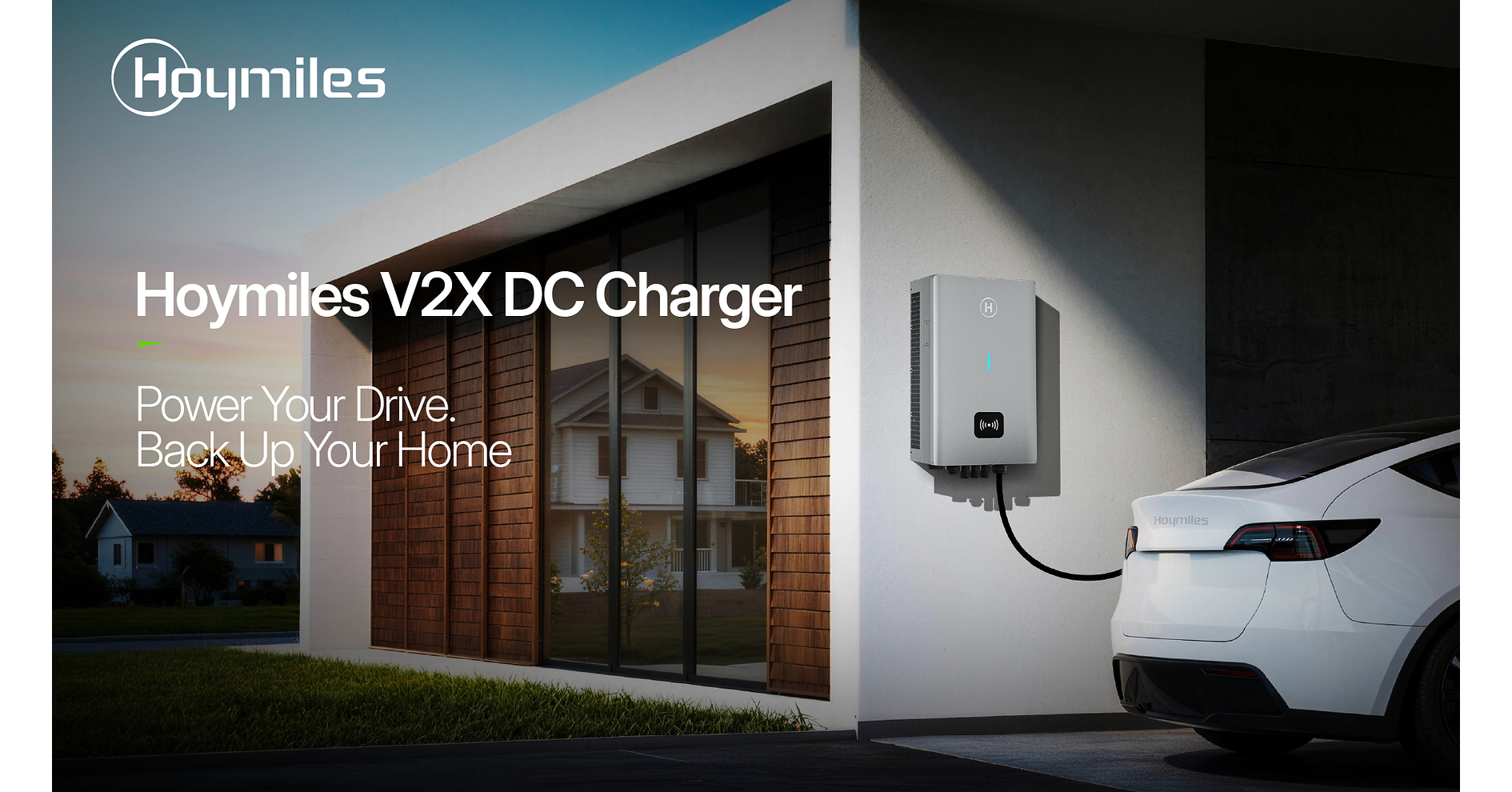
Hoymiles launched a 22 kW bidirectional DC V2X charger that integrates EVs with its HiOne home battery-storage system, solar generation and grid services. The charger supports V2H backup power and V2G participation in peak-demand management and virtual power plants, while delivering roughly 110 km of driving range per hour versus about 35 km for conventional AC charging. The product is compatible with 95% of mainstream EVs and expands Hoymiles' integrated residential-energy ecosystem.
Analysis
This is not a read-through catalyst for listed solar or EV equities: Hoymiles is private, and product availability, installed-base conversion, pricing, and local interconnection approvals—not hardware specifications—determine whether an integrated home-energy stack creates material revenue. The strategic pressure falls most directly on Wallbox (WBX), Enphase (ENPH), SolarEdge (SEDG), Generac (GNRC), and Tesla’s energy ecosystem, where bidirectional capability can shift competition from single-device gross margin toward software, installer access, and grid-services monetization.
The key second-order constraint is OEM and utility interoperability. Claimed vehicle compatibility is economically irrelevant unless bidirectional discharge is enabled by the vehicle manufacturer, local grid codes permit export, and utilities compensate flexible capacity; each approval cycle can take quarters to years. Hardware vendors may initially face margin dilution from higher-power electronics and installation complexity, while aggregators and residential solar/storage financiers such as Sunrun (RUN) gain only if they can capture recurring VPP payments rather than merely sell equipment.
Consensus is likely to overestimate near-term V2G penetration and underestimate the installation bottleneck. In the next 1-3 months, this is principally a competitive-intelligence signal; over 6-18 months, evidence of utility contracts, certified vehicle models, and attach rates could differentiate platform vendors from commodity inverter/charger suppliers. The thesis is falsified if broad OEM enablement and standardized utility compensation emerge faster than expected, which would expand the addressable market and reward first-mover ecosystems disproportionately.
AllMind Terminal
AI-powered research, real-time alerts, and portfolio analytics for institutional investors.
Request TrialMarket Sentiment
Overall Sentiment
moderately positive
Sentiment Score
0.45
Key Decisions for Investors
- No standalone directional trade on this announcement; it lacks disclosed pricing, shipment commitments, regional certification status, and a listed-company revenue read-through.
- Set an alert on WBX for disclosed bidirectional-charger orders, cash-burn guidance, and gross-margin commentary over the next two earnings cycles. A material order ramp without further liquidity pressure would challenge the bearish view on its capital-intensive product strategy.
- Monitor ENPH and GNRC for VPP revenue, battery attach-rate, and installer-channel metrics over the next 6-18 months; these are cleaner listed proxies for home-energy ecosystem monetization than charger-only vendors. Do not add exposure solely on V2X headlines.
- For RUN, treat utility capacity-payment awards and contracted VPP megawatts—not customer equipment installations—as the actionable catalyst. A sustained increase in contracted grid-services revenue could support multiple expansion; weaker California/NEM economics or declining battery attachment would invalidate the thesis.
More News
- AI Doubts Spread Cracks in Equities, Credit Markets: Evening Briefing Americas
- Stocks Fall as Oil Rally Keeps a Lid on Treasuries
- Energy markets are adapting to the Iran war as a ‘forever conflict’ while oil producers keep supplies flowing and avoid ‘mutually assured destruction’
- Kinder Morgan, Energy Transfer and Williams could benefit from cheap natural gas
- CrowdStrike CEO's alarming prediction — plus, the sell-off spreads beyond tech
- Vertex reports positive IgAN trial data, FDA decision due Nov. 30