
Closing the Loop: Battery Recycling Pilot Uses 100% Recycled Critical Minerals to Power New GM EVs
Source: PR Newswire
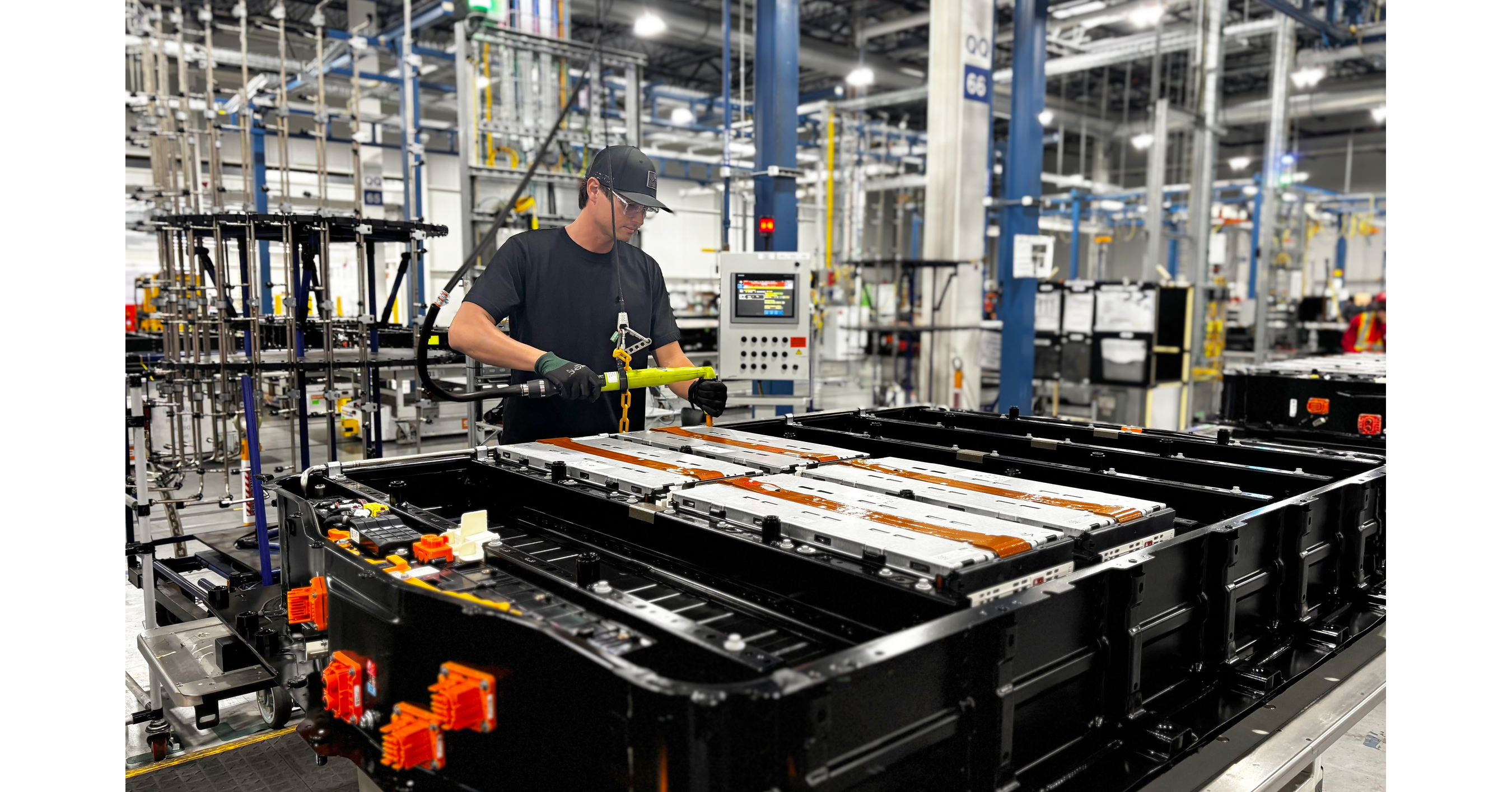
GM, Cirba Solutions and partners completed a closed-loop EV battery recycling pilot, producing the first GM battery cells with cathode active material made from 100% recycled nickel, cobalt and manganese recovered from end-of-life GM packs. The cells were manufactured through Ultium Cells and assembled into packs at GM's Factory ZERO and Spring Hill facilities, with the first EVs already shipped to consumers. The program validates recycled critical minerals for new-cell production and could strengthen domestic supply resilience as global lithium-ion battery demand is projected to reach 4.2-6.8 TWh annually over the next decade.
Analysis
This is strategically positive for GM’s domestic-material optionality but immaterial to near-term EPS: end-of-life EV feedstock will remain scarce relative to cell-production requirements for several years, so the pilot does not yet change GM’s battery cost curve or reduce its exposure to nickel/cobalt price volatility. The investable signal is qualification rather than volume—demonstrating recycled CAM can meet cell specifications lowers a technical barrier to future localization and could improve sourcing flexibility as US content rules tighten over the 6-18 month horizon.
The principal bottleneck shifts from collection/shredding to black-mass refining, precursor production and qualified CAM capacity. Cirba is private, limiting direct equity exposure; listed recycling peers such as ABAT and LICY should not be read through mechanically, since their valuation outcomes depend on financing, commissioning execution and contracted feedstock rather than proof that recycled cells can be manufactured. GM also retains meaningful counterparty and scale risk through Ultium: a qualified pilot does not establish commercial yield, delivered-material cost, or a reliable end-of-life pack collection channel.
Consensus may overvalue the ESG narrative while underweighting the near-term economics: manufacturing scrap is likely the more scalable initial feedstock source, but it is a temporary pool that declines as production yields improve. A genuine rerating catalyst for GM would be disclosed multi-year recycled-material volumes, a per-kWh cost advantage versus virgin CAM, or evidence the program supports eligibility for incremental domestic-manufacturing incentives; absent those disclosures, this is not a standalone reason to alter GM estimates.
AllMind Terminal
AI-powered research, real-time alerts, and portfolio analytics for institutional investors.
Request TrialMarket Sentiment
Overall Sentiment
strongly positive
Sentiment Score
0.58
Ticker Sentiment
Key Decisions for Investors
- Maintain GM as a watchlist positive, not a new event-driven long: require disclosure of contracted annual recycled-CAM volume and per-kWh economics before underwriting any margin benefit. Reassess around the next earnings call and 2026 battery-sourcing guidance.
- For existing GM longs, treat this as modest downside protection against future critical-mineral supply disruptions rather than an earnings catalyst; trim any news-driven outperformance that is not supported by raised EV gross-margin or free-cash-flow guidance.
- Do not buy ABAT or LICY solely on this validation. Monitor for independently verified feedstock contracts, operating throughput, refining yields and liquidity runway; for LICY in particular, financing/capital-structure developments dominate any sector-readthrough.
- Watch nickel and cobalt pricing over the next 1-3 months: a sustained decline in virgin-material costs reduces the immediate economic value of recycling, while a sharp supply disruption would increase the strategic premium assigned to qualified domestic recycling capacity.
More News
- GM CEO Mary Barra to attend Trump's state dinner for Xi, sources say
- Detroit Automakers Turn Back the Clock on the Arsenal of Democracy -- Investors Should Cheer
- Why This Top Automaker's Gamble on V-8 Engines During a Hybrid Boom Actually Makes Sense
- Wall Street’s Nasdaq hits all-time high as AI frenzy gathers pace
- Oil falls on increased Gulf supply and hopes for US-Iran talks
- Data-Center Bet Makes ESDS One of India’s Best New Listings