
Record Midterm Spending Pits GOP PACs Against Democrat Surge
Source: Bloomberg
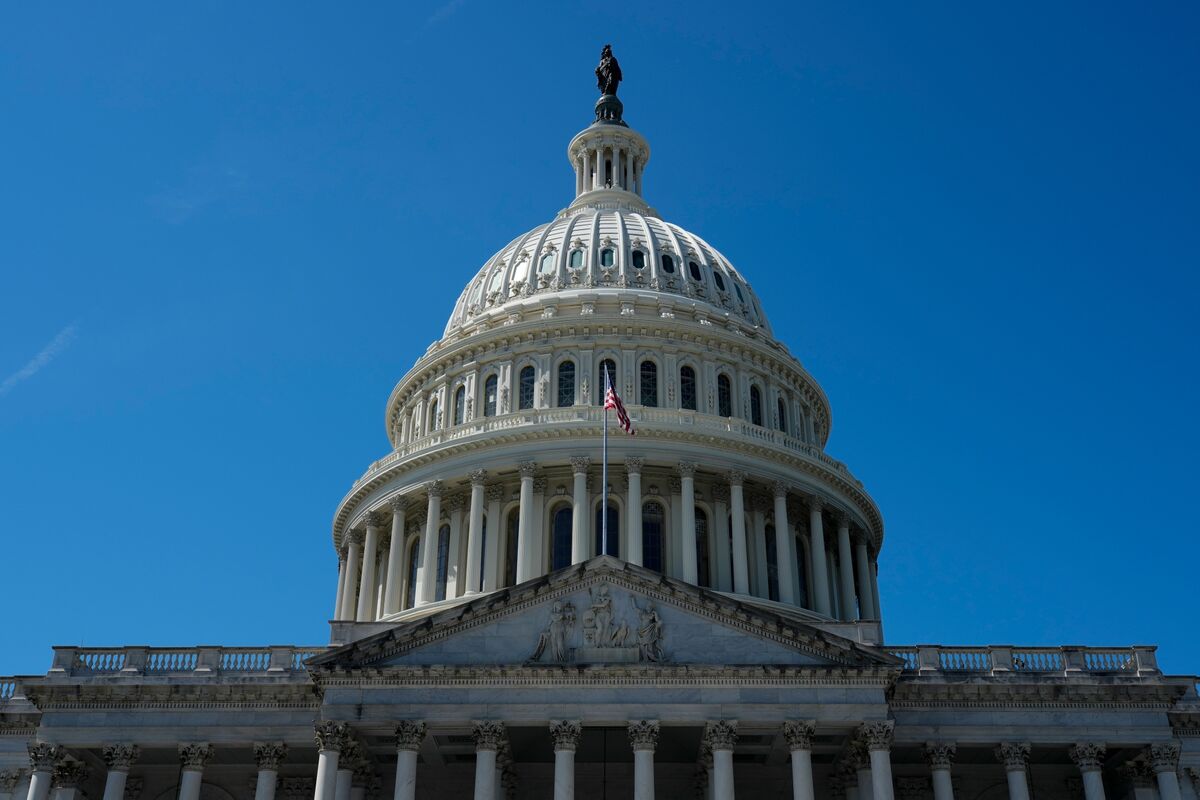
The 2026 US midterms are projected to become the most expensive elections in US history. Republican Senate candidates have raised hundreds of millions of dollars from PACs, while Democrats are seeing a growing surge in individual donations, creating an uncertain fundraising advantage in newly competitive Senate contests.
Analysis
Campaign-finance dispersion is not itself a tradable signal: individual-donor strength can persist into late-cycle advertising, while PAC funding is more easily redirected toward a small number of tipping-point races. The market-relevant variable is whether marginal spending changes the probability of Senate control, because that affects confirmation risk for regulators and the durability of agency rulemaking more than near-term fiscal policy.
Over the next 1-3 months, avoid treating fundraising headlines as a broad partisan-policy trade. The cleaner transmission channel is sector-specific: a divided government would likely reduce the probability of major statutory changes, favoring incumbents facing legislative overhang, while unified control could alter the discount rate applied to regulated utilities, managed care, fossil-fuel permitting, defense appropriations, and large-cap technology antitrust exposure. Polling in a limited set of pivotal races, not aggregate spending totals, is the required catalyst.
The contrarian view is that investors may overprice an election-driven policy reset. Even a Senate majority does not guarantee legislative execution; committee control, budget constraints, executive action, judicial review, and the House outcome determine realized policy. The more actionable election exposure may emerge through regulatory-confirmation expectations after November rather than through a pre-election directional equity trade.
AllMind Terminal
AI-powered research, real-time alerts, and portfolio analytics for institutional investors.
Request TrialMarket Sentiment
Overall Sentiment
neutral
Sentiment Score
0.05
Key Decisions for Investors
- Maintain no standalone directional election position from fundraising data; require state-level polling movement and a credible Senate-control probability shift before allocating risk.
- Create a post-election watch basket: XLU and regulated utility names for rate-setting and permitting sensitivity; XLE for federal leasing/permitting expectations; ITA for defense-appropriation expectations; XLV/managed-care names for healthcare-policy exposure. Reassess when Senate-control odds move materially rather than on donation headlines.
- For the 1-3 month horizon, monitor prediction-market and polling-model changes in pivotal Senate races alongside House-control odds; a simultaneous control shift is the threshold for repricing statutory-policy risk rather than agency-only risk.
- If election-implied volatility rises materially without corresponding movement in sector fundamentals, consider selling excess event premium only through defined-risk structures after confirming liquidity and option skew; the thesis is falsified by a rapid polling shift that makes unified government materially more likely.
More News
- In photos: China's Xi hardens Taiwan warning as country celebrates week-long National Day holiday
- California Gov. Gavin Newsom bans AI 'robo bosses' in landmark state law, reversing his earlier veto
- BofA’s Blanch on Global Impact of a US Diesel Export Ban
- Trump set to announce $200bn in energy investments from South Korea
- How does Trump’s White House AI accord work?
- Trump's meeting with tech leaders leaves AI safety more unsettled than ever