
Kali Therapeutics Named to the 2026 Endpoints 11, Recognizing Biotech's Most Promising Startups
Source: PR Newswire
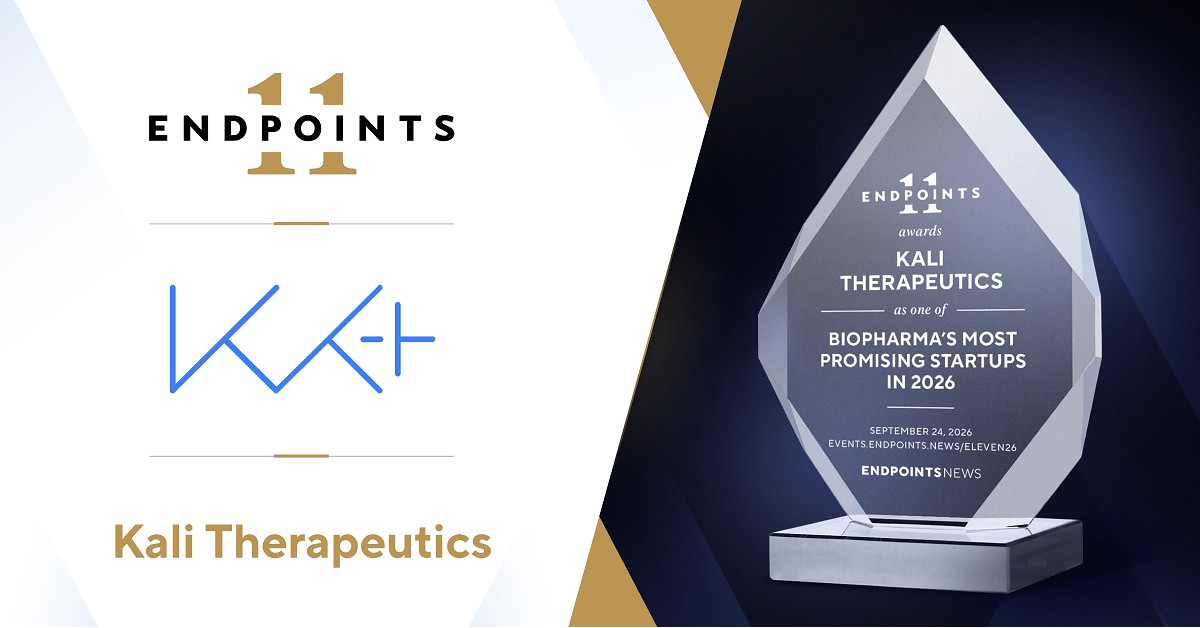
Private biotech Kali Therapeutics was named to the 2026 Endpoints 11 after advancing two candidates into clinical development in just over two years and licensing lead asset KT501 to Sanofi. The KT501 deal includes $180 million in upfront and near-term payments, up to $1.05 billion in milestones and tiered royalties; its Phase 1a rheumatoid arthritis trial dosed its first patient in March 2026. KT502 is in Phase 1, while trispecific candidate KT209 is targeting first-in-human testing in H1 2027.
Analysis
The only liquid read-through is SNY, but the economic relevance is modest near term: an upfront payment is immaterial to Sanofi's earnings base, while the milestone headline should not be capitalized until clinical efficacy and tolerability are independently demonstrated. The strategic value is option-like—success would give SNY exposure to a potentially differentiated autoimmune modality without bearing early discovery risk, supporting pipeline-quality perception rather than FY2027 EPS.
Competitive implications are more meaningful for private-market valuations than public equities. If masked CD3 engagement produces deep B-cell depletion without cytokine-release or infection liabilities, it could ultimately pressure chronic-treatment franchises in autoimmune disease, including B-cell therapies and inflammatory-disease biologics; however, this is a 6-18 month data-validation question, not an immediate revenue threat. Public autoimmune innovators with analogous durable-remission approaches—ARGX, IMVT and ROIV—could see sentiment spillover, but their mechanisms and patient populations are not interchangeable.
Consensus should resist treating editorial recognition or company-described early data as clinical de-risking. The core failure mode is that efficacy requiring aggressive T-cell activation may reveal cytokine-release, prolonged immunosuppression, infection, or manufacturing-dose consistency problems as enrollment broadens. For SNY, the relevant catalysts are initial Phase 1 safety/biomarker disclosure over the next 3-12 months and any evidence that the asset can move into registrationally credible autoimmune cohorts; absent that, this is not a reason to alter earnings estimates or establish a directional position.
AllMind Terminal
AI-powered research, real-time alerts, and portfolio analytics for institutional investors.
Request TrialMarket Sentiment
Overall Sentiment
strongly positive
Sentiment Score
0.58
Ticker Sentiment
Key Decisions for Investors
- No standalone SNY trade on this announcement; treat it as a pipeline-quality watch item. Reassess only if first-in-human data show repeat-dose tolerability plus durable B-cell depletion, with a meaningful valuation response requiring evidence of efficacy rather than pharmacodynamic activity alone.
- Maintain a relative-value watchlist of SNY versus large-cap autoimmune peers ABBV and REGN over 6-18 months: a validated finite-course immune-reset therapy would be structurally more disruptive to chronic biologic revenue models than to SNY's diversified base, but current evidence is insufficient for a pair trade.
- For biotech risk monitoring, flag Phase 1 updates for cytokine-release incidence, serious infections, duration of immunoglobulin suppression, and manufacturing comparability across dose cohorts. Any material safety signal or delayed enrollment would falsify the differentiated-platform narrative and remove the limited positive read-through to SNY.
- Avoid extrapolating the private-company award into listed autoimmune names such as ARGX, IMVT, or ROIV. Use any sympathy move without asset-specific data as a potential source of liquidity rather than a new long entry.
More News
- Shares of Akamai surge after deal with Anthropic. What Wall Street is saying
- Anthropic Goes Big on Compute, Microsoft Rethinks AI
- The Tiny Magnet Maker That Attracted $1.6 Billion From Lutnick
- Wall Street Week | China’s Trade Reckoning, Syracuse’s Second Chance, Humanoids in Healthcare
- Yields keep rising, Novo's tough week, why cat product sales are surging and more in Morning Squawk
- US court upholds Pentagon’s blacklisting of Anthropic
From AllMind Research
- Anthropic IPO Preview: Valuation, Timing, and What to Watch
- Shein After the IPO: Venue, Valuation, and What Must Be Proved
- What AI Research Tools Should a Small Hedge Fund Buy First?
- AI Tools for Family Offices: A Stack by Decision Type
- Reading Conviction in the Tape: What Level 3 Order Book Data Really Tells Discretionary PMs