
Pexar, Powered by Lexar, Launches PexarBolt Ultra TBT5 Dock with a 5-Inch Visual Dashboard
Source: PR Newswire
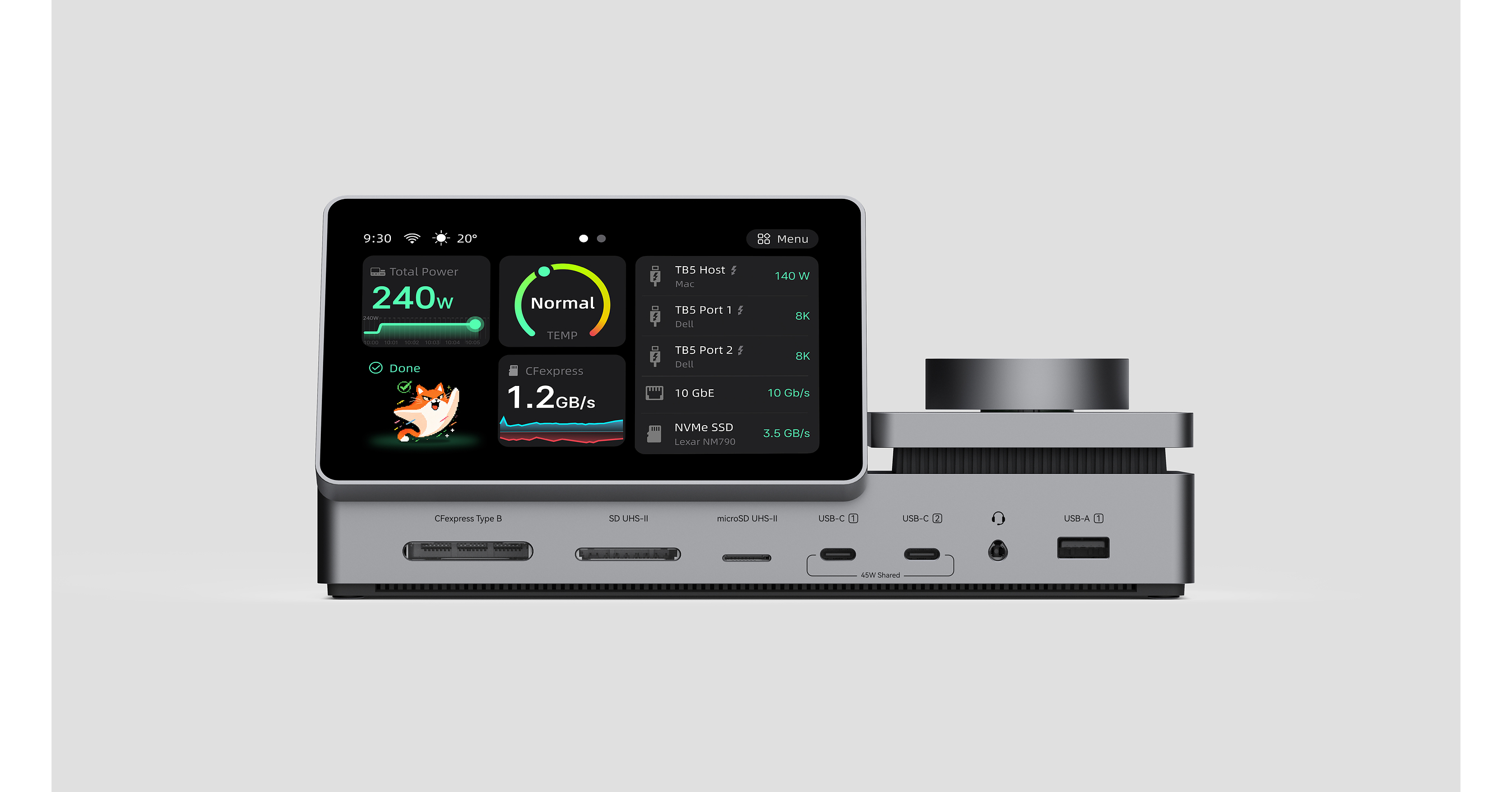
Pexar, powered by Lexar, launched a Kickstarter campaign for its PexarBolt Ultra TBT5 Dock at an early-bird price of $479, versus a planned $649 retail price. The 22-port Thunderbolt 5 dock offers up to 80 Gbps bidirectional bandwidth, up to 120 Gbps transmit bandwidth, 10GbE, CFexpress Type B, an NVMe SSD slot, and support for dual 8K/60Hz or triple 4K/144Hz displays. The product received a 2026 IFA Innovation Awards honor, but the launch is unlikely to have material public-market implications.
Analysis
This is not a public-equity catalyst: Lexar/Pexar is privately held, the product is pre-retail, and Kickstarter conversion/delivery execution are unverified. The more relevant signal is that Thunderbolt 5 peripherals are moving from specification-driven products toward higher-ASP creator-workstation bundles; unit economics will remain niche until the installed base of Thunderbolt 5 hosts broadens materially.
The near-term beneficiary set is indirect and likely immaterial for large caps: Intel (INTC) gains ecosystem validation for Thunderbolt 5, while SSD, CFexpress and high-speed-networking attachment rates could modestly support controllers and storage demand at Phison (8299.TW), Marvell (MRVL), Seagate (STX), and Western Digital (WDC). The larger second-order risk is that integrated NVMe/card-reader/10GbE functionality cannibalizes standalone accessory vendors, but this product’s premium price limits that risk to professional users rather than the mass market.
Over 6-18 months, the key competitive question is whether Apple’s Mac refresh cadence and Windows workstation OEM adoption make 80Gbps-class I/O a standard feature rather than a creator niche. If host penetration stalls, peripheral makers will face margin pressure from expensive certification, power-delivery, thermal, and silicon content spread over low volumes. Consensus should not extrapolate a crowdfunding launch into a storage-cycle inflection: the addressable dock market is too small to change earnings for the listed component suppliers above.
Falsifiers for the ecosystem view are weak Thunderbolt 5 adoption in Intel platform launches, delayed Apple support, or evidence that USB4 v2 achieves adequate performance at lower bill-of-material cost. Monitor campaign funding, delivery dates, retail-channel placement, and—more importantly—host-device attach rates before assigning revenue sensitivity to any public name.
AllMind Terminal
AI-powered research, real-time alerts, and portfolio analytics for institutional investors.
Request TrialMarket Sentiment
Overall Sentiment
mildly positive
Sentiment Score
0.30
Key Decisions for Investors
- No standalone trade recommended; treat this as a low-materiality ecosystem datapoint rather than a catalyst for INTC, MRVL, STX, or WDC.
- Create a 1-3 month watch alert on INTC: reassess only if multiple branded Thunderbolt 5 dock launches coincide with confirmed OEM laptop/workstation volume ramps. A broad accessory rollout would support platform differentiation, but is unlikely to move estimates absent host shipment evidence.
- For storage exposure, prefer existing cycle-driven longs in WDC or STX only on NAND/HDD pricing and enterprise-demand confirmation—not on creator-accessory launches. Use any peripheral-led rally as a reason to avoid chasing, since incremental dock attach is unlikely to be earnings-material.
- Watch Phison (8299.TW) and CFexpress-controller peers for a more direct but still small read-through: sustained premium-dock sell-through could lift controller content per creator workstation. Do not initiate without channel data showing demand beyond Kickstarter and shipment timing confirmation.
More News
- Vertex reports positive IgAN trial data, FDA decision due Nov. 30
- Elon Musk’s dangerous grip on outer space
- Ukraine Says Restrictions on Starlink Speed Have Been Lifted
- AI agents could disrupt bank deposits. Why Wall Street may be overreacting
- Piero Cipollone: Interview with Milano Finanza
- ‘It wasn’t me, and I don’t think it was Elon’: Trump and his cabinet send mixed messages about what led to Ukraine’s Starshield interruptions