
New Hampshire's First Skyscraper Reopens as Rendezvous on Elm
Source: PR Newswire
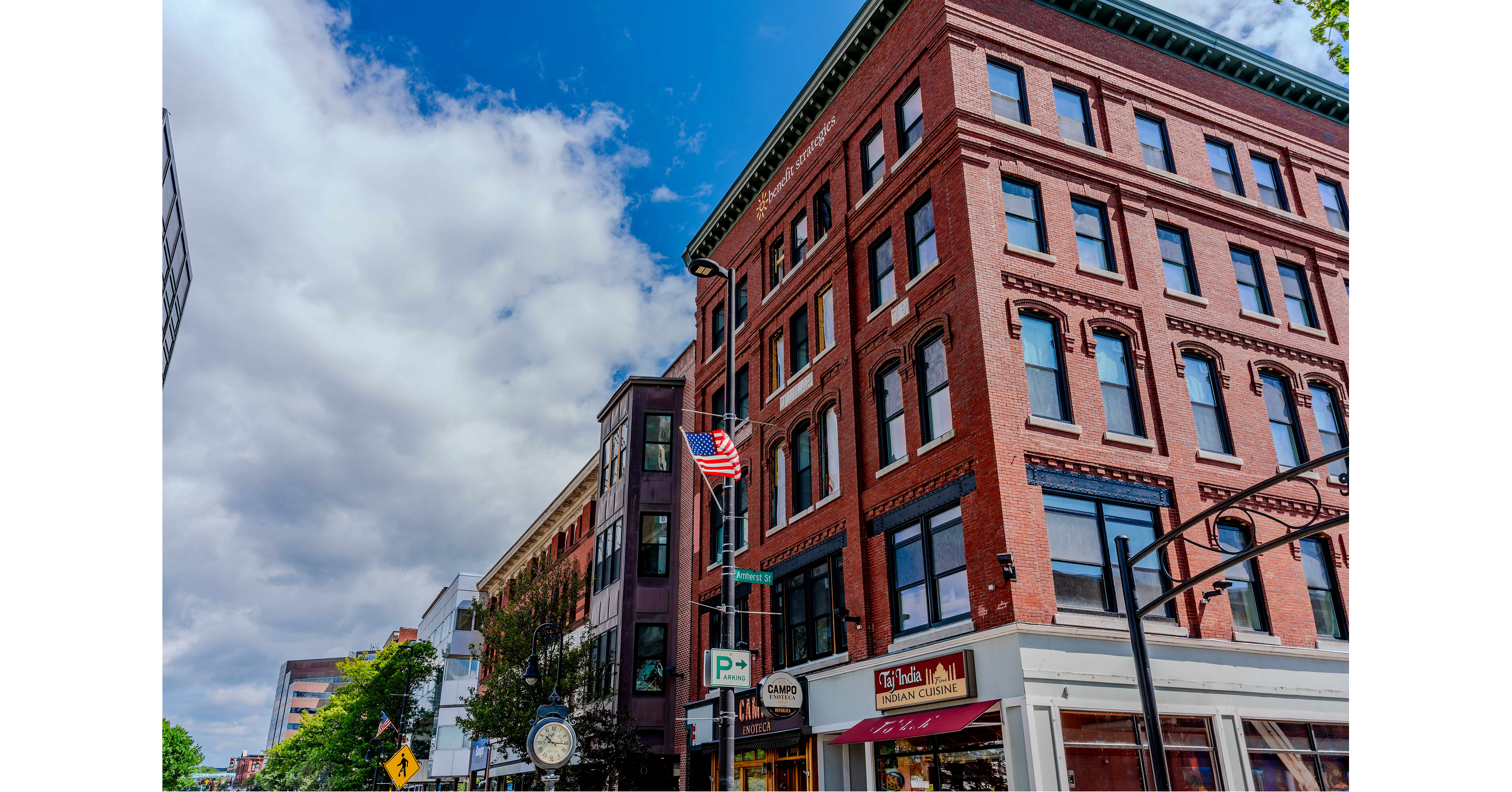
Rendezvous on Elm is opening in Manchester after a $10 million renovation that converted the 1879 Dunlap Building, New Hampshire’s first skyscraper, from vacant office space into 27 apartments. One-bedroom units start at $2,000 per month, and lease applications are open; the project adds residents to downtown but is a local property announcement with limited broader market impact.
Analysis
Local adaptive-reuse proof point, not a public-equity catalyst. At 27 units, the project is too small to move regional housing or retail demand; its investable signal is whether office-to-residential conversion can clear the cost and leasing hurdles in secondary downtowns. If leasing holds near asking rents after concessions, it may support conversion values for obsolete office assets and modestly improve nearby restaurants and retailers. Conversely, the advertised move-in specials make headline rents a weak proxy for realized economics. Historic-building systems work and soundproofing also make this an imperfect template for cheaper conversions: execution costs may absorb much of the value created by residential use.
Near term (days to 1–3 months), the ribbon-cutting itself is not a catalyst. The useful data are lease-up, concessions, and stabilized occupancy—none are provided. Over 6–18 months, repeat projects or transactions would matter more for local office owners and lenders than this single opening. Reversal risks include slow absorption, operating costs, and renovation overruns; a weak lease-up would undermine claims that downtown residential demand can rescue vacant office stock. With no public owner identified and no demonstrated earnings exposure for listed firms, the signal is too small and uncertain for a direct trade.
AllMind Terminal
AI-powered research, real-time alerts, and portfolio analytics for institutional investors.
Request TrialMarket Sentiment
Overall Sentiment
mildly positive
Sentiment Score
0.25
Key Decisions for Investors
- No position based on this announcement alone; the property is privately owned and the disclosed unit count does not establish a material public-company exposure.
- Track actual lease-up and effective rents after specials over the next 1–3 months; treat sustained concessions or slow occupancy as evidence against the conversion thesis.
- For office lenders and owners with secondary-market exposure, use this as a diligence prompt—not a valuation comparable—until renovation cost, stabilized occupancy, and operating economics are available.
- Revisit only if multiple Manchester conversions or transaction data show repeatable economics; that would be a more credible catalyst for local office-asset repricing and downtown retail demand.
More News
- Kevin Warsh’s Fed has a rent problem: Higher rates could fuel a ‘doom loop’ in housing, top economist warns
- MAGAnomics is starting to look uncomfortably like Bidenomics
- Spain’s Sánchez Calls Snap Election, Super Rich Exit the UK
- Spain’s lefty government evicted an 87-year-old woman from her home of 70 years and thousands of protesters took the streets
- Spain's PM Sanchez calls snap election after housing crisis protests
- Social Security checks could increase by just $69 next year. Here's how to close the retirement income gap
From AllMind Research
- Anthropic IPO Preview: Valuation, Timing, and What to Watch
- Shein After the IPO: Venue, Valuation, and What Must Be Proved
- What AI Research Tools Should a Small Hedge Fund Buy First?
- Can ChatGPT or Claude Replace a Research Platform?
- How the 2026 Milan-Cortina Winter Olympics Will Reshape Company Revenues and Stock Performance