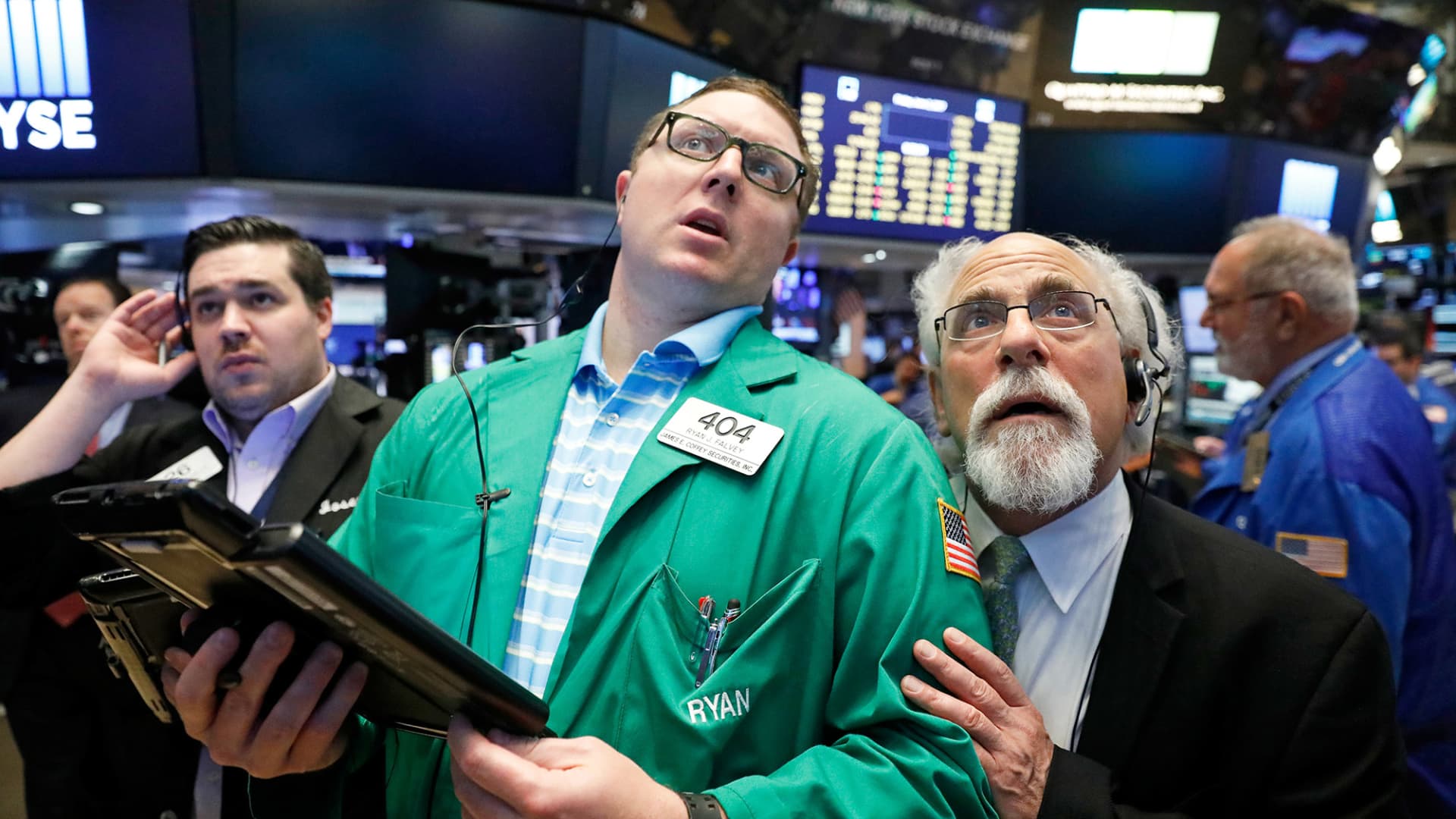
A strong jobs report pushed the 10-year Treasury yield above 4.5% and triggered a broad risk-off sell-off, with the S&P 500 down 2.6% and the Nasdaq down 4.2% on Friday; the S&P 500 also snapped a nine-week winning streak. Chip and AI-linked stocks were hit by earnings-related disappointment, including Broadcom (-13.7% for the week), Intel (-13.5%), CrowdStrike (more than -8%), and Palo Alto Networks (-3.4%), while Nvidia slipped 2.9% and Arm fell 3%. The article also highlights a looming supply overhang from major IPOs and stock sales, including SpaceX, Anthropic, Alphabet's planned $85 billion offering, and potential Meta issuance.
The market is transitioning from a momentum regime to a funding regime: higher real yields are not just compressing multiples, they are re-pricing duration-heavy growth equities against cash-returning defensives. That makes the first-order winner not simply “value,” but balance-sheet resilience and self-funding models with limited dependence on external capital. The key second-order effect is that AI capex is becoming a tax on megacap equity performance; companies that need repeated issuance or large incremental financing will trade at a persistent discount until supply pressure clears.
Chip and cyber leadership looks increasingly fragile because these names were owned for quality plus AI optionality, leaving them crowded on both fundamentals and positioning. When good prints fail to re-accelerate estimates, the market is signaling that the bar has moved from “beat and raise” to “show me a step-function increase,” which is hard to deliver quarter-to-quarter. That creates a likely air pocket over the next 2-6 weeks as systematic de-risking and earnings momentum funds cut exposure into any bounce.
The more interesting relative trade is not short semis broadly, but long the parts of the stack with tangible near-term monetization and short the names whose AI narrative still depends on multi-year promise. Intel’s CPU relevance may improve as inference shifts toward mixed CPU/GPU architectures, while Nvidia remains the best business but is vulnerable to portfolio rebalancing after an extended run. Separately, issuance risk could spill over into megacap index weights: if one large platform needs equity capital for AI, investors will start discounting future buybacks and raising the cost of capital across the cohort.
The contrarian point is that the selloff may be overstating long-term AI demand destruction. Rising yields usually hurt multiple expansion, but they also validate businesses with genuine pricing power and operating leverage; the eventual winners are likely to be the firms turning AI into immediate gross-margin expansion rather than just spending to stay relevant. That means the current washout may be an opportunity to rotate, not abandon, the AI theme.
AI-powered research, real-time alerts, and portfolio analytics for institutional investors.
Request TrialOverall Sentiment
strongly negative
Sentiment Score
-0.55
Ticker Sentiment
