
One in Three: As Europe Goes Electric, VinFast Builds for the Long Term
Source: PR Newswire
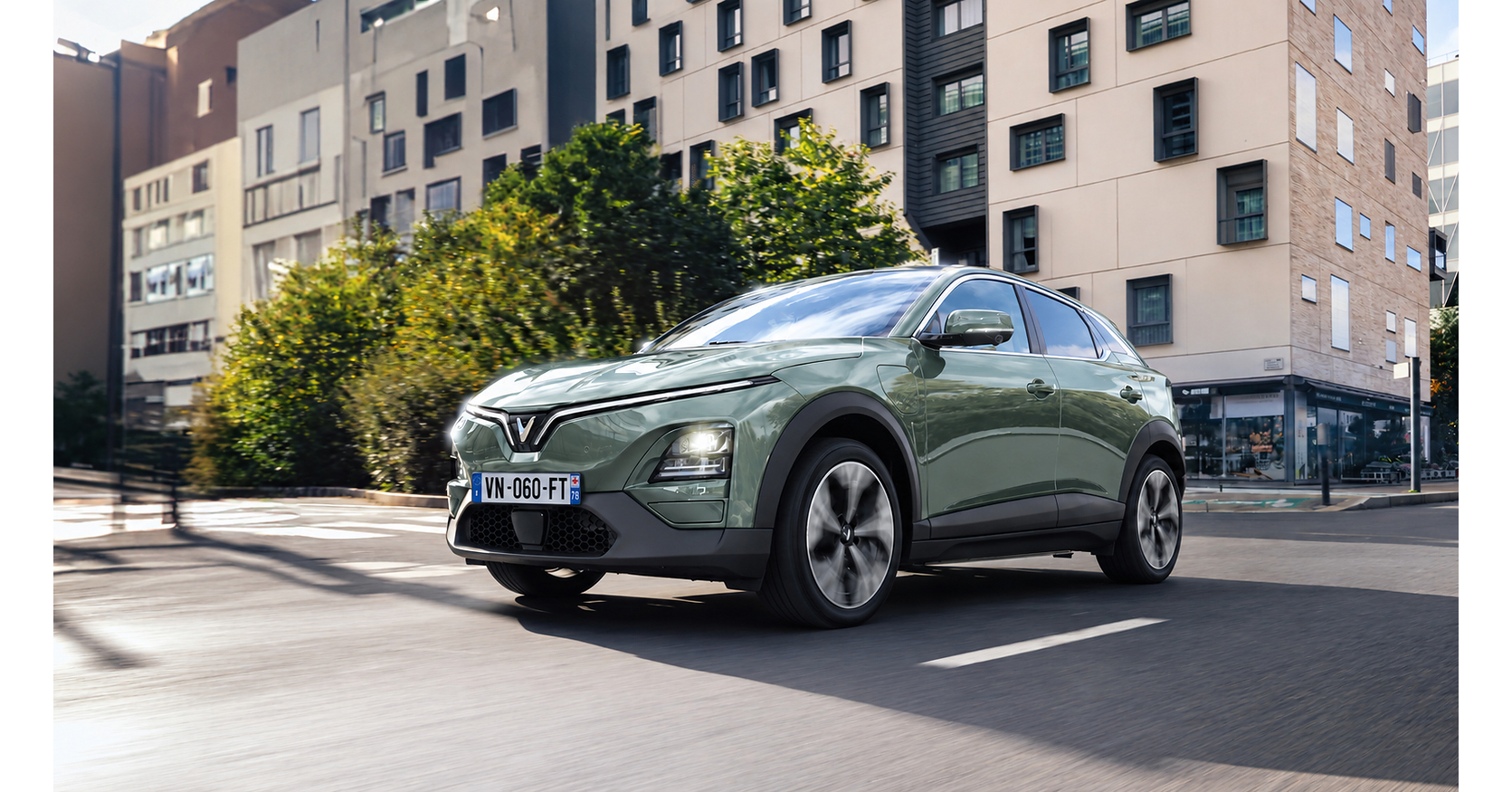
Battery-electric vehicles reached a 30.5% share of August new-car sales across 16 European markets, with 202,833 registrations, up 54.2% year on year—well above early-year forecasts of roughly 21%-23%. France and Germany recorded BEV shares of 38.3% and 32.5%, respectively, while zero-emission vehicles accounted for 60% of new EU city-bus registrations in 2025. VinFast is positioning its VF 6 passenger EV and certified EB 12 electric bus for this accelerating market, supported by dealership and service partnerships across Europe.
Analysis
The investable signal is broader European electrification, not VinFast’s promotional claims. Higher BEV penetration raises the cost of under-investment for VWAGY, STLA and RNO.PA: firms that fail to secure affordable battery supply, competitive software and dealer/service uptime risk both share loss and higher compliance costs. The nearer-term beneficiaries should be scale incumbents with European distribution and residual-value support, while lower-scale entrants face a materially higher working-capital burden from demonstrator fleets, parts inventories, warranty reserves and dealer incentives.
VinFast’s bus certification has limited standalone earnings value until it converts into independently disclosed framework awards, delivery schedules and service-level commitments. Municipal tenders favor proven uptime, financing capacity, local parts availability and bid bonds; that structurally favors VLVLY, DTRUY and TRATON over a new entrant, even if initial vehicle pricing is aggressive. A second-order risk for incumbents is margin pressure in smaller fleet tenders, but their installed service networks should preserve the higher-value maintenance and parts annuity.
For VFS, the likely market debate over the next 1-3 months is not European demand but whether expansion is being funded ahead of demonstrated unit economics. A localized partner model can reduce fixed retail capex, but it also cedes customer economics and may require dealer floorplan support, marketing subsidies and warranty reimbursement. The thesis turns constructive only if management discloses binding European orders, fleet deposits, delivery conversion and gross-margin progression; registrations or certifications alone do not establish durable demand.
Contrarian view: the transition’s bottleneck is shifting from vehicle availability to charging reliability, grid connections and fleet-depot energization. This makes pure vehicle-share extrapolation vulnerable to an adoption pause in 2027, even as bus mandates support a multi-year procurement cycle. The cleanest expression is therefore established commercial-vehicle and infrastructure exposure rather than chasing a high-volatility entrant on narrative momentum.
AllMind Terminal
AI-powered research, real-time alerts, and portfolio analytics for institutional investors.
Request TrialMarket Sentiment
Overall Sentiment
moderately positive
Sentiment Score
0.42
Ticker Sentiment
Key Decisions for Investors
- Keep VFS unowned pending verifiable European order backlog, delivered units, warranty/service cost per vehicle and gross-margin disclosure. Reassess after the next earnings release; a guidance increase without those KPIs is not confirmation.
- Consider a 3-6 month relative-value position: long VLVLY or DTRUY versus short VFS, sized small given VFS liquidity/borrow and reflexive-momentum risk. The pair benefits if fleet purchasers prioritize uptime and financing over launch pricing; cover the short if VFS reports material binding fleet orders with funded deposits and credible delivery dates.
- Monitor VWAGY, STLA and RNO.PA for BEV mix-driven margin divergence over the next two reporting cycles. Favor the issuer demonstrating lower incentives, stable residual values and improving BEV gross margin; avoid treating higher registrations alone as earnings-positive if discounting is rising.
- Set an alert for European charging/depot-connection bottlenecks or municipal tender delays. Evidence of delayed grid connections, weak fleet utilization or materially lower public-transit procurement would weaken the commercial-EV demand thesis and argue for reducing exposure to VLVLY/DTRUY.
More News
- Mark Ruffalo says Paramount’s $111 billion Warner Bros. deal ‘Will stifle creativity, weaken free speech, and cost people their jobs’
- States, cities sue U.S. agencies over weaker vehicle fuel economy rules
- Trump vs Europe as US presses for release of emergency diesel stocks
- Anthropic warns government attitudes may hurt customer ties, IPO prospectus shows: Reuters
- Paramount and Warner Bros Discovery to become Skydance
- FAA says Boeing 737 Max software glitch not a flight-safety issue