
LNG Buyers Turn to US as Hormuz Crisis Forces Supply Rethink
Source: Bloomberg
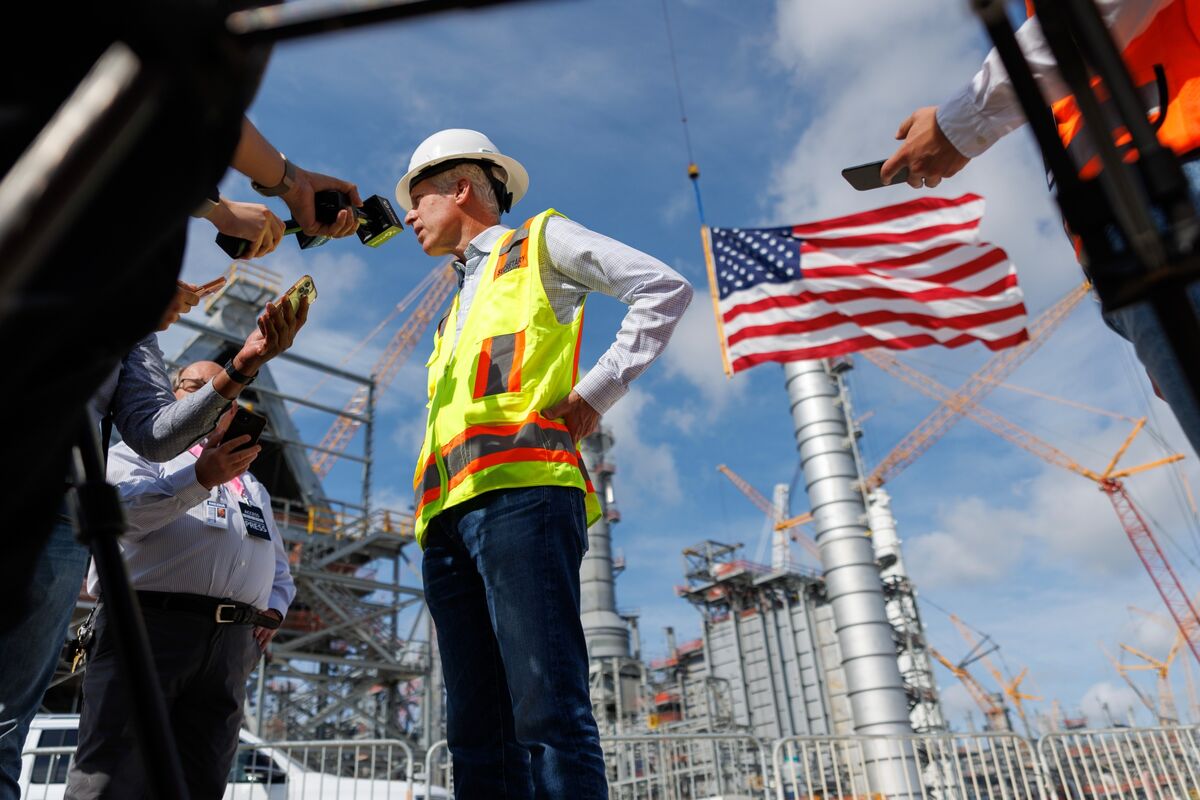
LNG buyers are increasingly looking to US supply as the Hormuz crisis forces a rethink of global gas sourcing and widens supply concerns. Industry executives at a major Bangkok gas conference emphasized diversification, while US LNG could help fill the gap only if pricing remains affordable. The disruption raises risks for global LNG trade flows and regional gas prices.
Analysis
The near-term bottleneck is not US resource availability but liquefaction capacity and contracted cargo allocation. That limits a mechanical uplift to Henry Hub or Appalachian producers in the next several weeks: higher Asian spot prices primarily revalue flexible LNG cargoes, while take-or-pay tolling economics insulate much of Cheniere's (LNG) base EBITDA from commodity upside. The immediate equity beneficiary is therefore LNG's marketing/optimization optionality and perceived strategic value, not a broad US natural-gas beta.
Over 1-3 months, the critical transmission mechanism is the JKM-to-Henry Hub netback after shipping, fuel, and liquefaction costs. A sustained premium would improve the commercial case for new offtake agreements and accelerate FIDs at projects such as NextDecade (NEXT), while increasing feedgas demand expectations for EQT (EQT), Antero Resources (AR), Williams (WMB), and Kinder Morgan (KMI). The equity rerating will depend on binding SPAs and financing, however; conference rhetoric alone should not be capitalized as incremental volumes.
The contrarian point is that a disrupted Middle East route can create a global LNG price spike without materially lifting US export volumes if terminals are already running near nameplate capacity. In that case, US buyers absorb higher domestic gas prices only later, while Asian and European importers bear the prompt shortage. A rapid de-escalation, weak Asian industrial demand, or a collapse in the JKM-Henry Hub spread would remove the FID incentive and leave high-duration development names exposed to cost inflation and project-finance risk.
For the 6-18 month horizon, persistent diversification demand raises the value of permitted US liquefaction and interstate pipeline capacity, but also invites political scrutiny of export approvals and domestic-price pass-through. Gas-intensive US sectors are a second-order loser if feedgas demand tightens the domestic market; the relevant confirmation is forward Henry Hub strength, not a one-day move in global LNG benchmarks.
AllMind Terminal
AI-powered research, real-time alerts, and portfolio analytics for institutional investors.
Request TrialMarket Sentiment
Overall Sentiment
mixed
Sentiment Score
0.05
Key Decisions for Investors
- Do not chase UNG or broad Appalachian gas producers on the initial geopolitical headline. Establish an alert for a sustained 30-day JKM-Henry Hub netback sufficient to cover shipping and liquefaction costs; only then consider a 6-12 month long EQT or AR position, with thesis invalidated by weakening 2027-28 Henry Hub strips or lower producer free-cash-flow guidance.
- Prefer LNG over a broad gas-price expression for a 1-3 month tactical position: buy LNG on pullbacks with a 5-7% risk limit, targeting relative outperformance versus UNG. The risk/reward rests on optimization upside and strategic-capacity scarcity; exit if management indicates minimal spot exposure or if cargo disruption normalizes before higher contracting activity emerges.
- Treat NEXT as an event-driven watch item rather than a preemptive long. Initiate only following independently verifiable long-term SPA additions and fully funded construction milestones; the upside is material if new contracts support valuation, but financing dilution, construction inflation, or delayed permits can dominate a geopolitical demand narrative.
- For a 6-18 month infrastructure basket, accumulate WMB and KMI selectively after evidence of incremental Gulf Coast feedgas commitments rather than on spot-price volatility. Falsification is delayed project FIDs, reduced contracted pipeline volumes, or regulatory actions that constrain LNG export growth.
- Monitor US gas-intensive margin exposure as a hedge candidate if forward Henry Hub tightens: nitrogen fertilizer and chemicals should be screened for unhedged gas sensitivity, but no short is warranted without company-specific fuel-cost disclosures and confirmation that domestic gas forwards—not merely LNG spot prices—are rising.
More News
- Consumers hit by one-two punch of oil and rates from Iran war. The estimated bill is $1,700 per household
- Trump may insist war in Iran is ‘small potatoes’—but it’s costing $3 billion a month, with $38 billion already spent, reports budget watchdog
- Arcee AI trained four models for $20 million. Now, it’s worth $1 billion.
- Citi sees oil prices supported by geopolitical risks and demand
- Ukraine's message to Asian nations: your chips are turning up in Russian missiles
- Yield on 10-year Treasury hovers above 5% as investors await Fed decision