
Saudi Oil Cuts Tied to War Hit Europe: Evening Briefing Americas
Source: Bloomberg
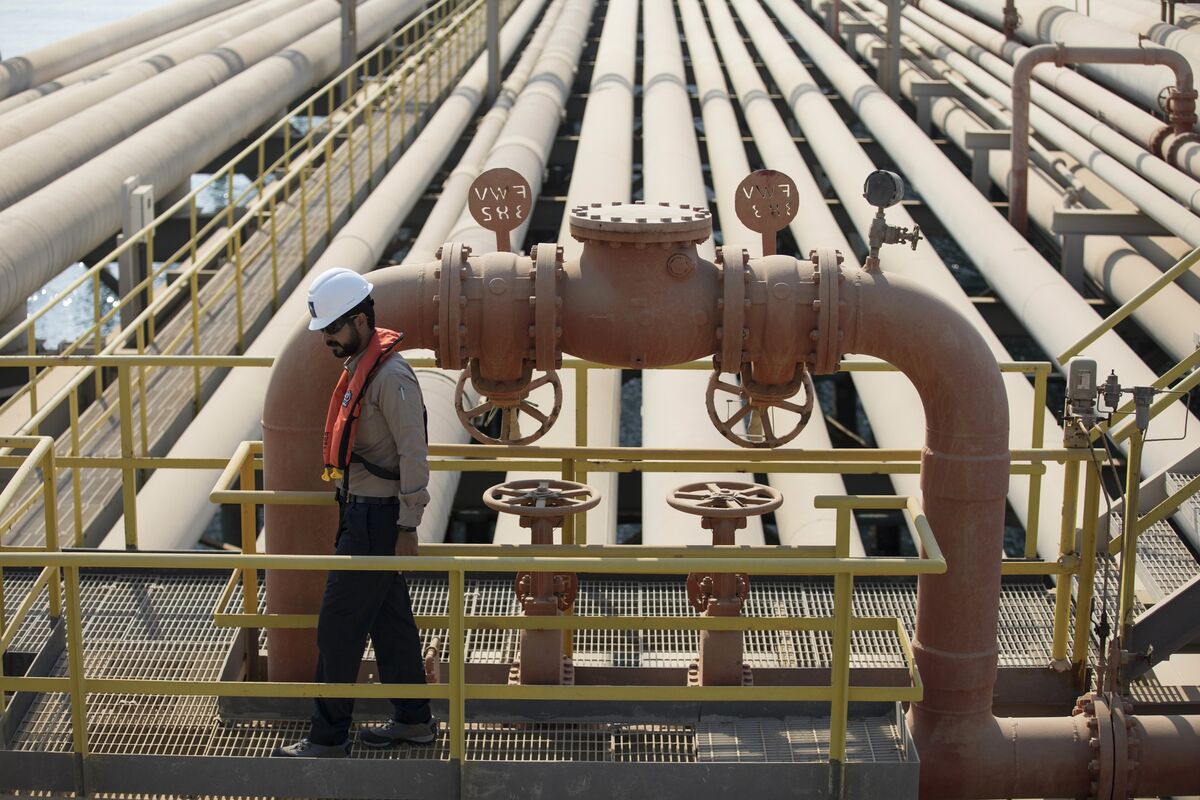
Saudi Aramco will provide no crude next month to at least two European refining customers under long-term contracts after an attack on a key Red Sea pipeline, intensifying the Iran-war-related supply disruption. European refiners must secure replacement cargoes, with Poland's Orlen already seeking shipments and lifting regional crude grades. Dated Brent, Europe’s physical-barrel benchmark, exceeded $130/bbl this week, raising risks of higher energy costs and refinery supply stress.
Analysis
The key transmission is not simply higher headline crude: a sudden loss of medium/heavy sour barrels forces European refiners into a narrower replacement pool, widening regional physical differentials and raising working-capital needs. Refiners configured for these grades face yield and processing penalties when substituting Atlantic Basin or U.S. barrels; higher diesel and jet cracks may offset this only where retail pricing is unconstrained. PKN's downside is therefore likely concentrated in the next quarterly procurement margin and inventory-financing cycle rather than a durable earnings reset.
The cleaner second-order beneficiary is crude tanker ton-mile demand. Replacement cargoes into Europe are likely to travel farther and compete for vessels with Asian demand, favoring Frontline (FRO) and Scorpio Tankers (STNG), although the latter is more exposed to product-tanker rather than crude-tanker flows. Integrated producers such as SHEL, BP and ENI have upstream offsets, but their European refining exposure makes them less direct expressions than a Brent-linked vehicle or tanker equities.
Near-term positioning can remain tight for 2-6 weeks because physical buyers must cover prompt requirements, while the 1-3 month catalyst is whether contractual allocations normalize and whether alternative grades clear without a sustained premium. The consensus risk is treating the dislocation as a broad oil-equity catalyst: if it is confined to a temporary logistics constraint, front-end Brent and tanker rates should outperform long-dated crude and integrated oils. Thesis failure would be prompt physical premiums narrowing, Brent backwardation easing materially, or verified restoration of affected export infrastructure.
AllMind Terminal
AI-powered research, real-time alerts, and portfolio analytics for institutional investors.
Request TrialMarket Sentiment
Overall Sentiment
strongly negative
Sentiment Score
-0.62
Ticker Sentiment
Key Decisions for Investors
- Buy 1-2 month BNO call spreads rather than outright BNO: target a defined-risk structure centered on further front-end Brent tightening; take profit if prompt Brent fails to hold recent breakout levels or physical differentials normalize. This is a days-to-weeks trade, not a strategic oil long.
- Initiate a 1-3 month long FRO / short SHEL pair in equal beta-adjusted dollars. The trade isolates rerouting and crude-tanker ton-mile exposure from broad oil-price beta; exit if freight benchmarks do not firm within two weeks or if export routing is restored.
- Maintain an underweight/short bias on PKN only after confirming its Saudi-grade dependency, replacement purchase prices, and any domestic fuel-price constraints. Without those data, treat PKN as a watch item rather than a fresh short because inventory gains and retail pass-through can mask procurement pressure for a quarter.
- Avoid adding to European independent refining exposure until regional diesel cracks and crude-quality spreads are observable. A sustained widening of both would support margin resilience; widening crude differentials without crack support is the bearish configuration for refinery EBITDA.
More News
- Trump says U.S. to build a 'large Military presence' in Greenland as part of a security deal with it and Denmark
- Stocks face a key hurdle in next week’s U.S.-China summit. Here’s what’s at stake
- American, United and Southwest are all cutting ‘marginal routes’ as jet fuel prices spike
- European Economies Eye Another Energy Crisis Heading Into Winter
- Analysis-Russia sanctions bill gives Trump sweeping new tariff powers
- Trump Says He Expects ‘A Lot’ of Deals During Xi Summit
From AllMind Research
- Anthropic IPO Preview: Valuation, Timing, and What to Watch
- Shein After the IPO: Venue, Valuation, and What Must Be Proved
- What AI Research Tools Should a Small Hedge Fund Buy First?
- Bitcoin's 52% Crash Proves It's a Tech Stock: Here's What That Means for Portfolio Construction
- What Is an AI Investment Research Platform?