
Kemp Proteins Establishes a Strategic Partnership with NeuImmune to Implement the geCHO Technology to Advance Precision Protein Production
Source: PR Newswire
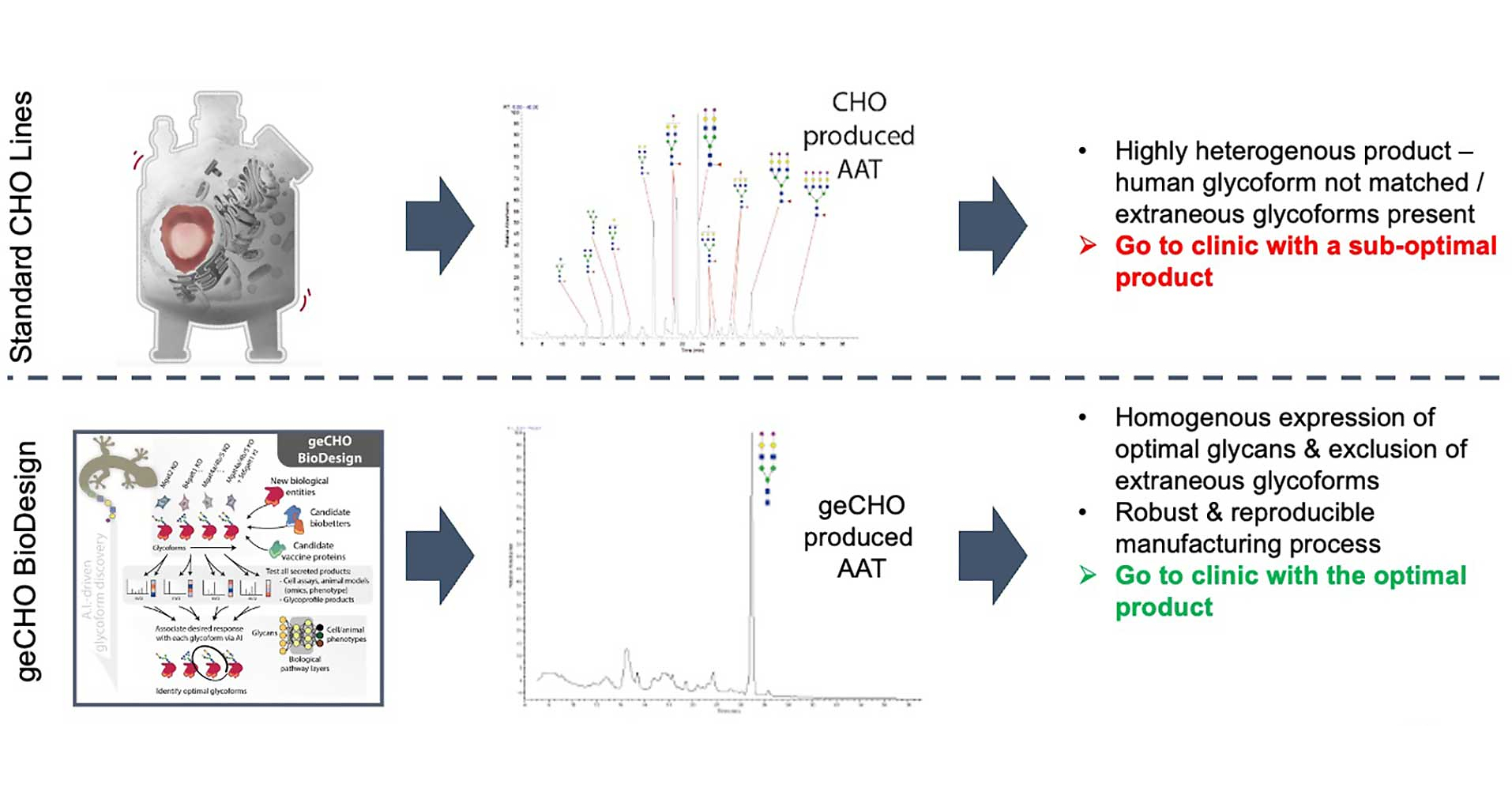
Kemp Proteins formed a strategic partnership with early-stage biotech NeuImmune to deploy its geCHO BioDesign platform, which uses 28 genome-edited CHO cell lines to produce and evaluate defined protein glycosylation profiles. The technology, supported through BARDA's BioMaP-Consortium, will be applied to complex biologics including monoclonal antibodies targeting Ebola and Sudan virus. The partnership expands Kemp's precision protein-production capabilities and supports U.S. domestic biomanufacturing and health-security objectives, but no financial terms or near-term commercial revenue impact were disclosed.
Analysis
This is a private-market capability announcement rather than a priced public-equity catalyst. The economic value, if validated, is shortening biologic lead optimization and reducing later-stage comparability risk; that can improve a CDMO's win rate and pricing power, but neither private party offers sufficient revenue, capacity, customer-conversion, or IP-exclusivity data to underwrite an investable read-through.
The more relevant public-market implication is a modest reinforcement of demand for differentiated mammalian-cell-line development rather than commodity biologics manufacturing. Large biologics CDMOs such as LONN.SW, DSV.CO, and Wuxi Biologics (2269.HK) could benefit structurally if sponsors increasingly pay for upstream glycan-control workflows, while standard CHO-expression service providers face mild differentiation pressure. The near-term revenue pool remains too small and development-cycle timing too long to affect estimates over the next 1-3 months.
Consensus may overvalue the AI label: computational glycan-phenotype association is useful only if it produces reproducible potency, PK, safety, or manufacturability gains across programs. The critical diligence item is whether the platform converts into client programs advancing into IND-enabling work, followed by commercial-scale tech transfers; absent that evidence, this is technical validation rather than evidence of durable platform economics. Over 6-18 months, BARDA follow-on awards or named biopharma customers would be the first credible signals of monetization.
AllMind Terminal
AI-powered research, real-time alerts, and portfolio analytics for institutional investors.
Request TrialMarket Sentiment
Overall Sentiment
moderately positive
Sentiment Score
0.42
Key Decisions for Investors
- No standalone public-equity trade on this announcement; both counterparties are private and the disclosed information does not establish an earnings impact.
- Add LONN.SW, DSV.CO, and 2269.HK to a 6-18 month watchlist for evidence that glycoengineering becomes a separately priced development-service category; act only after management discloses bookings, utilization, or margin contribution tied to advanced cell-line engineering.
- For defense-health-security exposure, monitor BARDA procurement announcements and congressional appropriations rather than treating this partnership as a funding proxy. A sizable follow-on award, named prime contractor, and funded manufacturing scope would be required before evaluating listed suppliers or contractors.
- Thesis falsifier: lack of IND progression, repeat customer disclosures, or follow-on non-dilutive funding within 12-18 months would indicate that technical differentiation is not translating into commercial adoption.
More News
- Italy to deploy warships to protect shipping through Bab al-Mandeb
- Australia’s central bank chief warns inflation risks materialising
- Asian stocks rise as oil retreat eases inflation fears, BOJ in focus
- US to Sell F-35s to Saudi Arabia in $24.3 Billion Deal
- California AG Bonta on Paramount-Warner Bros., Meta and AI
- A breakout in the 10-year Treasury yield could hold back stocks if it reaches this level