
TWO NEW BOULDER COUNTY MURALS AIM TO TURN WILDFIRE AWARENESS INTO ACTION
Source: PR Newswire
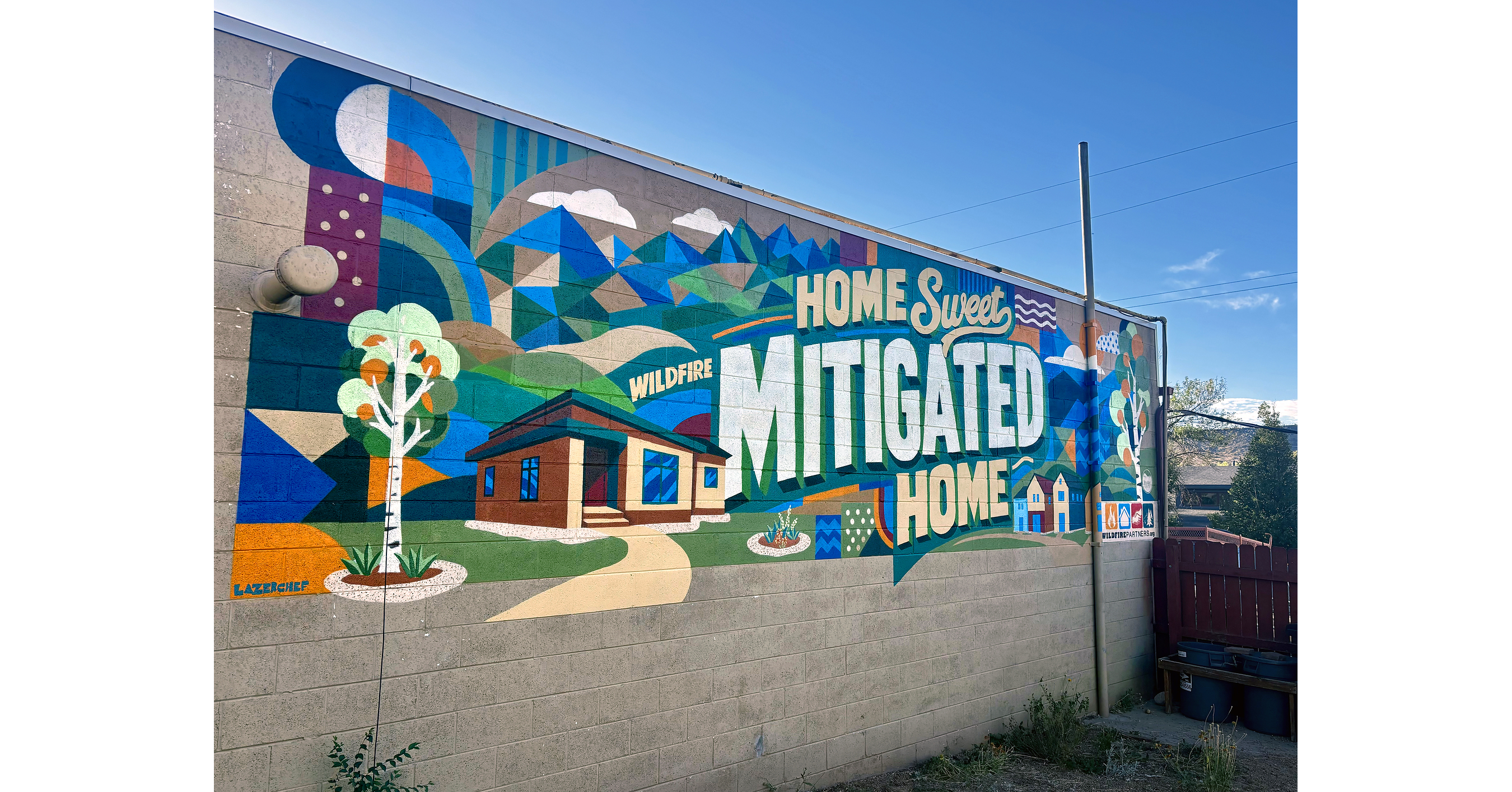
Boulder County's Wildfire Partners commissioned two public murals to encourage household wildfire-mitigation actions in a county ranked among the Rocky Mountain region's 10 most wildfire-prone areas. Colorado's annual average wildfire count rose from 13 in the 1990s to more than 70 in the 2020s, underscoring the campaign's urgency. Residents may qualify for rebates of up to $500 for approved mitigation projects, funded through the county's voter-approved 2022 Wildfire Mitigation Sales Tax.
Analysis
This is not an investable demand signal for public equities: the funded activity is too small and geographically narrow to affect revenue or earnings for home-improvement, landscaping, building-products, or insurance companies. The relevant read-through is behavioral and political rather than financial—recurring local mitigation programs can gradually normalize defensible-space maintenance and home hardening, supporting a multi-year replacement/retrofit tailwind for HD, LOW, IBP, OC and roofing suppliers, but not on a measurable 1-3 month basis.
The more consequential second-order issue is property-insurance availability. Widening mitigation adoption can improve modeled loss severity at the margin, but insurers will not materially reprice Colorado exposure until mitigation is verified, aggregated and reflected in regulatory-approved rating plans. ALL, CB, HIG and PGR remain more sensitive to catastrophe reinsurance costs, state rate adequacy, and actual fire-loss experience than to public-awareness campaigns. A broadening of county-funded mitigation mandates or insurance premium credits across Western states would be the catalyst that converts this from local civic activity into a scalable building-products and insurer-margin theme.
Contrarianly, rising mitigation spending does not necessarily imply an insurance-sector long: it can be evidence that local authorities expect escalating hazard, which may accelerate non-renewals, rebuild-cost inflation and municipal fiscal demands before loss prevention benefits emerge. The key falsifier for the bearish insurance interpretation would be sustained improvement in Colorado admitted-market capacity, approved rate increases that exceed loss-cost trends, and measurable reductions in wildfire claims severity over multiple fire seasons.
AllMind Terminal
AI-powered research, real-time alerts, and portfolio analytics for institutional investors.
Request TrialMarket Sentiment
Overall Sentiment
mildly positive
Sentiment Score
0.15
Key Decisions for Investors
- No immediate trade: avoid extrapolating a local public-relations campaign into earnings revisions for HD, LOW, OC, IBP or landscaping-related suppliers; revisit only if statewide or multi-state rebate programs show material committed funding and contractor-volume data.
- Set a 6-18 month policy alert for Colorado and other Western states: premium discounts or underwriting credits tied to verified home-hardening certifications would be incrementally constructive for ALL, CB and HIG if they improve retention without sacrificing pricing discipline.
- Maintain catastrophe-risk monitoring on Western-exposed personal-lines insurers through the next fire season; a deterioration in reinsurance pricing, Colorado market exits, or adverse wildfire loss development is a more actionable downside catalyst than this campaign is an upside catalyst.
- Watch public building-materials suppliers for evidence of scalable retrofit demand—same-store sales or contractor-channel commentary specifically citing fire-resistant roofing, insulation, vents, siding or defensible-space products would justify evaluating a long HD/LOW versus a broader consumer-discretionary hedge.
More News
- US official says upcoming spectrum auctions could generate more than $100 billion
- Hot or not? The economy’s fate rests on Kevin Warsh’s answer to one key question
- Iran war has cost the US $38bn: How will it impact US economy, politics?
- LARRY KUDLOW: Prosperity is as American as apple pie
- 5% Treasury yields mean America's debt bill just got a lot bigger
- Bond market woes likely a factor for Fed, but intervention seen as unlikely
From AllMind Research
- Anthropic IPO Preview: Valuation, Timing, and What to Watch
- Shein After the IPO: Venue, Valuation, and What Must Be Proved
- What AI Research Tools Should a Small Hedge Fund Buy First?
- Augmented Intelligence: AllMind, Elevate Human Judgement With an Accessible, Powerful, Data-Driven Financial AI Toolkit
- AI Research Systems for Hedge Funds: A Pilot Design