
80% of Homeowners Have Regrets About Their Home, With 19% Feeling Remorse Within the First Month of Owning
Source: PR Newswire
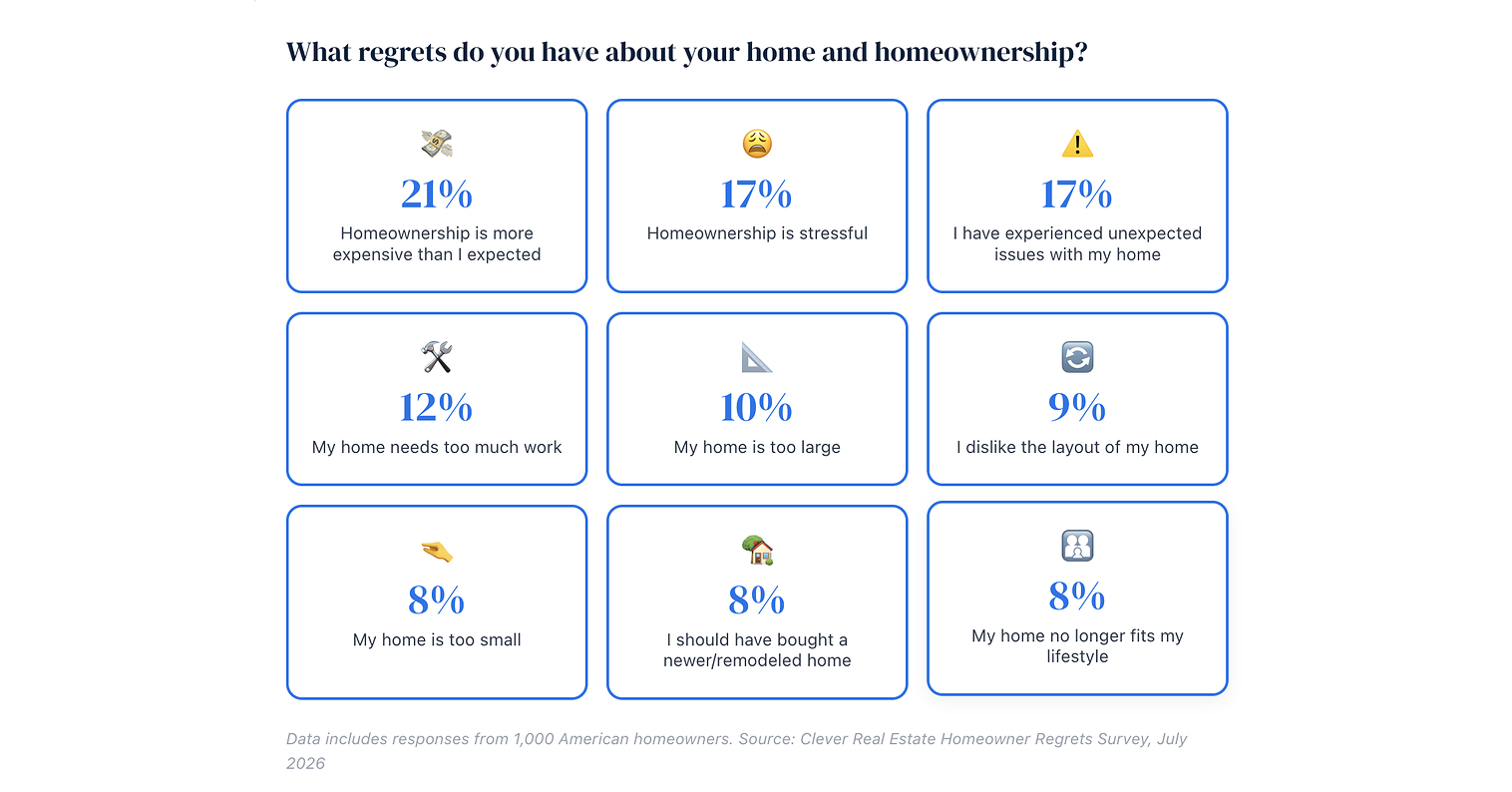
Clever Real Estate found that 80% of homeowners have regrets about their homes, with 40% reporting buyer's remorse within the first year and 19% within the first month. Rising labor, materials, property-tax, maintenance, and repair costs are key pain points: 55% say ownership has cost more than expected, while 46% delayed repairs because of higher costs. Despite dissatisfaction and 41% wishing they could move, 91% do not regret becoming homeowners and 92% still view homeownership as a good financial investment; rising home prices have made 60% less likely to relocate.
Analysis
This is a weak direct signal for TRST and should not alter positioning absent regional mortgage-credit data. The relevant read-through is that dissatisfaction does not necessarily translate into transaction volume: owners facing high replacement-cost mortgages are more likely to defer a move and fund selective repairs from cash, HELOCs, or unsecured credit. That mix supports housing-related maintenance demand but constrains purchase-mortgage originations and broker commissions over the next 1-3 months.
The more investable second-order effect is a bifurcation within home improvement. Essential repair exposure—HVAC, plumbing, roofing and replacement appliances—should prove more resilient than discretionary remodel exposure, because postponement raises failure risk rather than eliminating the spend. This favors service-heavy operators such as FIX and WSO over big-ticket discretionary renovation baskets; HD and LOW remain exposed to project deferral, although a gradual shift from DIY toward pro-installed repair can partially offset weaker ticket sizes.
For regional banks, the risk is not immediate mortgage default but household liquidity erosion from recurring housing carrying costs. Over 6-18 months, rising tax, insurance, and maintenance burdens can increase revolving-credit utilization and modestly worsen consumer-credit loss rates, particularly in high-tax or catastrophe-prone markets. The survey is commissioned by a commission-discounting intermediary and lacks disclosed sampling detail here, so it is insufficient evidence for a housing-demand inflection on its own.
AllMind Terminal
AI-powered research, real-time alerts, and portfolio analytics for institutional investors.
Request TrialMarket Sentiment
Overall Sentiment
mixed
Sentiment Score
-0.15
Key Decisions for Investors
- No standalone TRST trade: maintain neutral exposure until quarterly disclosures show whether mortgage banking revenue, HELOC balances, or consumer delinquencies are diverging from regional-bank peers. A material rise in 30+ day consumer delinquencies or reserve build would turn the household-cost thesis negative.
- Watch-list pair for the next 1-3 months: long WSO or FIX versus short a broad discretionary home-improvement basket (HD/LOW weighted). The thesis requires resilient service revenue and weakening big-ticket comparable sales; exit if HD or LOW report accelerating transaction growth and improving project-ticket trends.
- Avoid using this survey to short housing broadly. A sustained decline in mortgage rates would unlock mobility and renovation demand simultaneously, reversing the repair-versus-remodel relative-value setup even if household dissatisfaction remains elevated.
- Monitor home-equity lending and credit-card charge-off trends at regional banks during the next two earnings cycles. If utilization rises without delinquency deterioration, lenders with meaningful HELOC exposure could see net-interest-income support rather than a credit-cost headwind.
More News
- Dollar holds near 2-month high as markets weigh rate hikes, Iran diplomacy
- Trump Says US Team Met With Iranians at UNGA
- Sullivan: Wall Street admits it doesn't know where oil is headed. There's one stock they do agree on
- How Kevin Warsh’s rate hike exposed a 2-speed U.S. economy, with AI and housing at the poles
- The bond market is flashing a warning for stocks. These sectors are already wobbling.
- China Vanke shares surge on report of regulatory debt intervention