
Micron: The $50 Billion CapEx Misconception (Why The Memory Floor Is Rising)
Source: seekingalpha.com
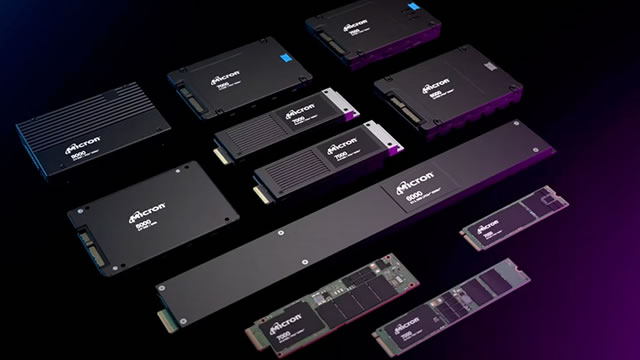
Micron reported robust FQ4 results, including $54.23B in revenue, an 87% GAAP gross margin, and EPS of $33.42, underscoring exceptional strength in memory markets. The company plans more than $50B of annual capex for early cleanroom construction, while strategic customer agreements cover over 35% of projected 2030 revenue. More than 75% of FY2027 output is committed, supported by $150B in remaining performance obligations and $32B in customer financial commitments, materially improving revenue visibility and downside protection.
Analysis
The investable issue is not the reported beat but whether Micron is converting a cyclical memory upturn into contract-backed, higher-return HBM and data-center DRAM capacity. If customer prepayments and SCAs are legally enforceable rather than framework arrangements, MU should command a lower through-cycle discount versus SK Hynix and Samsung because utilization, working-capital needs, and capex funding become more predictable. The second-order beneficiary is ASML, AMAT, LRCX and KLAC: early cleanroom construction raises the probability that memory-equipment orders are deferred rather than cancelled, improving their 2027-28 backlog visibility.
The key risk is that committed wafer capacity becomes a liability if AI-server demand normalizes before new fabs are qualified. Memory pricing is set at the margin; even modest oversupply can compress DRAM/NAND ASPs sharply and turn incremental capacity from high-margin HBM into lower-return conventional DRAM. The disclosed commitments should therefore be discounted until investors can verify cancellation terms, pricing floors, product mix, and whether commitments are tied to volume or simply reservation rights.
Near-term, MU may extend on earnings-estimate revisions and evidence that HBM supply remains constrained through calendar 2027. Over 1-3 months, the relevant catalysts are customer qualification updates, HBM allocation commentary from NVIDIA/AMD hyperscaler supply chains, and any upward revision to bit-growth or ASP assumptions. Over 6-18 months, the thesis depends on industry capex discipline: Samsung's and SK Hynix's capacity plans matter more to MU's multiple than another single-quarter beat.
Contrarian view: the market may overcapitalize long-dated customer commitments as though they eliminate cyclicality. A better framing is that these arrangements improve financing visibility while potentially locking MU into aggressive capex before returns are proven; if conventional DRAM pricing weakens, the stock can de-rate despite intact revenue commitments. Falsify the constructive view if HBM qualification slips, DRAM contract pricing rolls over for two consecutive months, or management guides materially lower gross margin despite rising shipments.
AllMind Terminal
AI-powered research, real-time alerts, and portfolio analytics for institutional investors.
Request TrialMarket Sentiment
Overall Sentiment
strongly positive
Sentiment Score
0.78
Ticker Sentiment
Key Decisions for Investors
- Maintain or initiate a tactical long MU over the next 1-3 months only on confirmed upward consensus EPS revisions and stable DRAM contract pricing; target a 10-15% upside from estimate/multiple expansion, with a 7-8% stop if HBM qualification or gross-margin guidance weakens.
- Express the cleaner supply-chain read-through via long KLAC or LRCX versus short SOXX for 6-12 months; memory-fab build activity supports service and process-control revenue while the hedge reduces broad AI-semiconductor multiple risk. Reassess if memory WFE guidance is cut or customer prepayments prove nonbinding.
- Do not underwrite a long-dated MU call structure until the terms of the customer commitments are disclosed. Set an alert for evidence of take-or-pay provisions, price floors, and HBM-specific volume commitments; absent those details, treat the backlog as lower-quality than contracted equipment backlog.
- Monitor Samsung Electronics and SK Hynix capacity commentary as the primary thesis risk. A coordinated acceleration in conventional DRAM output would favor a short MU/long diversified semiconductor-equipment hedge reversal, as ASP downside can overwhelm MU-specific execution gains within 2-3 quarters.
More News
- Stocks remain under the thrall of higher yields and higher oil. Here's what's ahead
- Nvidia is a 'best in breed' stock on sale. Here's why I'm buying
- Micron sees the memory shortage tightening into 2028 after a record quarter
- CLSA raises Micron stock price target on strong memory pricing outlook
- Wall Street sets Micron (MU) stock price for 12 months
- Why is Infineon Technologies stock surging 6% today?