
EAIGLE and Loblaw Expand Partnership to Strengthen Supply Chains with AI-Powered Gate Automation
Source: PR Newswire
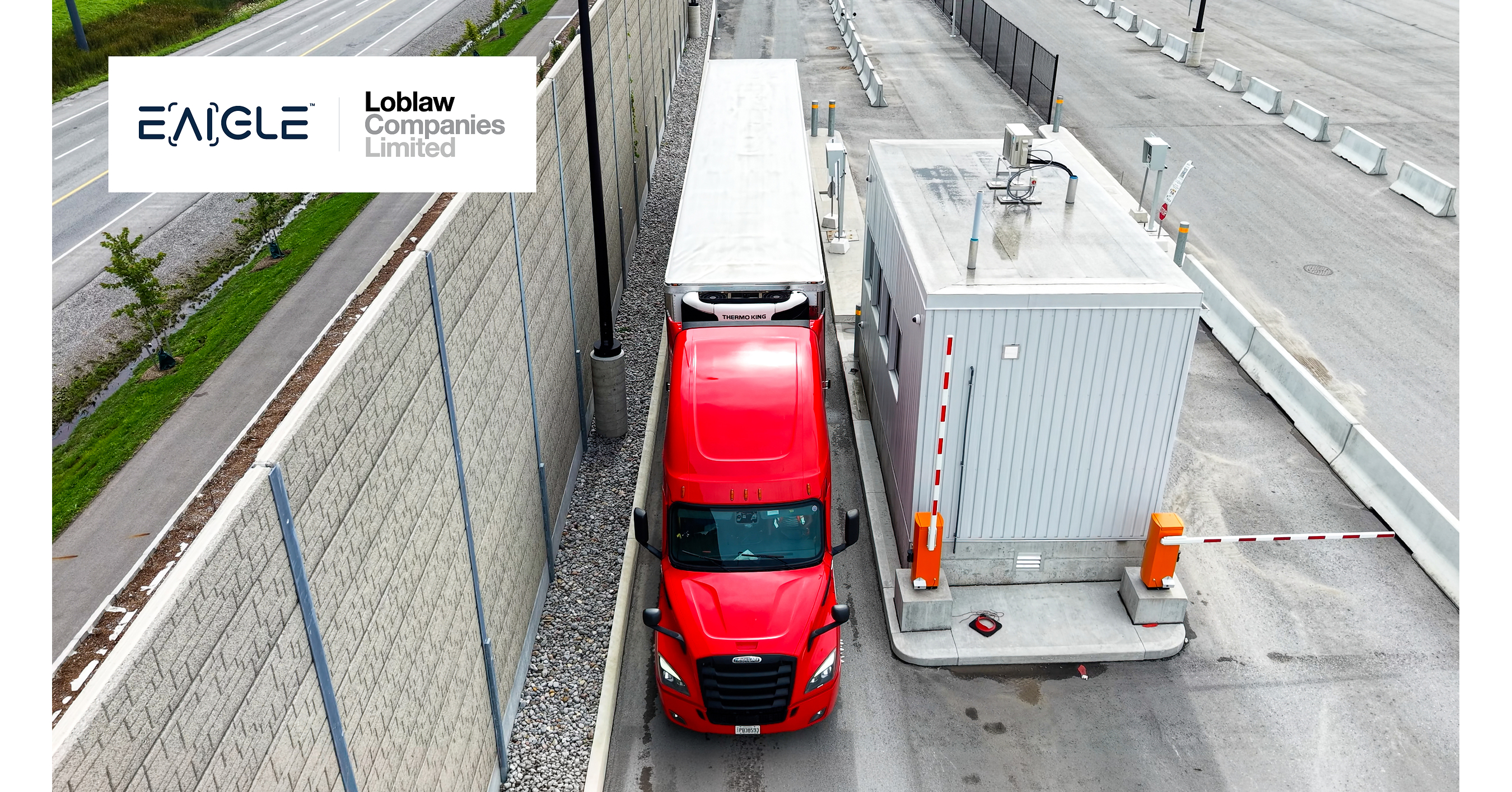
Loblaw is expanding deployment of EAIGLE's Vision AI gate-automation technology across multiple distribution yards and centres following early improvements in processing times, driver experience and data accuracy. EAIGLE's AVAC platform uses computer vision to automate vehicle access, capture freight data in real time and integrate with WMS, TMS, YMS and ERP systems. The rollout supports Loblaw's effort to improve distribution-network throughput, visibility and supply-chain resilience, though no financial terms or quantified operating benefits were disclosed.
Analysis
This is operationally constructive for Loblaw (L) but unlikely to alter near-term earnings estimates: gate automation affects a narrow portion of distribution-center labor, detention, and asset-utilization costs rather than the larger store labor, procurement, and price-investment pools. The more relevant mechanism is incremental network capacity without proportional capex: faster truck turns can reduce trailer dwell, improve inbound appointment reliability, and modestly lower working-capital volatility during seasonal peaks. Any benefit should emerge over 2-4 quarters and is more likely to support margin resilience than drive visible revenue growth.
The second-order implication is that better real-time freight data can improve negotiating leverage with carriers and reduce charge leakage from disputed wait times, shortages, and accessorials. That is modestly negative for fragmented Canadian trucking operators, while potentially positive for large 3PLs with integrated systems that can monetize higher-quality scheduling data. EAIGLE is private, so there is no direct public-equity read-through; the announcement is principally a validation point for the broader warehouse-automation ecosystem rather than a sector-wide demand inflection.
Consensus may over-credit the AI label. The financial test is whether L reports measurable distribution cost per case, on-time inbound performance, or inventory-shrink improvement—not qualitative claims about throughput. A meaningful thesis would be falsified if deployment requires material process redesign, if driver adoption is weak, or if transportation expense as a percentage of sales fails to improve through the next two seasonal operating periods.
AllMind Terminal
AI-powered research, real-time alerts, and portfolio analytics for institutional investors.
Request TrialMarket Sentiment
Overall Sentiment
mildly positive
Sentiment Score
0.35
Ticker Sentiment
Key Decisions for Investors
- No standalone trade on the release; retain L only within a broader Canadian defensive-consumer or operating-margin thesis. Reassess after the next two earnings reports for evidence of distribution/transport expense leverage versus sales.
- Set an operational KPI alert for L: upgrade the automation thesis only if management quantifies lower cost per case, fewer detention/accessorial charges, or improved inventory turns; absent disclosure, assume earnings impact remains immaterial.
- For a 6-18 month thematic basket, prefer diversified warehouse-automation exposure through GXO or KNX over attempting to infer value from a private-vendor deployment. Entry should follow evidence that automation converts to contract margins or asset turns; downside is customer capex deferral and implementation costs outrunning savings.
- Monitor Canadian trucking spot and contract-rate data over 1-3 months. If retailer-led yard digitization becomes broader, avoid lower-scale carriers with high detention-income dependence; this is a watch item, not yet a short catalyst.
More News
- Oil extends losses as Saudi Arabia reportedly offers ship-to-ship crude transfers after pipeline hit
- Japan’s corporate leaders sound alarm over weak yen — even dollar-earners are voicing concerns
- 'Hostile act': Trump threatens EU with tariffs over Canada associate-membership proposal
- Fed hikes again - an AI-Picked insurer is still cashing in
- US military claims Strait of Hormuz remains open amid ongoing blockade
- Oil prices extend losses as fears of Middle East supply disruptions ease