
Huawei wprowadza rozwiązanie Fintelligent AI, które ma pomóc instytucjom finansowym na całym świecie w realizacji idei „Własny system AI, własna inteligencja"
Source: PR Newswire
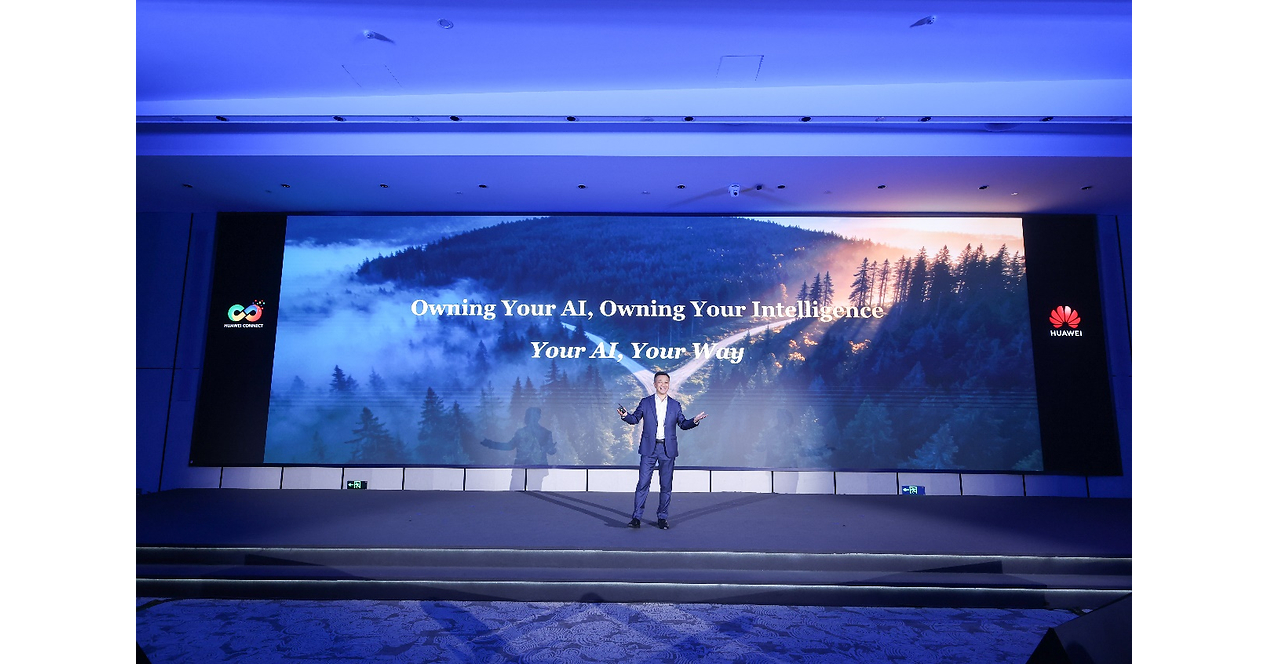
Huawei launched its Fintelligent AI solution globally at HUAWEI CONNECT 2026, targeting large-scale deployment of AI agents in financial institutions through Agent Factory, Token Factory and Data-Knowledge Factory. Built on the openJiuwen agent platform and Huawei computing infrastructure, the offering emphasizes financial-sector security, scalable agent management, token-cost optimization and conversion of bank data and legacy-code rules into reusable AI knowledge. Huawei also introduced TokeNexus token lifecycle management and cited 7,100+ financial-sector clients across 80+ countries, including 54 of the world’s 100 largest banks.
Analysis
The investable read-through is less about incremental AI software revenue and more about the monetization layer shifting toward sovereign compute, governance and systems integration. Financial institutions will pay for auditability, data residency and legacy-core integration before they pay for model quality; this favors Huawei’s domestic ecosystem and pressures horizontal AI vendors whose offerings require public-cloud or US-chip dependencies. In China, an expanding bank workload base would be a marginal demand tailwind for Ascend-linked supply chains, including SMIC (688981) and Cambricon (688256), while creating incremental substitution risk for NVIDIA’s China data-center revenue.
The near-term equity impact should be limited: this is vendor-led marketing without disclosed contracts, pricing, deployment volumes, or customer ROI. The relevant 1-3 month catalyst is evidence that state-owned banks commit capex or name Huawei as a production AI platform; absent that, investors should not capitalize the claims into semiconductor earnings. Over 6-18 months, successful conversion of proprietary banking code and internal data into reusable AI workflows could reduce outsourced IT-maintenance spending and favor Chinese incumbents with entrenched bank relationships over standalone model providers.
Consensus may overstate the immediate NVIDIA displacement effect. Regulated financial workloads are latency- and reliability-sensitive, but often low-volume relative to training clusters; early deployments may consume modest inference capacity while generating disproportionate integration revenue. The thesis turns materially more negative for NVIDIA only if disclosed bank rollouts demonstrate repeatable, scaled inference demand on Huawei silicon and Chinese cloud providers show corresponding utilization gains.
AllMind Terminal
AI-powered research, real-time alerts, and portfolio analytics for institutional investors.
Request TrialMarket Sentiment
Overall Sentiment
moderately positive
Sentiment Score
0.48
Key Decisions for Investors
- No immediate directional trade on the release; require named financial-institution contracts, deployment scale, and disclosed hardware configuration before underwriting revenue impact.
- Set a 1-3 month alert on SMIC (688981) and Cambricon (688256): consider a tactical long basket only if Chinese bank AI-capex awards or Ascend-related utilization data emerge. Size modestly because export-control escalation and weak yields can overwhelm demand upside.
- Monitor NVIDIA (NVDA) China commentary at the next earnings call; a cut to China data-center outlook or evidence of banking inference substitution would support a 3-6 month NVDA underweight versus AMD (AMD). Do not initiate solely on this announcement, since regulated-finance inference is unlikely to move consolidated NVDA estimates near term.
- For China technology exposure, prefer a measured long KWEB versus short a broad US software-AI basket only after procurement evidence appears; the risk/reward depends on sovereign-AI capex converting into orders rather than remaining pilot activity. Falsify if bank IT budgets stay flat or Huawei fails to disclose production customers within two reporting cycles.
More News
- Taiwan benchmark Taiex rises to record intraday high as tech stocks advance
- AMD joins the $1 trillion club as chip rally surges - our AI Strategy saw it early
- Jamie Dimon says hyperscaler AI spending could hit $1 trillion next year
- Factbox-Key issues for this week’s Trump-Xi summit in Washington
- 20 countries propose global oversight body to manage AI dangers
- Australia Bets on AI to Spur Economic Growth For Decades