
Is SpaceX Stock Worth Buying Ahead of Its 14th Starship Test?
Source: zacks.com
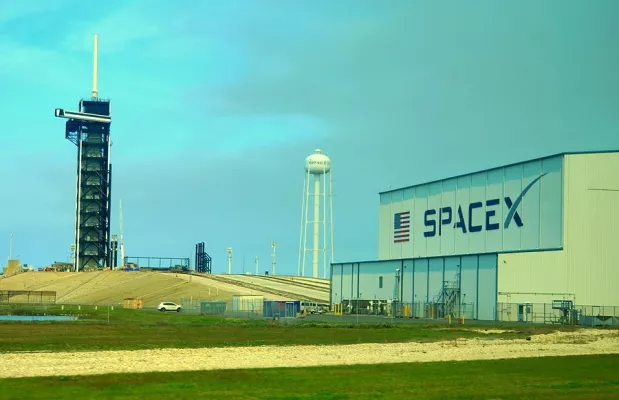
SpaceX targets Sept. 28 for Starship Flight 14, which aims to complete a full Earth orbit and deploy operational Starlink V3 satellites, but the company remains exposed to technical, regulatory and scheduling risks. Q2 2026 AI compute revenue rose 247.5% year over year to $2.56 billion and adjusted EBITDA reached $1.15 billion, reversing a $276 million loss, yet $18.4 billion of capex contributed to a $541 million net loss. Zacks rates SPCX Hold and advises against new purchases, citing elevated valuation and execution risk despite consensus expectations for EPS to improve from a $0.15 loss in 2026 to $1.63 profit in 2027.
Analysis
The key investable conclusion is that this is not a clean SpaceX catalyst: SPCX is not a listed operating equity, and several financial/AI-compute assertions in the source require independent verification before they can be used in an underwriting model. A single orbital test has asymmetric headline value but limited near-term valuation relevance unless it establishes repeatable cadence, payload deployment reliability, and a regulatory path to materially higher launch frequency. The more immediate public-market read-through is modestly positive for satellite and launch-economics proxies, but a successful event could also reinforce competitive pressure on AST SpaceMobile (ASTS), Globalstar (GSAT), Iridium (IRDM), and legacy connectivity providers as capacity per dollar falls.
The non-obvious issue is capital allocation: lower launch cost is economically valuable only if it converts into incremental broadband ARPU or enterprise/government demand faster than satellite replenishment, ground infrastructure, and spectrum costs rise. That dynamic is potentially negative for incumbents with high-cost constellation refresh cycles, while beneficiaries include direct-to-device ecosystem partners and cloud customers if space-based connectivity becomes a credible resilience layer. For GOOG and NVDA, the alleged compute relationship is not sufficiently material or verified to alter earnings estimates; treat it as narrative, not a catalyst. Over 6-18 months, evidence of persistent launch cadence would matter more for ASTS/GSAT competitive multiples than the binary outcome of one test.
Consensus may overvalue a successful mission as proof of commercial readiness. The falsification test for the bearish-to-incumbent view is not launch success, but disclosed recurring deployment cadence, demonstrated satellite availability, and measurable subscriber or wholesale revenue acceleration over the following two quarters. Conversely, another delay or anomaly is likely a short-lived sentiment event unless it forces a redesign, regulatory stand-down, or materially reduces expected deployment capacity.
AllMind Terminal
AI-powered research, real-time alerts, and portfolio analytics for institutional investors.
Request TrialMarket Sentiment
Overall Sentiment
mixed
Sentiment Score
-0.12
Ticker Sentiment
Key Decisions for Investors
- No position in purported SPCX shares: confirm instrument identity, listing status, ownership structure, and audited financials before assigning any catalyst value. Treat unverified financial metrics as a hard stop rather than an entry signal.
- Maintain ASTS and GSAT as a 1-3 month relative-value watchlist around the launch window; do not chase a post-event selloff without evidence that lower-cost competing capacity will arrive on a repeatable schedule. A disclosed multi-launch cadence or wholesale Starlink expansion would justify reassessing downside to their terminal-value assumptions.
- For a liquid competitive hedge, consider a small long IRDM / short ASTS pair only after a successful mission produces a sharp ASTS rally: IRDM has established service revenue while ASTS remains more duration-sensitive to deployment and financing assumptions. Target 10-15% relative return over 3-6 months; exit if ASTS reports materially improved funding terms, commercial contracts, or launch commitments.
- Keep GOOG and NVDA exposure tied to their own cloud/GPU order books rather than this narrative. Revisit only if either company discloses contract backlog, capacity commitments, or capex related to the alleged counterparty sufficient to affect forward revenue or supply allocation.
- Set an alert for a regulatory stand-down, payload-deployment failure, or a delay beyond one launch cycle; those outcomes would be more actionable for satellite-sector sentiment than a nominal launch-date change and could create a tactical short opportunity in high-beta space names.
More News
- AMD joins the $1 trillion club as chip rally surges - our AI Strategy saw it early
- 20 countries propose global oversight body to manage AI dangers
- Here's who we know is going to the Trump-Xi dinner so far
- Perpetual underdog AMD nips at Nvidia's heels as it joins the $1T club
- Intel surges 12% as CPU stocks rally. Here's what's driving the move
- Nvidia's Forecast Assumes No Data Center Chip Sales to China. The Sept. 24 U.S.-China Summit Could Change That.
From AllMind Research
- Anthropic IPO Preview: Valuation, Timing, and What to Watch
- Shein After the IPO: Venue, Valuation, and What Must Be Proved
- What AI Research Tools Should a Small Hedge Fund Buy First?
- Weekly Update: New Reporting Features, UI Improvements, and Chat Optimizations
- Selecting an AI Research Platform for Institutional Investors