
oneworld relanza su herramienta de ventas para reuniones y eventos
Source: PR Newswire
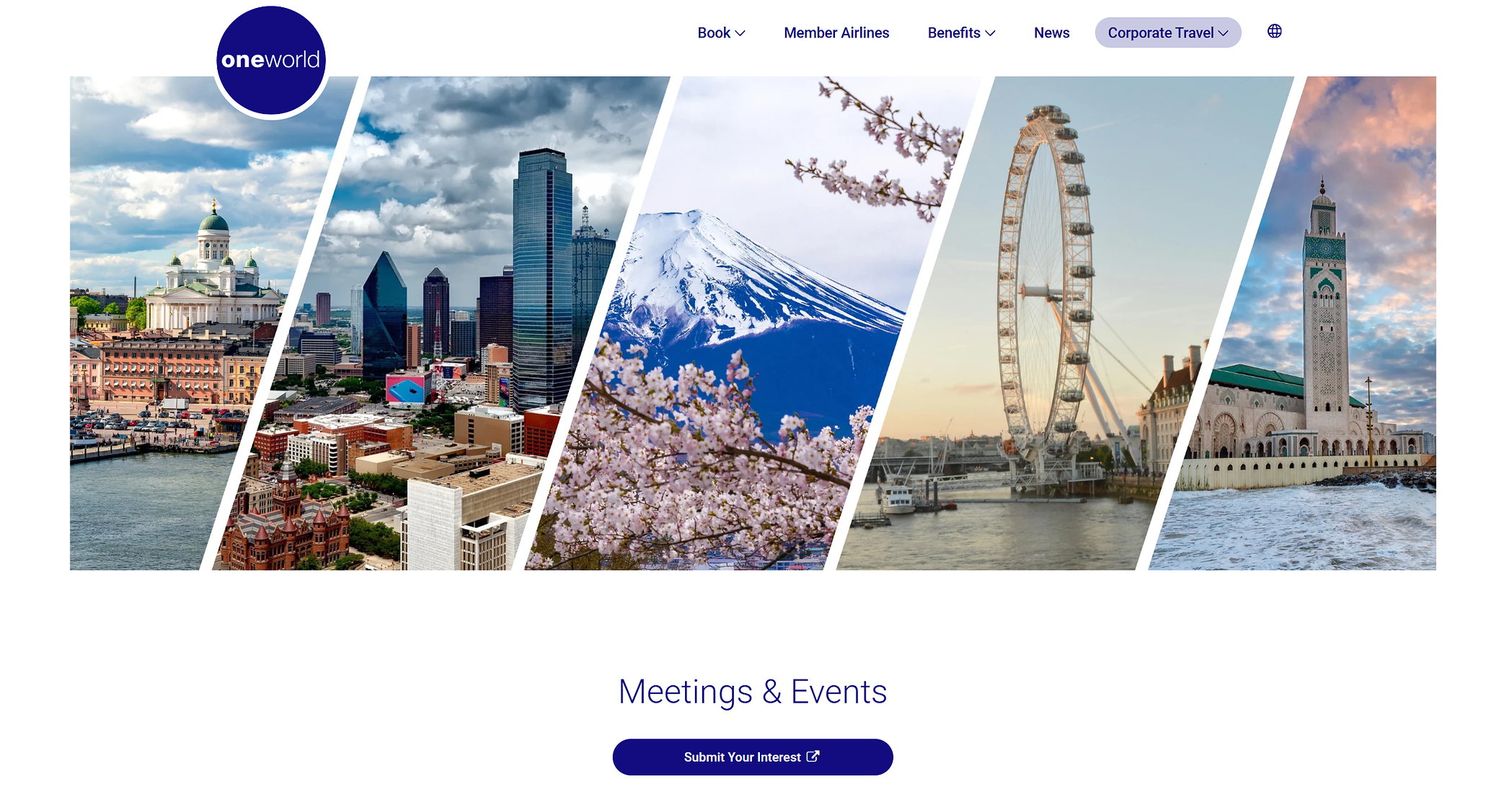
oneworld relaunched Meetings & Events, offering event organizers preferred fares across its 15 member airlines and a network serving nearly 1,000 destinations; the product is designed for groups of at least 50 self-booking delegates. The launch coincides with an oneworld–Globetrender report outlining seven trends expected to shape global meetings and events from 2027 to 2030, including the rising value of in-person connections and increased focus on attendance ROI. The announcement is a commercial product update, with no financial results or market reaction reported.
Analysis
This is a distribution and loyalty initiative, not yet evidence of material demand growth. The commercial upside for American Airlines (AAL), Alaska Air Group (ALK) and Finnair (FIA1S) depends on whether the tool captures genuinely incremental group travel—particularly on weaker travel days or routes—or merely discounts bookings that would have occurred anyway. Preferential fares can support load factors, but may dilute revenue if they displace higher-yield bookings; the article provides no booking, revenue or fare data to size either effect.
The 50-delegate minimum and self-booking model make the product most relevant to larger, geographically dispersed events, while limiting its reach among smaller meetings. If adoption grows, hotels and event destinations could gain from longer stays and ancillary spend; competing airline alliances may respond with comparable group-booking and loyalty offers. The report’s 2027–2030 themes are directional, not independent proof that in-person event travel will accelerate: it was produced with the alliance and supplies no quantified demand forecast.
Near term, expect little fundamental impact absent evidence of uptake. Over 1–3 months, watch for organizer adoption, booked delegate volumes, discount depth and whether bookings skew toward off-peak capacity. Over 6–18 months, the key question is whether alliance-wide loyalty and itinerary access create repeat corporate travel or simply redistribute share among carriers. A thesis of incremental airline benefit weakens if management commentary or disclosed metrics show low use, material fare concessions, or no improvement in relevant load factors or unit revenue.
AllMind Terminal
AI-powered research, real-time alerts, and portfolio analytics for institutional investors.
Request TrialMarket Sentiment
Overall Sentiment
mildly positive
Sentiment Score
0.20
Key Decisions for Investors
- No standalone trade on the launch: the release contains no adoption, pricing or financial-impact data, and the supplied per-company sentiment is neutral.
- Watch AAL, ALK and FIA1S for evidence of incremental event bookings versus fare dilution. Treat improving load factors without deterioration in unit revenue as a positive confirmation; rising discounting with flat traffic would falsify the bullish read.
- Potential 1–3 month catalyst: concrete organizer uptake or booking-volume disclosures. Until then, avoid extrapolating the sponsored 2027–2030 trend report into airline earnings estimates.
- Monitor rival-alliance responses and corporate travel budgets. A broad shift to in-person events could help airline and hotel demand, but substitution between alliances would make this primarily a share-and-yield question rather than a sector-wide volume signal.
More News
- Airport attacks put aviation in crosshairs of geopolitical conflicts
- United Airlines is making it harder to reach its top frequent flyer status in 2027
- European stocks fall as U.S. bank earnings roll in
- Stock Movers: LVMH, Givaudan, Finnair (Podcast)
- South Korean carmaker Hyundai plans 'strategic' investment of $15.5 billion in India by 2032
- Namibia battles cattle disease outbreak as EU suspends several meat imports