
4 Heavy Construction Stocks Riding Higher Infrastructure Investment
Source: zacks.com
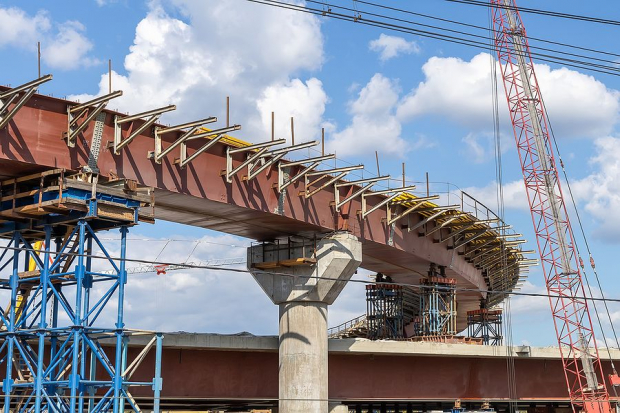
The heavy-construction industry is positioned for a multiyear 2026 growth cycle driven by AI data centers, fiber deployment, grid upgrades and public transportation, water and energy spending; industry 2027 and 2028 EPS estimates have risen to $9.55 from $8.92 and to $12.02 from $11.25, respectively. Zacks ranks the group No. 50, in the top 20% of more than 250 industries, although the group gained only 1.8% over the past year versus a 15.3% gain for the S&P 500. Tutor Perini, EMCOR, Dycom and Granite are highlighted as beneficiaries, but skilled-labor scarcity, wage and material inflation, project complexity, permitting delays and funding timing remain margin risks.
Analysis
The investable distinction is labor ownership and contract structure, not broad infrastructure exposure. EME's self-perform electrical/mechanical capability and mission-critical project mix should translate incremental data-center power spend into margin more reliably than civil contractors exposed to fixed-price scope changes. The same labor scarcity that constrains industry volume raises barriers to entry and favors scaled specialty contractors; it also shifts pricing power upstream to electrical equipment vendors such as ETN, HUBB and PWR, which can monetize grid and interconnection bottlenecks with less project-execution risk.
Near term (next 1-3 months), estimate revisions and backlog conversion are the relevant catalysts, but the sector's valuation discount is not automatically attractive: public-project awards can be delayed while revenue recognition lags awards materially. DY is the higher-beta catch-up candidate because its relative underperformance leaves room for multiple recovery if broadband awards convert to field activity, but BEAD timing and customer concentration make it less clean than EME. TPC offers the largest upside if higher-margin backlog converts without claims or cost overruns, yet its project concentration creates asymmetric downside from a single execution miss.
Consensus appears to treat AI construction as a uniform demand pulse. The more durable 6-18 month opportunity is power availability: data-center developers cannot monetize completed shells without substations, transmission and interconnects, favoring PWR and ETN alongside EME over pure fiber or site-work exposure. This thesis is falsified by sequential backlog-margin deterioration, materially lower awarded-work conversion, or wage escalation outpacing contract escalation clauses for two quarters.
AllMind Terminal
AI-powered research, real-time alerts, and portfolio analytics for institutional investors.
Request TrialMarket Sentiment
Overall Sentiment
moderately positive
Sentiment Score
0.48
Ticker Sentiment
Key Decisions for Investors
- Overweight EME versus FLR on a 6-12 month pair basis: long EME / short FLR, sized for a 10-15% gross move. EME offers superior exposure to electrical/mechanical intensity and recurring service work; exit if EME's backlog margin or operating-margin guidance falls by more than 100bp.
- Accumulate DY only after evidence that funded broadband awards are converting into revenue—specifically, accelerating backlog or next-twelve-month revenue guidance—over the next two earnings reports. Target 20-30% upside on estimate and multiple recovery; cut on customer-driven revenue deferral or a material decline in book-to-bill.
- Maintain a smaller, catalyst-driven long TPC through backlog-conversion updates over 3-6 months, but cap position size given mega-project concentration. Seek roughly 2:1 upside/downside; reduce if cash conversion trails earnings or any major-project cost-to-complete revision emerges.
- Add PWR or ETN as a lower-execution-risk complement to contractor exposure over 6-18 months. Grid interconnection constraints are likely to capture a greater share of AI-infrastructure economics than general civil construction; reassess if utility capex plans or transmission award activity weaken.
- Avoid treating GVA as a direct AI proxy. It is appropriate only as a public-infrastructure/materials exposure; require evidence of pricing holding above labor, aggregates and subcontractor inflation before adding over the next 1-2 quarters.
More News
- US to send third aircraft carrier towards Iran: US official to Al Jazeera
- Dollar at 17-month high as global bond rout hits euro
- Latin America most exposed to any US ban on diesel exports, Goldman Sachs says
- Trump launches midterms campaign blitz amid record low approval ratings
- Japanese yen firms on strong inflation, dollar muted before payrolls test
- Nvidia Faces Questions Over China AI Chip Smuggling Cases
From AllMind Research
- Anthropic IPO Preview: Valuation, Timing, and What to Watch
- Shein After the IPO: Venue, Valuation, and What Must Be Proved
- What AI Research Tools Should a Small Hedge Fund Buy First?
- AI Software for Buy-Side Teams: Build the Research Stack
- Augmented Intelligence: AllMind, Elevate Human Judgement With an Accessible, Powerful, Data-Driven Financial AI Toolkit