
New Study Finds Widespread Antibiotic Overuse for Sinus Infections Across the U.S.
Source: PR Newswire
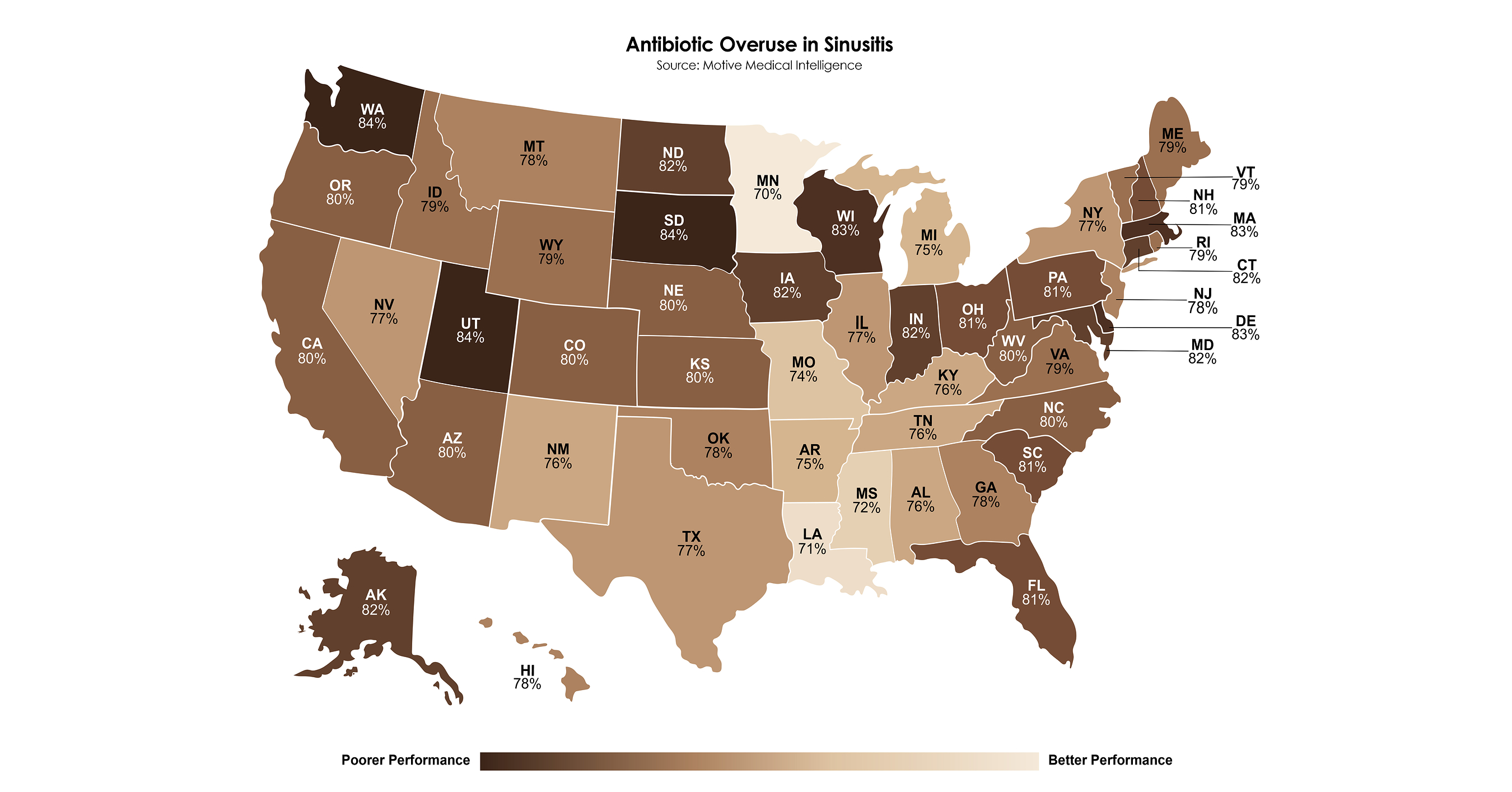
A Motive Medical Intelligence analysis of claims from January 2023 through December 2024 found that 77.8% of 22,178 primary care clinicians prescribed antibiotics for acute sinusitis, despite guidelines recommending watchful waiting for most cases. Inappropriate prescribing accounts for nearly 20% of outpatient antibiotic prescriptions and costs the U.S. healthcare system more than $11 billion annually, while exposing patients to avoidable risks and contributing to antibiotic resistance. The report identifies variation by state and argues clinician-level measurement could help address the gap.
Analysis
This is a weak direct earnings signal and a potentially useful indicator of where value-based-care programs can target avoidable utilization. The economic upside is more likely to accrue to health systems and risk-bearing providers that can reduce downstream costs than to insurers automatically: savings depend on who bears the cost, whether antibiotic avoidance changes total episode spending, and whether follow-up is delivered without shifting patients into repeat visits. Generic antibiotic manufacturers could face a marginal volume headwind if prescribing changes, but the article does not establish product-level exposure; the effect is too diffuse to support a sector short.
The more investable second-order effect is demand for clinician-level quality measurement and workflow interventions. That remains conditional: a claims-based scorecard is not proof that a health system can change prescribing without worsening patient experience or increasing return visits. The source is also a vendor press release, so its estimates and stated system-wide cost should be independently validated before treating them as a savings pool.
Near term (days), little basis for a price reaction. Over 1–3 months, watch for payer or health-system contracts tying reimbursement to appropriate prescribing and for adoption evidence from analytics vendors. Over 6–18 months, antibiotic stewardship could become one component of broader waste-reduction programs, but entrenched clinician and patient incentives make rapid change unlikely. The thesis weakens if interventions fail to reduce prescribing or increase repeat visits, complications, or patient dissatisfaction. No mapped public company has a sufficiently direct exposure for a high-conviction trade.
AllMind Terminal
AI-powered research, real-time alerts, and portfolio analytics for institutional investors.
Request TrialMarket Sentiment
Overall Sentiment
mildly negative
Sentiment Score
-0.25
Key Decisions for Investors
- No immediate trade: the article identifies a persistent practice gap but does not establish a near-term earnings catalyst for a listed company.
- Watch healthcare analytics and value-based-care vendors for independently verified contract wins and measured reductions in total episode cost—not just lower antibiotic utilization—before underwriting revenue upside.
- Do not short antibiotic makers on this evidence alone; any prescribing shift is likely diffuse, and the article provides no product-level sales or volume sensitivity.
- Reassess if large payers or health systems disclose scaled stewardship programs with outcome data; falsify the opportunity if lower prescribing is offset by more repeat visits, complications, or patient dissatisfaction.
More News
- Artiva halts AlloNK development, cuts 94% of workforce
- Universal Health Services falls 3% on legal settlement concerns
- Midterm elections: How affordability and the economy could impact voters
- Why is Artiva Biotherapeutics stock collapsing today?
- adar1 capital management buys $53,691 of NextCure stock
- Zura Bio shares jump on Wedbush buy call ahead of trial data