
CSI Introduces Bidirectional Megawatt Charging System (MCS) Capability Option for Its Mobile Battery Energy Storage Systems
Source: PR Newswire
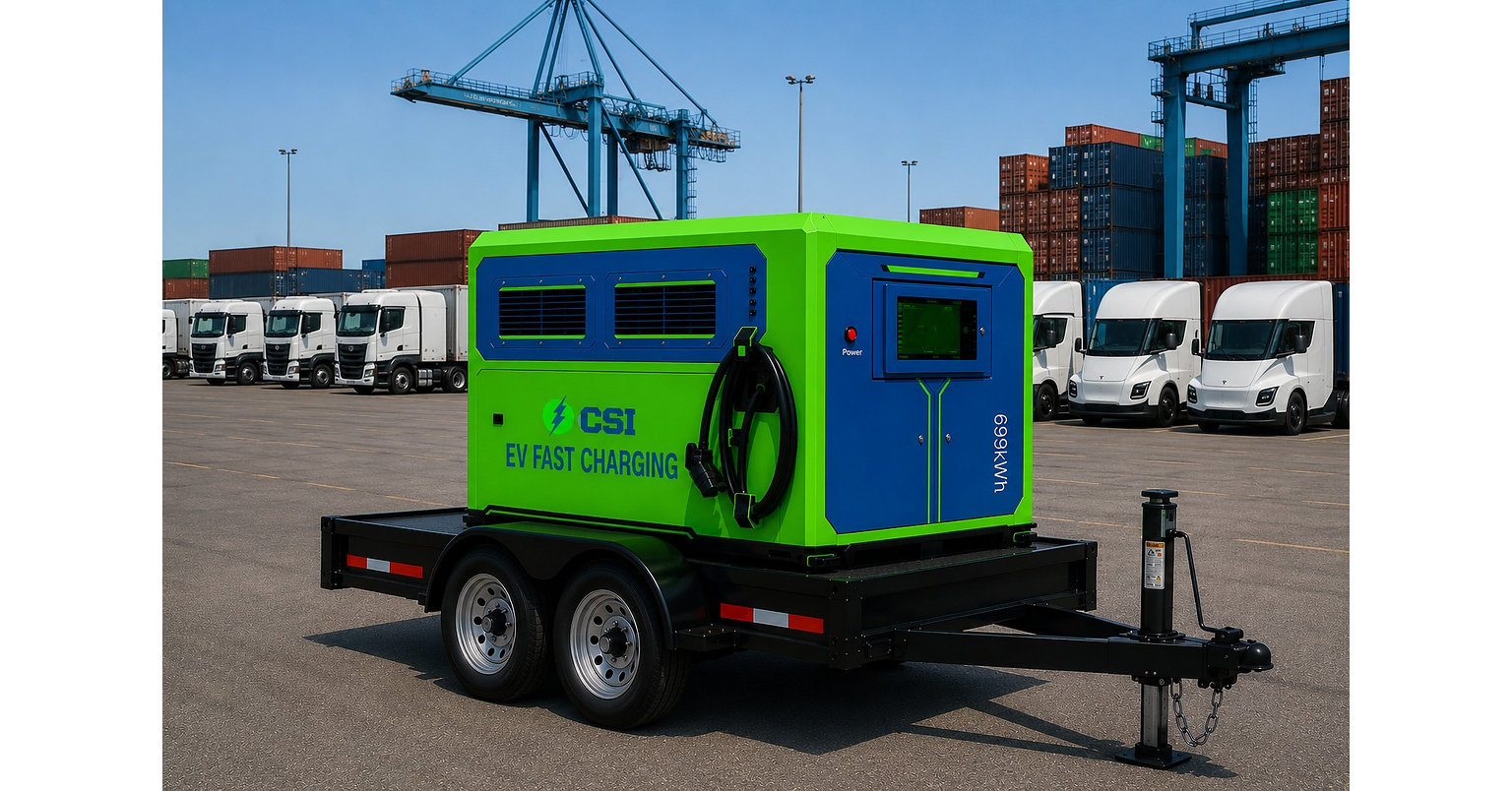
Coulomb Solutions (CSI) announced a bidirectional Megawatt Charging System (MCS) option for its mobile BESS, enabling up to 1MW of charging power both for rapid recharging and for bidirectional vehicle charging. The 699 kWh unit supports up to ~700 kW MCS input/output and the 2.3 MWh unit supports up to ~1 MW input/output, with added 480 VAC bidirectional capability for grid-constrained sites. CSI also cited IEC TS 63379 (Feb 2026) and SAE J3271 as standardization milestones for interoperable heavy-duty megawatt charging, and noted eligibility for up to $300,000 via 2026 CORE Voucher Funding rebates.
Analysis
This is more of an ecosystem-enablement event than a direct earnings catalyst. The economic value is in compressing deployment friction for heavy-duty fleets: fewer utility interconnect delays, less fixed infrastructure capex, faster pilot-to-scale conversion, and a temporary bridge that can be redeployed as utilization changes. That should help TSLA at the margin via Semi adoption confidence, but the real beneficiaries are fleet operators that can monetize trucks sooner rather than charger vendors that need permanent installs.
Second-order, the announcement is mildly negative for pure-play depot charging and utility-upgrade intensity because mobile BESS can substitute for some fixed buildout in the next 6-18 months. It also shifts bargaining power toward whoever controls the energy logistics layer, not necessarily the vehicle OEM; if MCS becomes a common interface, hardware differentiation compresses and value migrates to fleet software, uptime guarantees, and financing. CVGI looks too far removed to matter unless it has disclosed heavy-duty EV content tied to MCS-adjacent platforms.
The contrarian miss is timing: standards progress does not equal procurement scale. The gating items remain fleet economics, duty-cycle utilization, and the availability of enough MCS-equipped trucks to justify MWh-scale mobile storage; without those, this reads like a useful bridge product rather than a demand inflection. Falsifiers are simple: no Semi order acceleration, no visible MCS fleet deployments, or evidence that fleets still prefer fixed chargers once utility timelines normalize.
AllMind Terminal
AI-powered research, real-time alerts, and portfolio analytics for institutional investors.
Request TrialMarket Sentiment
Overall Sentiment
mildly positive
Sentiment Score
0.25
Ticker Sentiment
Key Decisions for Investors
- TSLA: maintain a small tactical long bias only as an optionality trade on Semi ecosystem adoption; prefer 3-6 month call spreads rather than outright delta, because near-term earnings impact is negligible and the catalyst is adoption data, not revenue today.
- Short or underweight pure-play charging infrastructure proxies on any post-announcement strength if they appear to be pricing in accelerated fixed-depot buildout; the more realistic near-term outcome is deferral/substitution into mobile BESS, not a surge in permanent installs.
- No direct trade in CVGI on this headline alone; put it on watch for disclosed EV content or heavy-duty electrification exposure, since the read-through is too indirect to justify risk today.
- Set a 1-3 quarter alert on TSLA for concrete Semi fleet orders, MCS-compatible deployment disclosures, or management commentary on reduced infrastructure bottlenecks; if none appear, fade the enthusiasm and close any optionality position.
More News
- Tesla's Full Self-Driving is now called Assisted Driving in Europe
- Tesla drops 'Full Self-Driving' brand name in Europe after regulator pushback
- ‘I drive a Tesla’: After Elon Musk said he’d lose his job, Delta CEO Ed Bastian says there’s ‘no tit for tat’ as airline unveils earnings miss
- Tesla’s ‘Full Self-Driving’ Becomes ‘Assisted Driving’ in Europe
- Tesla renames ‘Full Self-Driving’ to ‘Tesla Assisted Driving’ in Europe
- Elon Musk intensifies attack on Ambani over Starlink India launch delay