
IOT achieves a world first with personalized progressive lenses 3D-printed using light
Source: PR Newswire
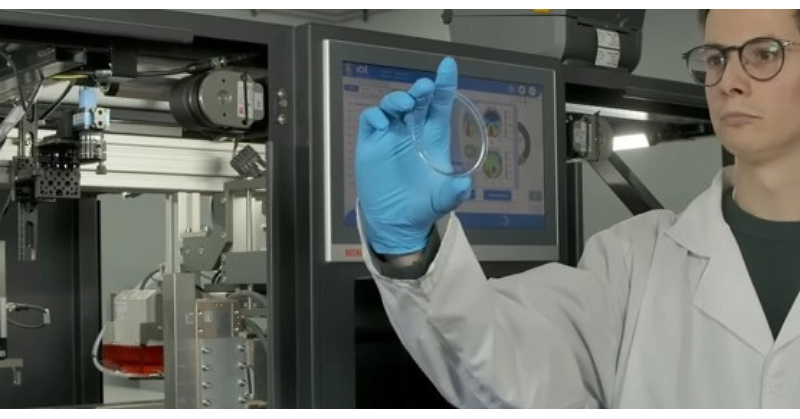
IOT introduced Light-Form, a process that forms personalized progressive lenses in seconds using a single flash of light, without conventional generating or polishing. The company says manufacturing water use is eliminated, energy consumption falls 90%, and waste declines 76% versus conventional methods; its first commercial application is already reaching consumers. Smart-glasses and in-store production are described as future development opportunities, not current applications.
Analysis
The investable question is not the seconds-long forming step but whether total cost per saleable lens beats conventional production after curing, mapping, quality control, labor, and equipment utilization. If validated, decentralized capacity could reduce finished-lens inventory and turnaround time while shifting value toward prescription data, workflow software, resin supply, and local lab/retail relationships. Conversely, it could pressure suppliers of conventional surfacing equipment and reduce the advantage of centralized labs—but only if print yield, optical consistency, and throughput scale beyond the initial application.
The release is a company claim, not evidence of industry economics: it provides no production capacity, yield, unit-cost comparison, installed-base plans, or customer adoption data. The stated resource savings are manufacturing-process comparisons and do not establish consolidated savings or commercial margins. Large lens groups such as EssilorLuxottica, HOYA, and ZEISS could be adopters, competitors, or both; their existing distribution and quality systems may matter more than the printer itself. Smart-glass and AR applications are longer-dated options, not a basis for near-term earnings estimates, and would require validation on waveguide compatibility and optical performance.
Near term (days), headline-driven enthusiasm is likely to outrun disclosed financial impact. Over 1–3 months, watch for named lab deployments, repeat orders, throughput/yield data, and evidence of lower total delivered cost. Over 6–18 months, successful localization could alter lab capex and inventory economics; failure to meet quality or scale requirements leaves conventional production largely intact. No direct equity trade is justified from this release alone: no mapped issuer or quantified exposure is provided.
AllMind Terminal
AI-powered research, real-time alerts, and portfolio analytics for institutional investors.
Request TrialMarket Sentiment
Overall Sentiment
moderately positive
Sentiment Score
0.45
Key Decisions for Investors
- Do not trade the technology announcement as an earnings inflection for lens incumbents. Treat any immediate sector move as vulnerable to reversal until commercial scale and economics are independently evidenced.
- Set a watch item on conventional lens-surfacing equipment exposure versus lens groups with the ability to adopt or distribute the process. Reassess only after disclosures on customer deployments, equipment orders, saleable-lens yield, throughput, and total cost per lens.
- Potential positive catalyst: repeat commercial orders or verified lab-level cost and turnaround improvements within the next 1–3 months. Falsification: weak repeat demand, quality/yield problems, or no credible production economics; these would limit the technology to a niche workflow.
- Keep smart-glass/AR applications out of near-term valuation assumptions. Upgrade that option only on demonstrated waveguide/substrate integration and customer qualification, rather than development-roadmap statements.
More News
- Stocks slump, bonds leap as AI giants’ spending spooks investors
- DoorDash offers $17 billion for Instacart: ‘the largest companies are only eating more and more of the pie’
- Alphabet Erases $500 Billion as ChatGPT, Google AI Cut into Search
- Alphabet just had its worst day as a public company. BofA now values Google search at a lower multiple than fossil fuel stocks
- PC chip plunge wipes out a quarter of Intel’s value
- Intel plunges on a major guidance miss. What went wrong — and how to proceed