
Bulk Material Flow Expert Zach Janosky Explains Why Material Stops Flowing in Hoppers and Silos in HelloNation
Source: PR Newswire
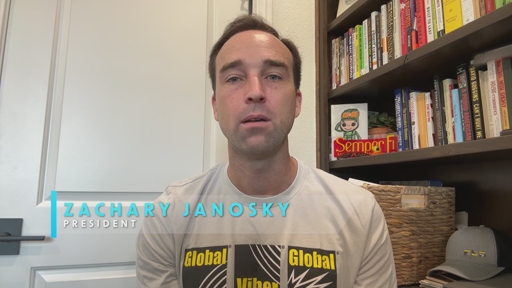
The HelloNation article, citing Global Manufacturing's Zach Janosky, explains that moisture, compaction, friction and hopper design can disrupt bulk-material discharge. It distinguishes bridging, arching, ratholing and clinging, and says flow aids such as vibrators, aerators and air blasters should be selected only after diagnosing the specific material and vessel conditions. The article reports no company financial results or quantified market impact.
Analysis
This is educational, advertorial-style content—not evidence of a new order, product breakthrough, or change in industry demand. It offers no investable near-term catalyst, and the named expert’s affiliation does not establish a public-company exposure.
The economic mechanism is operational: persistent discharge problems can turn modest handling inefficiency into unplanned downtime, cleanup, lost usable inventory, and delayed shipments. If recurring across a facility, that could support targeted spending on vessel redesign or flow aids; however, the article provides no incidence, spend, or payback data to establish a revenue opportunity for equipment vendors. Conversely, bulk-material operators may face costs that are easy to miss in reported commodity or transport economics. Moisture and compaction are condition-specific, so a generic equipment fix may fail or shift disruption downstream.
Horizon: no clear days-to-weeks catalyst. Over 1–3 months, monitor earnings commentary from bulk handlers and process-industry operators for downtime, throughput, maintenance-capex, or inventory-loss signals. Over 6–18 months, repeated reliability issues could favor engineered storage/discharge upgrades, but this article alone does not support a sector-level earnings revision. The contrarian point is that “flow aid” demand should not be assumed to rise with flow problems: correct diagnosis may instead favor vessel redesign or operating changes, limiting equipment sales.
No directional trade is justified without verified company exposure and customer evidence. Reassess if public operators quantify recurring flow-related losses or vendors disclose material orders; falsify an emerging capex thesis if reliability improves without incremental spending or guidance remains unchanged.
AllMind Terminal
AI-powered research, real-time alerts, and portfolio analytics for institutional investors.
Request TrialMarket Sentiment
Overall Sentiment
neutral
Sentiment Score
0.05
Key Decisions for Investors
- No trade on this article alone; treat it as general operating guidance rather than a demand or earnings signal.
- Watch earnings and filings from bulk-material-intensive operators for quantified downtime, throughput loss, inventory write-offs, or maintenance-capex changes before taking exposure.
- If vendors later cite rising orders, verify whether they are recurring, attributable to flow-control projects, and material to revenue; distinguish equipment sales from engineering or retrofit work.
- Revisit the thesis if operators report persistent discharge bottlenecks and raise reliability capex; downgrade it if operating metrics improve without new spending or guidance remains unchanged.
More News
- SK Hynix shares slide after chipmaker scraps Solidigm IPO plans
- Apple’s iPhone Duo Hits Stores in Face of Short Supply and High Demand
- OpenAI nears up to $30 billion funding round at $1.25 trillion valuation led by UAE investors
- Moderna shares plunge after leak of partial cancer vaccine data
- SpaceX records $561 million investment gain from stake in Elon Musk's Boring Co.
- Iran says seven ships hit in Hormuz Strait, warns US of wider response