
Taiwan Coast Guard Plans Visit to Philippines as China Pressure Grows
Source: Bloomberg
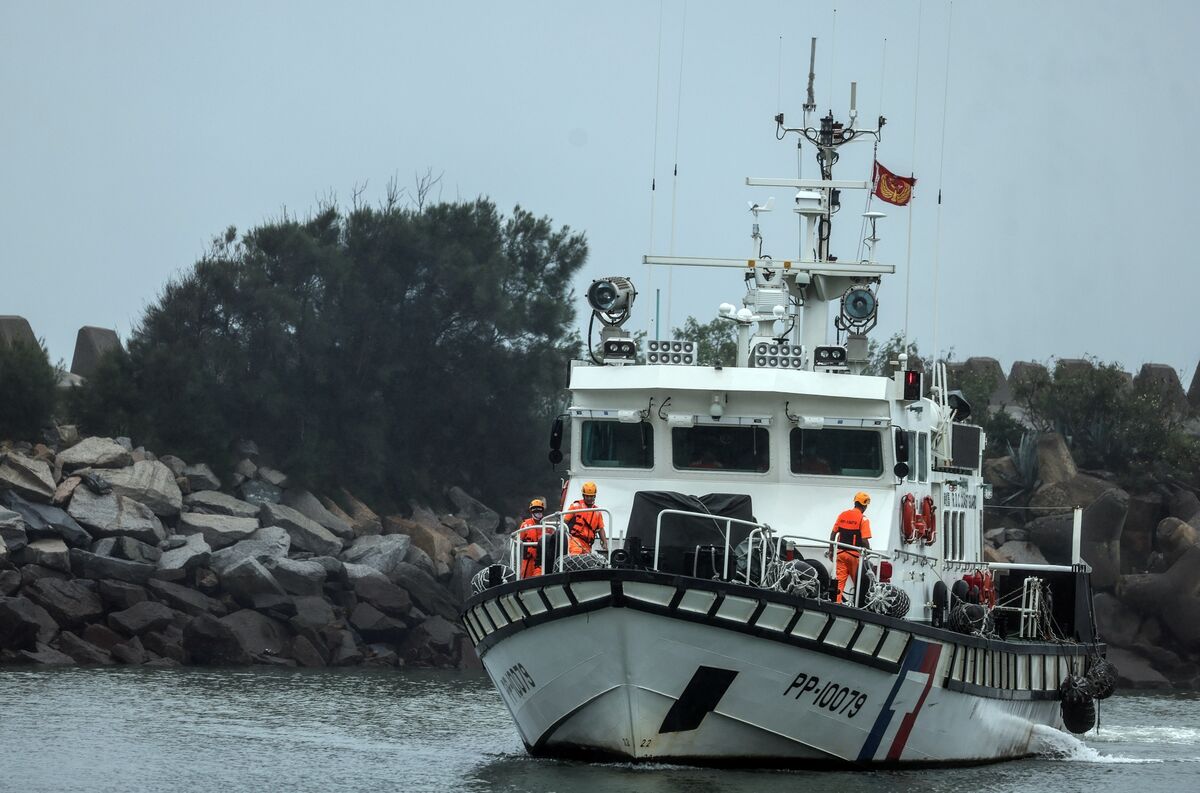
Taiwan plans its first publicly reported coast guard visit to the Philippines since 1974, with funding included in its 2027 budget. The move would deepen Taiwan-Philippines security ties as China increases naval activity in the region, though the number of vessels and final deployment details remain unclear. It signals elevated regional geopolitical tension and could draw a response from Beijing.
Analysis
The market relevance is not the planned port call itself but the normalization of Taiwan-Philippines operational coordination around the Bashi Channel, a critical passage between the South China Sea and western Pacific. Even limited coast-guard cooperation increases the probability that future maritime incidents become alliance-management events rather than bilateral disputes, raising the geopolitical risk premium embedded in Taiwan semiconductor supply chains. The immediate read-through is modest; the more material 6-18 month implication is accelerated spending on maritime surveillance, anti-ship systems, resilient communications and dispersed logistics by Manila, Taipei and treaty partners.
Likely beneficiaries are US defense primes with Indo-Pacific exposure—LMT, RTX, NOC and GD—plus maritime sensor and communications suppliers such as HII and LHX. The less appreciated second-order beneficiary is Japanese defense-industrial exposure through ITA/DFEN proxies and Japanese contractors, as a more contested Luzon Strait raises demand for interoperability and munitions stockpiles rather than only large naval platforms. Semiconductor names should not be reflexively short: TSM’s geopolitical discount is already structural, but a sustained escalation that impairs shipping or air routes would widen customer diversification efforts, favoring INTEL and potentially Samsung over a multi-year horizon.
Consensus may overprice a near-term Taiwan-strait crisis from symbolic security engagements. Coast-guard diplomacy provides Beijing room for calibrated gray-zone responses that stop short of actions triggering treaty commitments; absent a blockade-related shipping disruption or visible US force posture change, broad risk assets are unlikely to sustain a move. The key 1-3 month catalyst is whether China responds with exercises near the Bashi Channel, economic coercion against Manila, or sustained incursions that force Philippine-US consultation.
Falsifiers for a defense-over-semiconductor-risk stance include de-escalatory bilateral maritime arrangements, no increase in regional defense procurement guidance, or evidence that Taiwan-linked shipping insurance and freight rates remain unchanged after any Chinese response. Monitor Philippine defense budget revisions, US foreign military financing announcements, AIS shipping-route deviations, and Taiwan CDS; these will validate whether rhetoric is converting into investable risk repricing.
AllMind Terminal
AI-powered research, real-time alerts, and portfolio analytics for institutional investors.
Request TrialMarket Sentiment
Overall Sentiment
mildly negative
Sentiment Score
-0.15
Key Decisions for Investors
- Maintain a 3-6 month tactical overweight in ITA versus SPY rather than chase a one-day defense move; add only if Chinese activity expands into the Bashi Channel or Manila announces incremental procurement. Thesis is modest multiple support plus order-book optionality; exit if regional procurement guidance does not improve by early 2027 budget cycles.
- Pair trade for a confirmed escalation: long LHX or RTX / short SOXX for 1-3 months, sized small. This expresses higher surveillance, communications and missile-defense demand against increased Taiwan supply-chain risk; invalidate if Taiwan CDS and regional freight/insurance costs fail to widen.
- Do not initiate a directional TSM short on this development alone. Set an alert for sustained shipping diversions, airspace restrictions, or a material rise in Taiwan CDS; those conditions would justify reassessing TSM relative to INTC as customer diversification risk becomes earnings-relevant.
- For higher-beta geopolitical hedging, consider a small 6-month ITA call spread only after independently verified Chinese military exercises or US-Philippine force-posture announcements. Defined-risk options are preferable to outright defense chasing because the base case remains gray-zone signaling without a durable market dislocation.
More News
- Bank of Japan raises interest rates to 31-year high, flags concerns over inflation
- Italy to deploy warships to protect shipping through Bab al-Mandeb
- UN mission finds evidence of U.S. war crimes in Iran; Washington rejects report
- Oil prices fall as Saudi supply hopes outweigh fresh Houthi strikes
- Why is the Japanese yen sliding today?
- Oil prices fall for 3rd day as supply concerns ease, diplomacy in focus