
Georgia-Pacific Foodservice Solutions Helps Convenience Retailers Win More Meals with Foodservice Expertise and Packaging Innovation at NACS Show 2026
Source: PR Newswire
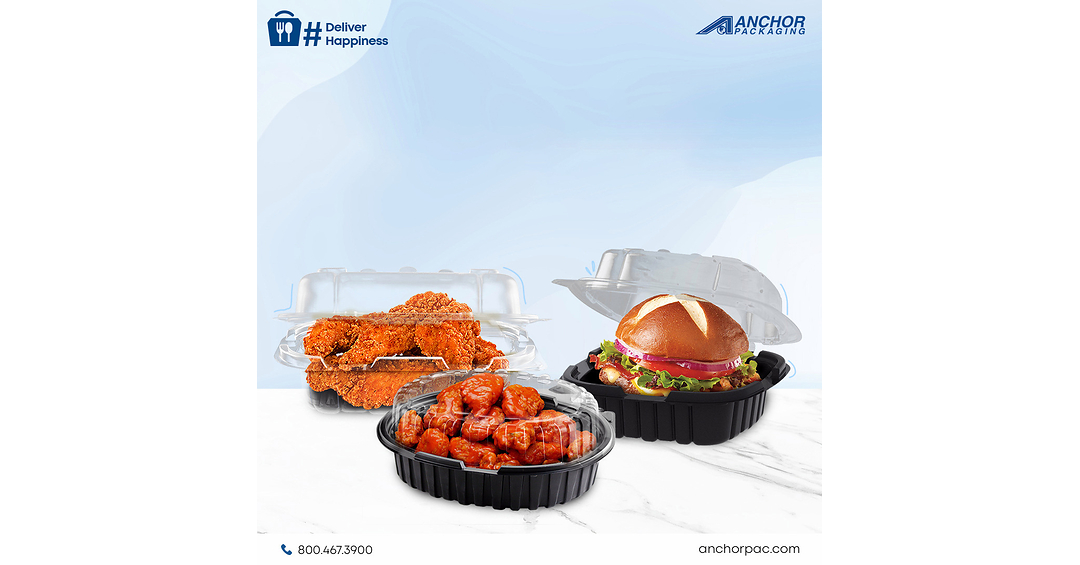
Georgia-Pacific Foodservice Solutions will showcase Anchor Packaging products at the Oct. 7–9, 2026 NACS Show, targeting a convenience-store foodservice channel present in more than 90% of U.S. convenience stores. Its Invertibles container is designed to cut storage requirements by up to 50% and was named Convenience Store News’ 2026 Best New Product for Foodservice Packaging. The product claims and event announcement are promotional; the article reports no sales or financial results.
Analysis
This is a product-marketing signal, not evidence of material earnings impact: the article provides no customer wins, unit volumes, pricing, or rollout commitments, and Georgia-Pacific is not a publicly traded vehicle. The economic mechanism is plausible but conditional. Packaging that better preserves hot-food quality could support repeat purchases and reduce unsold-product waste; a one-piece design could ease storage and handling constraints. Those benefits accrue first to operators, and only become a packaging-supplier growth story if trials convert to recurring, scaled orders without price concessions that absorb the value.
For C-store operators such as Casey’s (CASY), Murphy USA (MUSA), and Alimentation Couche-Tard (ATD), the potential second-order benefit is better foodservice economics from existing store footprints—not a demonstrated near-term earnings catalyst. Packaging competitors may face substitution pressure if Anchor establishes proven performance, but the release does not establish differentiation versus alternatives. “Recycle-ready” polypropylene also does not guarantee collection or recycling in local markets, leaving a potential mismatch with retailer sustainability commitments.
Near term, expect little fundamental repricing from a trade-show demonstration. Over 1–3 months, watch for named retailer pilots, repeat orders, and measurable waste, labor, or food-quality outcomes. Over 6–18 months, scaled adoption could matter to foodservice mix and packaging share, but evidence is absent. The contrarian point: foodservice growth is not automatically a packaging-margin opportunity; retailers may capture most of the value through traffic and waste reduction, while suppliers compete on price. No trade is warranted on this release alone.
AllMind Terminal
AI-powered research, real-time alerts, and portfolio analytics for institutional investors.
Request TrialMarket Sentiment
Overall Sentiment
mildly positive
Sentiment Score
0.18
Key Decisions for Investors
- No immediate position: do not treat the NACS showcase or award as proof of commercial adoption or incremental earnings.
- Add CASY, MUSA, and ATD to a watchlist for disclosures on prepared-food sales, waste, repeat purchasing, and store-level foodservice economics; do not assume they are Anchor customers.
- Reassess only if Georgia-Pacific/Anchor identifies scaled customer deployments or repeat orders and provides evidence of price realization; verify customer names, volumes, and economics independently.
- Falsify the adoption thesis if pilots fail to expand, operators cite packaging cost as outweighing labor or waste savings, or sustainability requirements restrict polypropylene use in key markets.
More News
- Singapore's Temasek warns of the ‘biggest risk’ facing markets right now
- GIC Private Ltd, Medline 10% owner, sells over $721m in shares
- A 32% beat, a +6% jump: the IT solutions name our models picked in July
- Nvidia Is on the Verge of a $6 Trillion Market Value
- Controversial $110 billion mega-merger of Paramount and Warner Bros. finally closes
- What Marvell's rosy long-term guidance means for our AI chip stocks
From AllMind Research
- Anthropic IPO Preview: Valuation, Timing, and What to Watch
- Shein After the IPO: Venue, Valuation, and What Must Be Proved
- What AI Research Tools Should a Small Hedge Fund Buy First?
- Choosing an AI Copilot for Equity Research
- Weekly Update: Advanced Search Filters, Redesigned Ticker Dashboard, and Improved Search Experience