
UROVO Launches SP35 and U100 to Extend Self-Service Across the Shop Floor
Source: PR Newswire
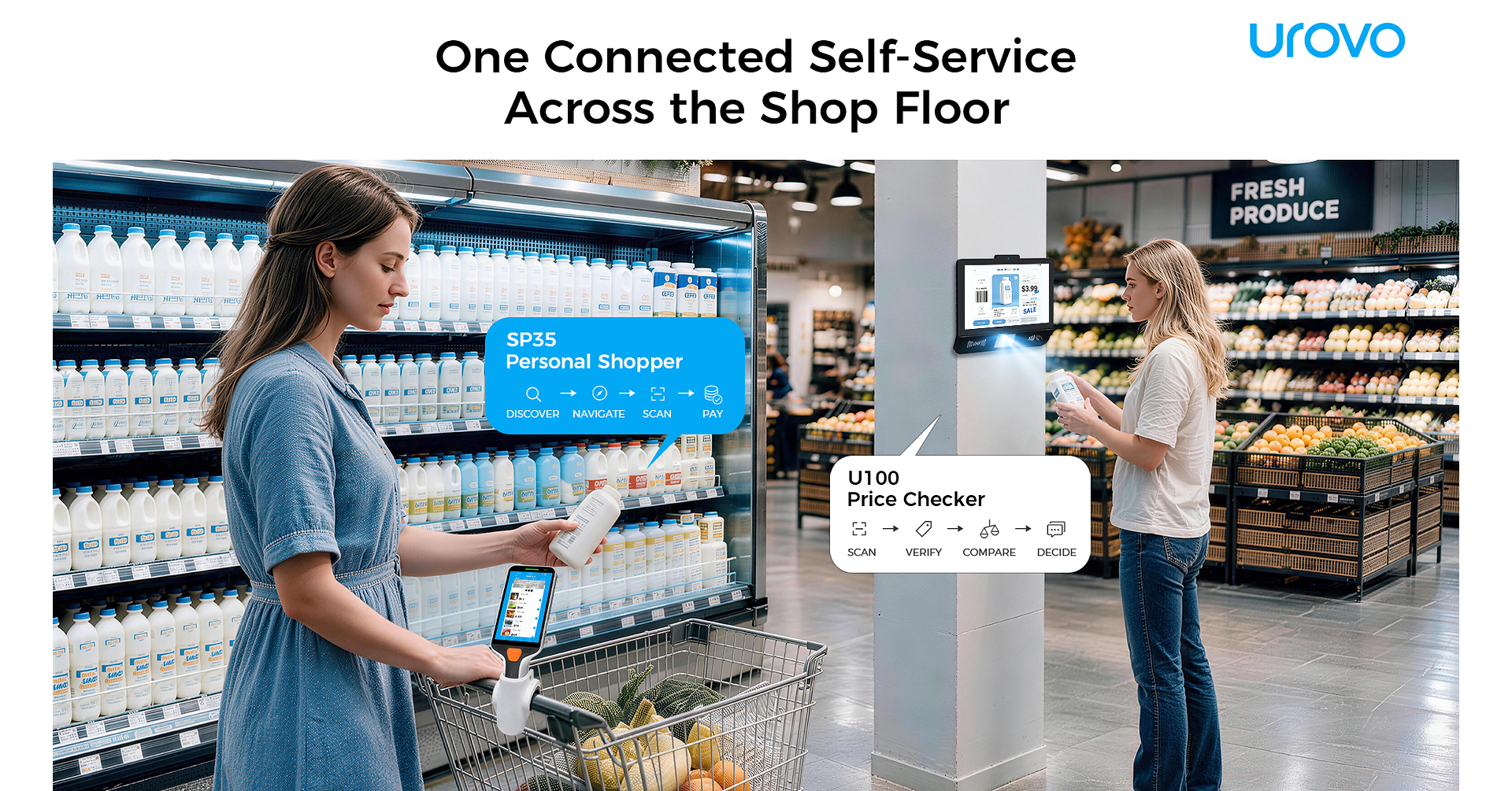
UROVO launched the SP35 Personal Shopper and U100 Price Checker to expand retailer self-service from mobile shop-floor tools to fixed shelf-side touchpoints. The SP35 includes optional UWB item location, barcode scanning, NFC and SoftPOS payments, while the U100 offers a 10.1-inch HD pricing display and optional UHF RFID multi-item lookup. The launch supports retailers seeking to reduce routine staff intervention, though the announcement provides no financial guidance, customer contracts, or expected revenue impact.
Analysis
This is not yet a public-markets catalyst: the financial impact depends on retailer pilots converting into fleet deployments, integration work, and recurring software/service attach rates—none of which are disclosed. The relevant mechanism is labor substitution rather than hardware demand alone: retailers will only fund deployments if shrink, checkout abandonment, and maintenance costs do not offset labor savings. The launch is therefore more useful as a read-through on the direction of store automation capex than as evidence of near-term revenue inflection.
Competitive pressure is most direct on Honeywell (HON), Zebra Technologies (ZBRA), Toshiba TEC, and NCR Voyix (VYX), although the product categories are fragmented and procurement cycles are typically 6-18 months. UROVO's lower-cost Asian manufacturing base could pressure commodity handheld and price-checker ASPs, particularly in Europe; however, ZBRA and HON retain advantages in installed base, channel support, device-management software, and enterprise integration. A broader rollout of scan-and-go can also raise shrink exposure, making retailers more likely to pair self-service capex with RFID, computer vision, or loss-prevention spending—potentially benefiting Sensormatic/JCI and RFID ecosystem suppliers more than endpoint vendors.
The contrarian point is that self-service hardware adoption may remain constrained by retailer ROI hurdles, not shopper demand. Wage inflation supports the use case over 6-18 months, but elevated retail theft, unreliable in-store connectivity, and fragmented POS integration can delay deployments or shift budgets toward fixed security systems. Watch for announced chain-level pilots, RFID attachment, and retailer commentary on scan-and-go shrink; absent those signals over the next 1-3 months, this release should not change estimates for listed peers.
AllMind Terminal
AI-powered research, real-time alerts, and portfolio analytics for institutional investors.
Request TrialMarket Sentiment
Overall Sentiment
mildly positive
Sentiment Score
0.25
Key Decisions for Investors
- No directional trade on the launch alone; treat it as a diligence alert for HON, ZBRA, and VYX ahead of their next earnings calls. Seek evidence of European retail handheld pricing pressure, lost bids, or reduced gross-margin guidance before positioning.
- For a 6-18 month automation theme, prefer a selective long ZBRA over VYX only if ZBRA confirms improving retail order growth and stable gross margin; ZBRA has stronger recurring software and installed-base defenses, while VYX carries greater execution and balance-sheet sensitivity. Falsifier: retail organic growth remains negative or margin guidance falls on pricing.
- Monitor JCI as a second-order beneficiary if major retailers cite scan-and-go shrink as a deployment constraint and increase loss-prevention/RFID spending. Do not initiate solely on this news; require disclosed contract wins or security-solutions backlog acceleration.
- If HON or ZBRA rallies materially on generalized retail-automation enthusiasm without corresponding order/backlog evidence, consider a short-term relative-value short versus a broader industrial technology basket. The key risk is an unannounced large retailer refresh cycle or improving European retail IT budgets.
More News
- Here’s the ‘core economic flaw’ in the AI bull case as stock and bond trades unravel, according to a top economist
- Biotech stocks are surging. How investors can play the new drug innovation boom
- Instacart reportedly discussed selling itself with DoorDash and Uber
- Sudan’s soaring fuel prices make getting by harder for workers
- Ukraine says Starlink and Starshield high speed restrictions have been lifted
- French police use tear gas and water cannons after some protests turn violent as shopkeepers board up storefronts across Paris