
Why are Intel and AMD stocks falling on Tuesday?
Source: invezz.com
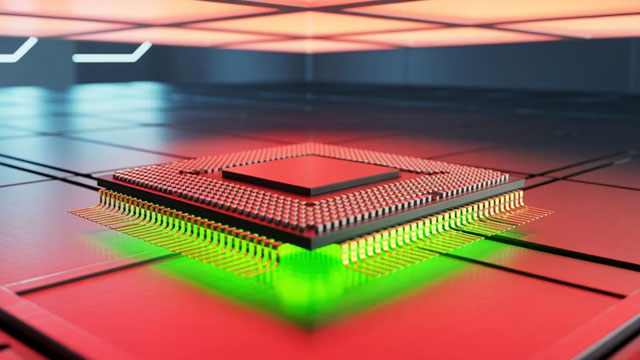
Intel shares fell about 1.4% and AMD shares declined just over 1% by 11 a.m. Tuesday as a broader semiconductor selloff accelerated. The article attributes pressure to intensifying competition from China and concerns that financing constraints could slow AI infrastructure expansion.
Analysis
The key transmission is demand elasticity, not the day’s share-price move: if AI infrastructure funding tightens, customers can defer deployments, stretching accelerator order timing and pressuring the broader buildout chain. AMD is more exposed to changes in accelerator expectations; Intel may be affected through server-platform demand, but the article provides no company-specific evidence that either has lost orders. Intensifying Chinese competition could also cap pricing or fragment addressable markets, though the impact depends on product capability and export-control boundaries—not competition headlines alone. Near term (days), this looks more like sector-level risk reduction than a differentiated read-through to either company. Over 1–3 months, watch hyperscaler capex commentary, financing conditions, and evidence of changes in AI hardware orders. Over 6–18 months, sustained customer funding constraints would matter more than a single day’s flow; conversely, confirmed deployments and resilient order visibility would weaken the bearish case. The contrarian point: investors may be treating competition and funding risk as simultaneous, proven demand deterioration when neither is established here. A broad short risks reversing if capex plans hold.
AllMind Terminal
AI-powered research, real-time alerts, and portfolio analytics for institutional investors.
Request TrialMarket Sentiment
Overall Sentiment
mildly negative
Sentiment Score
-0.25
Ticker Sentiment
Key Decisions for Investors
- Do not chase the modest decline as a standalone short signal. Keep AMD and Intel exposure sized to broader semiconductor risk until company-specific order or guidance evidence differentiates them.
- Watch for a relative underweight in AMD versus Intel only if AMD accelerator order visibility or pricing weakens while Intel’s server demand indicators remain stable; otherwise the pair lacks a confirmed company-specific catalyst.
- Use hyperscaler capex guidance, AI hardware order commentary, and financing conditions as the 1–3 month trigger set. A material capex pullback or repeated order delays would support reducing semiconductor exposure; stable or rising plans would challenge the bearish thesis.
- Falsify the funding-constraint thesis if major customers reaffirm deployment plans and supplier commentary confirms resilient order timing. Reassess the China-competition risk if evidence shows meaningful price pressure or lost business in markets addressable by AMD or Intel.
More News
- Applied Materials’ $5 billion AI lab aims to cut chip development time in half—and restore Silicon Valley’s edge
- Global chip selloff deepens as AI worries, China competition weigh
- Goldman Sachs quarterly profit rises on equities strength
- Microsoft plans multi-gigawatt rollout of next-gen Azure Maia AI accelerator racks
- Stock Market Today, Oct. 13: Fermi Surges 14% on AMD Credit Support for Project Matador
- Stocks making the biggest moves midday: Apple, Meta Platforms, Bumble, Fermi, Goldman Sachs & more