
Beijing’s mini-stimulus package: Next China
Source: Bloomberg
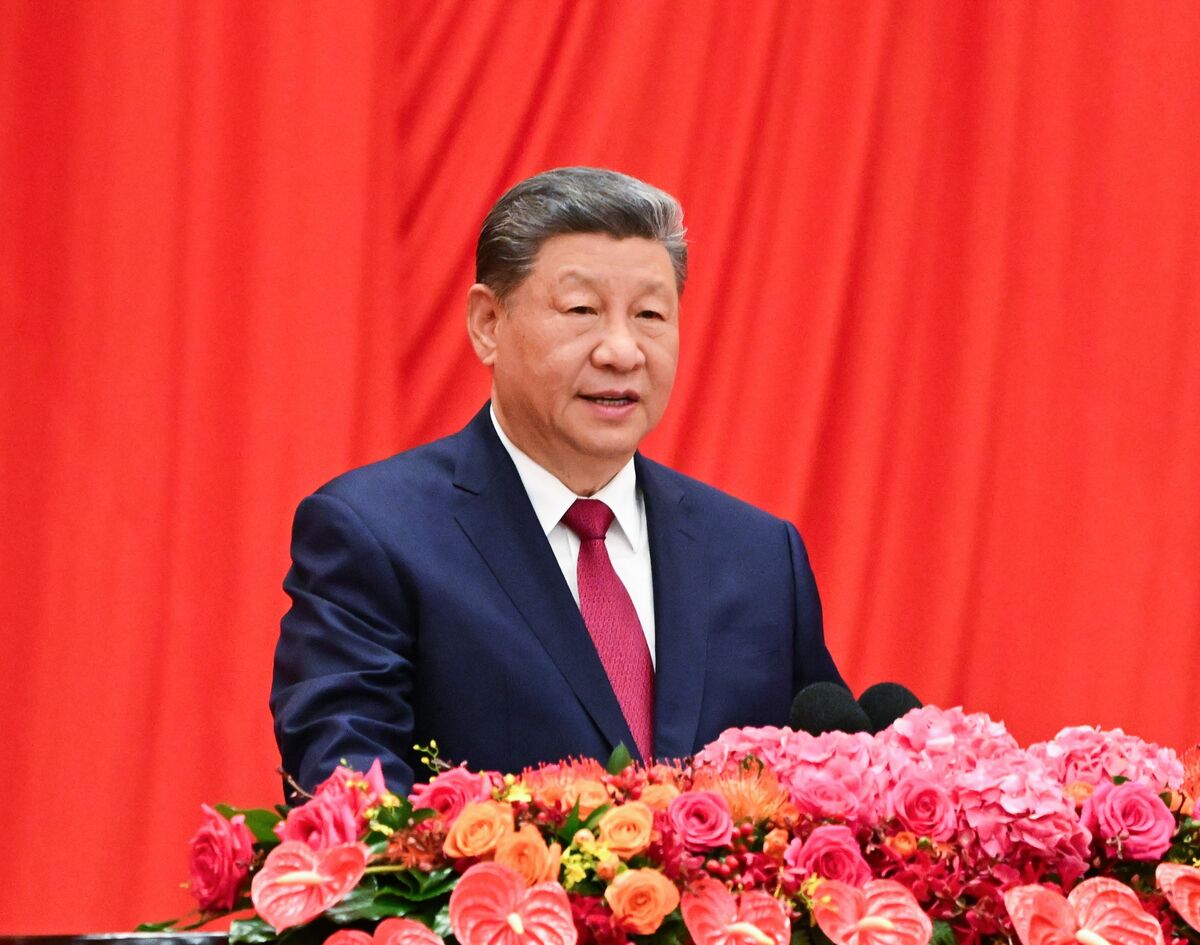
Beijing unveiled its largest stimulus effort since September 2024 to restore momentum in China’s flailing economy, but the package is characterized as only a modest nudge rather than a game changer. The limited scale is likely to leave investors wanting more forceful fiscal support and may constrain the near-term market and growth impact.
Analysis
The relevant market signal is not the absolute size of support but the implied policy reaction function: Beijing appears willing to cushion downside without underwriting a broad private-sector reflation. That limits earnings-upgrade potential for MSCI China-heavy exposures (MCHI, FXI) and cyclicals tied to a property/construction revival, while preserving the deflationary mix that supports duration-sensitive Chinese assets. A weak fiscal multiplier would also keep pressure on corporate pricing power, particularly for banks, developers and upstream industrial capacity.
Over the next 1-3 months, the key transmission test is whether fiscal deployment produces a measurable turn in credit demand rather than merely additional public-sector borrowing. Without improvement in new-home sales, private fixed-asset investment and core inflation, investors should expect tactical rallies in China risk assets to fade as 2026 earnings expectations are revised lower. The second-order effect is bearish for global China-demand proxies—copper (HG, FCX, SCCO), iron ore-linked equities and European luxury (MC.PA, CFR.SW)—whose valuations still require a more durable Chinese consumption and construction recovery.
Consensus may be too focused on headline stimulus comparisons and too little on capital allocation: incremental support can reduce tail-risk without solving household balance-sheet caution, local-government deleveraging or excess industrial supply. That setup favors selective policy beneficiaries over index beta; however, a credible housing-inventory absorption program, direct household transfers, or a material relaxation in property-financing constraints would rapidly invalidate the cautious view and trigger a violent short-covering move in FXI/KWEB.
AllMind Terminal
AI-powered research, real-time alerts, and portfolio analytics for institutional investors.
Request TrialMarket Sentiment
Overall Sentiment
mildly negative
Sentiment Score
-0.30
Key Decisions for Investors
- Maintain an underweight China-beta stance for the next 1-3 months via a short FXI / long INDA pair, sized modestly given India valuation risk. The thesis is relative earnings revisions: China requires a private-demand inflection while India remains supported by domestic capex and consumption. Exit if Chinese new-home sales and private credit growth show a sustained two-month acceleration or if the announced fiscal program shifts toward direct household support.
- Avoid adding broad copper exposure on the policy headline; use any stimulus-driven rally in FCX or SCCO to reduce cyclical exposure unless Chinese construction-linked demand indicators improve. A tactical short FCX against long XLU offers a three-month expression of lower-for-longer China industrial demand, but should be stopped on a sustained copper break above the prior 3-month range accompanied by improving China credit data.
- Prefer defensive China exposure over high-beta internet/property proxies: retain or add a small position in ASHR only after confirmation that bank lending, infrastructure orders and local-government payment arrears are improving. Until then, KWEB and developer-heavy exposures remain liquidity trades rather than earnings trades.
- Set event alerts for the next fiscal-budget implementation details, aggregate financing growth, property sales and CPI/PPI releases. A direct-consumption package or meaningful property inventory purchase mechanism would warrant covering China shorts immediately; absent those measures, the likely path is multiple compression rather than an earnings-led rerating.
More News
- French Bond Blowout Amid Debt Dilemma: Market Snapshot
- A Brexit reversal is on the table 10 years on from the vote that changed Britain. Here’s what’s at stake
- Latin America most exposed to any US ban on diesel exports, Goldman Sachs says
- Dollar at 17-month high as global bond rout hits euro
- PIMCO's Stracke on Credit Risks, Yield Shock Ahead
- Developing countries hit by overlapping crises, UNDP chief warns
From AllMind Research
- Anthropic IPO Preview: Valuation, Timing, and What to Watch
- Shein After the IPO: Venue, Valuation, and What Must Be Proved
- What AI Research Tools Should a Small Hedge Fund Buy First?
- Stop Treating AI Like a Chatbot: What Are Agents, SubAgents, MCP, and Skills, and How Do They Actually Work?
- Earnings-Triggered Research Automations: A Control Guide