
Die 94. CMEF, die weltweit führende Fachmesse der Medizintechnikbranche, findet vom 21. bis 24. Oktober in Peking statt.
Source: PR Newswire
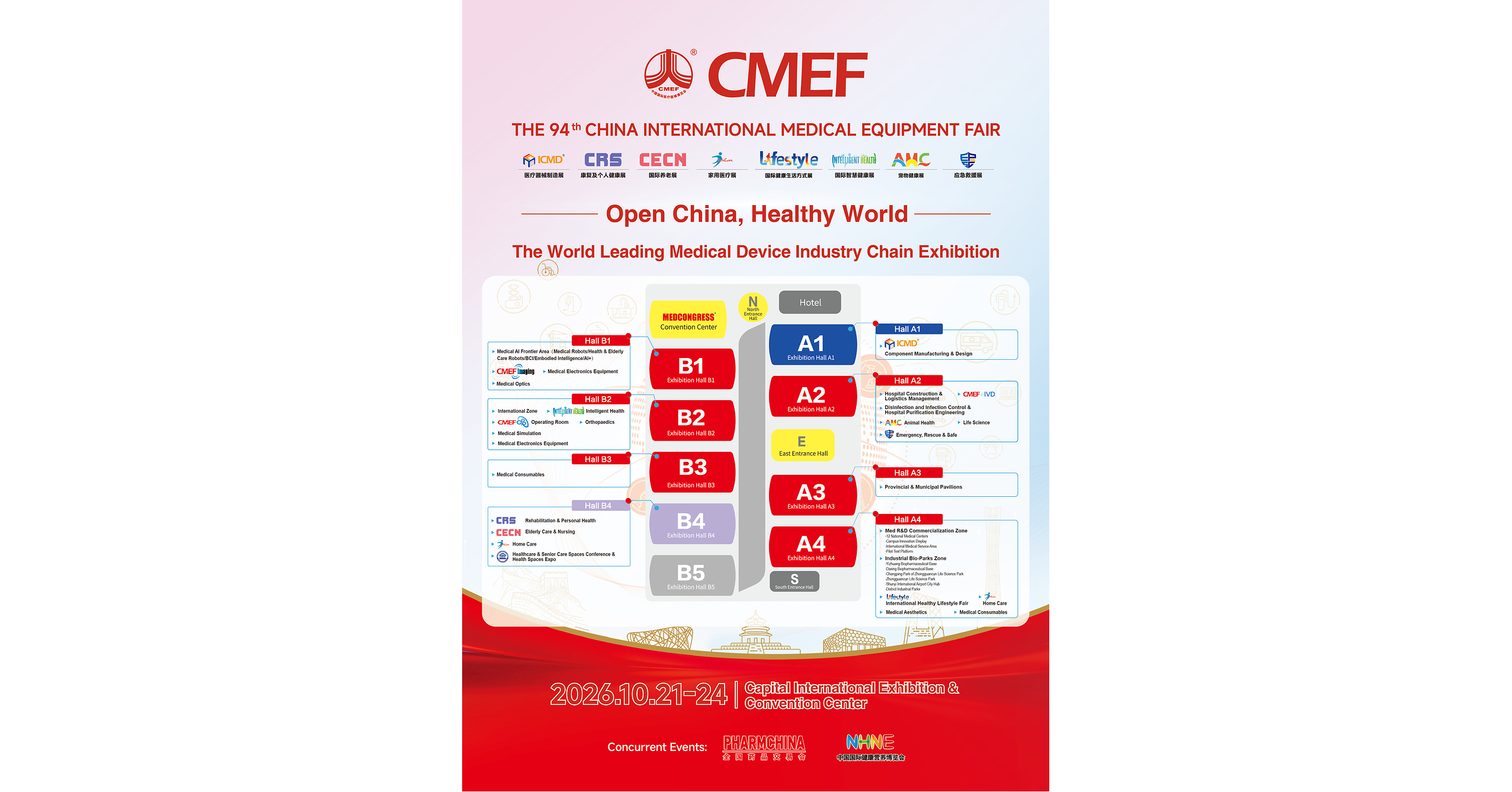
China's 94th CMEF medical-technology trade fair will be held in Beijing on October 21-24, spanning roughly 170,000 square meters and bringing together nearly 3,000 exhibitors, more than 120,000 professional visitors and almost 10,000 overseas buyers. The event will highlight medical AI, robotics, brain-computer interfaces, 5G healthcare applications, diagnostics, rehabilitation and senior care, while providing matchmaking and sourcing services for international buyers. The announcement signals continued expansion of China's medtech innovation and cross-border procurement ecosystem, but is primarily an industry-event update rather than a material market catalyst.
Analysis
This is primarily a channel-check event rather than an investable catalyst. The useful signal will be whether international procurement activity translates into signed distributor agreements, hospital tenders, or export-order disclosures—not exhibitor counts or product demonstrations. Public Chinese medtech names with meaningful overseas ambitions, including Mindray (300760.SZ), United Imaging (688271.SS), and MicroPort (0853.HK), could see sentiment support, but the October event itself is unlikely to alter FY26 revenue estimates without subsequent order evidence.
The more consequential second-order read-through is competitive: Chinese imaging, IVD, surgical-robotics and home-care suppliers may use international buyer access to lower distribution friction in emerging markets, pressuring premium pricing for global incumbents such as GE HealthCare (GEHC), Siemens Healthineers (SHL.DE), Philips (PHG), and Danaher (DHR) over 6-18 months. This matters most in price-sensitive markets where service-network quality is adequate and procurement is tender-led; it is less immediately relevant to US and Western European regulated markets, where approvals, reimbursement and installed-base switching remain material barriers.
Consensus should not extrapolate AI-zone marketing into near-term earnings. Medical AI monetization depends on hospital integration, validated clinical workflows, reimbursement and data-governance approval; product launches can raise R&D and sales expense before revenue scales. The actionable datapoints after the event are disclosed export backlog, gross-margin trajectory, regulatory clearances and distributor commitments. Absent these, this is not a stand-alone reason to add risk.
AllMind Terminal
AI-powered research, real-time alerts, and portfolio analytics for institutional investors.
Request TrialMarket Sentiment
Overall Sentiment
mildly positive
Sentiment Score
0.25
Key Decisions for Investors
- No event-driven position ahead of CMEF; treat it as a monitoring catalyst with a 2-6 week post-event verification window. Upgrade the signal only if 300760.SZ or 688271.SS disclose material export orders/backlog or raise international revenue guidance.
- Maintain a 6-18 month watchlist pair: long 300760.SZ versus short PHG or GEHC only after evidence that international sales growth is accelerating while Chinese vendor gross margins hold. Thesis target is relative multiple convergence; invalidate if exports fail to grow or Chinese pricing drives a sustained gross-margin decline.
- For DHR and GEHC, monitor management commentary on emerging-market tender pricing and China order cadence at the next earnings cycle. A widening price concession or China backlog deterioration would be a more actionable short-side catalyst than the trade-show news.
- Track Chinese regulatory approvals, hospital procurement policy and overseas clearances for medical-AI and robotics products through 2027. Commercial contracts and reimbursement adoption—not demonstrations—would justify a structural rerating.
More News
- US job growth expected to slow in September; unemployment rate likely steady
- SoftBank completes final phase of $30 billion investment in OpenAI
- Trump launches midterms campaign blitz amid record low approval ratings
- Amazon seeks to offload $8 billion of Nvidia chips to investors, FT reports
- Amazon seeks to offload $8 bln of Nvidia chips to investors- FT
- Fed’s Cook sees AI buildup as top inflation risk for 2027
From AllMind Research
- Anthropic IPO Preview: Valuation, Timing, and What to Watch
- Shein After the IPO: Venue, Valuation, and What Must Be Proved
- What AI Research Tools Should a Small Hedge Fund Buy First?
- How to Build an Automated Research Process for a Fund
- Weekly Update: AI-Powered Report Editing, Investor Relations, and Enhanced Search