
Huawei's NG WAN Solution Enters Large-Scale Commercial Use to Drive Carrier Growth
Source: PR Newswire
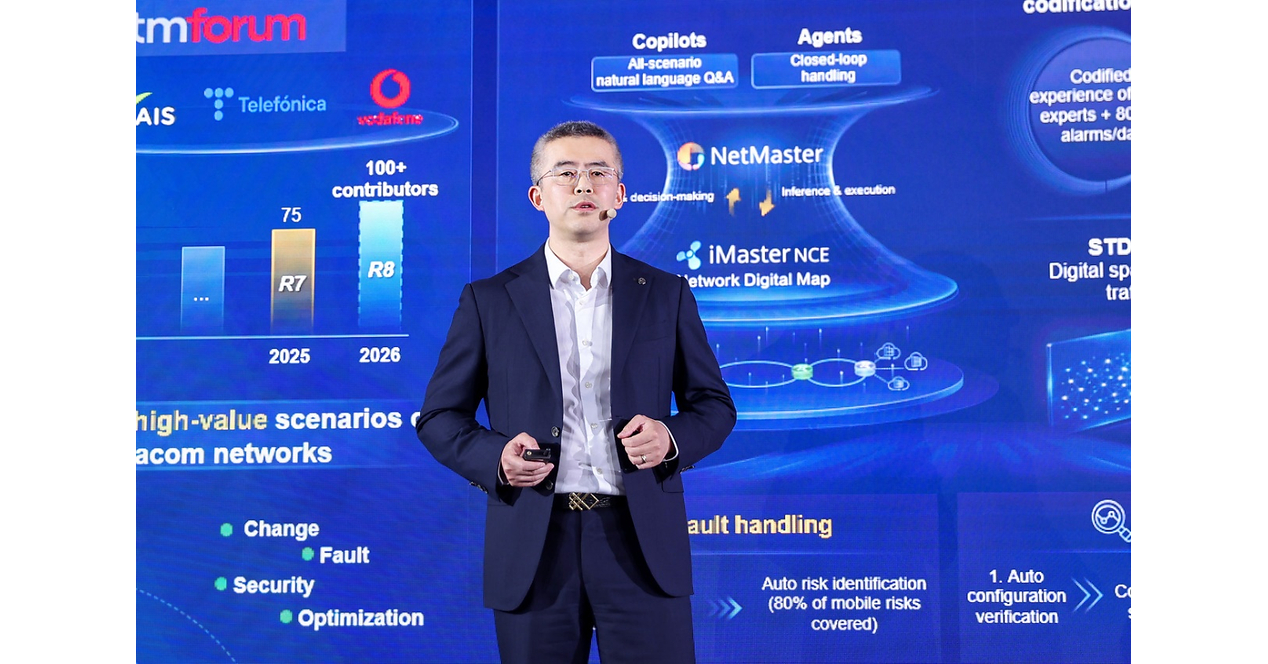
Huawei says its NG WAN network solution has entered large-scale commercial use, with deployments at more than 60 carriers worldwide. The company cites product performance including 98% link utilization, over 7% higher training and inference performance, and a 30% reduction in hardware use; in one Chinese carrier healthcare project, it says computing costs fell 30% and private-line ARPU rose fivefold. These are company-reported results in a promotional announcement, with no financial guidance or market reaction reported.
Analysis
The investable signal is a possible shift in carrier spending from conventional capacity upgrades toward AI-cluster interconnect, loss reduction, security and automation—not evidence yet of a material step-up in industry profits. If carrier deployments convert into recurring premium private-line and managed-security revenue, vendors with IP-routing, optical-transport and network-automation portfolios could gain; Nokia, Cisco and HPE are relevant competitive read-throughs. Conversely, Huawei’s commercial traction may pressure incumbent vendors on price in markets where it can compete. Export controls and procurement restrictions limit how far Huawei’s reported adoption can be extrapolated globally.
Treat the performance and customer-economics figures as vendor-reported, not independently verified. The cited deployments do not establish contract value, recurring revenue, gross margin, or whether higher private-line ARPU is incremental rather than a reclassification or a single-project outcome. The quantum-key-distribution claims also should not be conflated with broader post-quantum cryptography adoption: interoperability, operating costs and standards acceptance determine whether these become scalable products.
Near term, the announcement is a weak standalone catalyst for public-market names. Over 1–3 months, watch carrier capex guidance, named procurement awards and evidence of paid AI-network services. Over 6–18 months, the thesis strengthens only if operators demonstrate utilization and monetization that support returns on added network investment. Falsifiers: carrier capex cuts, delayed deployments, weak paid-service uptake, or competing vendors reporting price-led margin erosion. The contrarian risk is assuming AI traffic automatically creates pricing power: efficiency gains may instead reduce the bandwidth or hardware required per unit of compute, restraining equipment demand.
AllMind Terminal
AI-powered research, real-time alerts, and portfolio analytics for institutional investors.
Request TrialMarket Sentiment
Overall Sentiment
mildly positive
Sentiment Score
0.30
Key Decisions for Investors
- No direct trade from this announcement: Huawei is not an investable mapped issuer here, and the release provides no independently verifiable order or earnings data.
- Watch Nokia, Cisco and HPE for carrier-network order growth and margin commentary; consider a relative long only after disclosed awards or guidance confirm incremental demand, and avoid treating Huawei’s reported deployments as global market-share evidence.
- Track carrier capex plans and paid AI/private-line service uptake over the next 1–3 months. Reassess the thesis if deployments do not translate into recurring revenue or if vendors flag discounting and margin pressure.
More News
- Anthropic's third-quarter revenue is said to hit $16.8 billion ahead of IPO
- Why is Samsung Electronics stock plunging today?
- SK Hynix plunges 8% amid Asia tech rout as Fed rate hike fears, AI funding worries mount
- Elon Musk says Trump is 'ultimately' responsible for any curbs on Ukraine's Starshield systems
- SK Hynix seeks U.S. chip equipment exports to China tied to new factory
- Dell stock plunges 11%, leading data center sell-off on concerns about 'enterprise AI timing'
From AllMind Research
- Anthropic IPO Preview: Valuation, Timing, and What to Watch
- Shein After the IPO: Venue, Valuation, and What Must Be Proved
- What AI Research Tools Should a Small Hedge Fund Buy First?
- AI Research Systems for Hedge Funds: A Pilot Design
- Weekly Update: New Reporting Features, UI Improvements, and Chat Optimizations