
Will Ralph Lauren's New Store Openings Drive Global Expansion?
Source: zacks.com
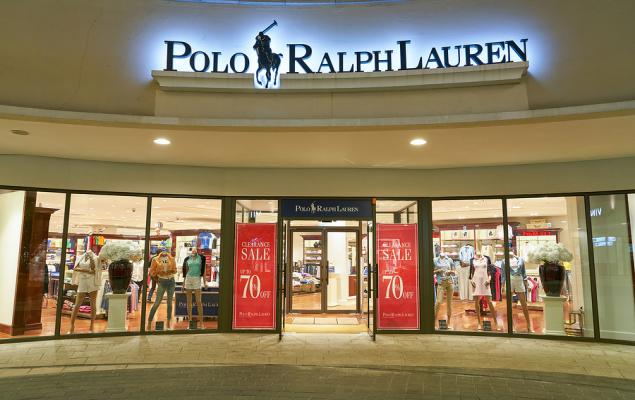
Ralph Lauren opened 22 owned and partner stores during the quarter as part of its key-cities expansion strategy, including locations in Los Angeles, Palo Alto, Istanbul, Sydney and Perth. Global direct-to-consumer comparable sales rose 12%, with Asia sales up 25% and China sales increasing more than 40%, supported by city-cluster and digital expansion. Management remains cautious on Europe amid macroeconomic pressure, while consensus forecasts imply fiscal-year earnings growth of 13.3% followed by 10.6% next year.
Analysis
The relevant signal is not unit growth but mix: owned retail and digital can lift RL’s gross-margin capture and improve demand visibility relative to wholesale-led apparel peers. The offset is fixed-cost absorption—new flagships, renovations and hospitality concepts require sustained productivity, so the investment case depends on sales per square foot and digital repeat rates rather than store-count optics. In the next 1-3 months, management commentary on DTC gross margin, occupancy deleverage and China full-price sell-through should matter more than reported revenue growth.
China is the highest-beta earnings variable. A premium-brand consumer recovery can support both revenue and mix, but concentration in top-tier city clusters leaves RL exposed to a sharp reversal in luxury traffic, local competition, or promotional intensity. Europe is the more immediate downside: weak tourist and local demand would likely first show up in markdowns and lower outlet conversion, pressuring gross margin before consensus materially cuts sales estimates. This makes the current premium valuation vulnerable if the next print shows DTC growth decelerating without an offsetting margin gain.
Contrarian view: the market may be treating retail expansion as straightforward growth while underweighting the possibility that RL is deliberately exchanging near-term EBIT margin for brand elevation and customer-data ownership. That can be value accretive over 6-18 months, but only if new stores cannibalize wholesale rather than simply add cost. There is no read-through for AMZN, GOOG or NVDA from this item; their inclusion is data noise.
The cleaner relative expression is RL versus more wholesale- and value-consumer-exposed apparel names, not an outright momentum chase. RL needs evidence that incremental DTC revenue converts at a higher rate than wholesale revenue; absent that disclosure, this is a watch-list catalyst rather than a high-conviction new long.
AllMind Terminal
AI-powered research, real-time alerts, and portfolio analytics for institutional investors.
Request TrialMarket Sentiment
Overall Sentiment
mildly positive
Sentiment Score
0.38
Ticker Sentiment
Key Decisions for Investors
- Maintain/watch RL as a 6-12 month quality-consumer long; add only after the next earnings release confirms DTC gross-margin expansion and stable SG&A leverage. Target a 10-15% upside from multiple stability plus earnings revision; exit if DTC comp growth falls below mid-single digits or gross margin contracts year over year.
- Consider a 3-6 month pair: long RL / short KTB in equal dollar amounts if premium Chinese demand remains resilient. RL has greater direct-to-consumer mix upside, while KTB is more exposed to wholesale inventory cycles and a pressured value consumer; close the pair if RL’s China growth decelerates sharply or KTB delivers a material wholesale-inventory normalization.
- Do not buy VNCE or SVV on this development. Their customer bases, price points and operating models do not provide a reliable sympathy read-through; treat any correlated move as an opportunity to avoid false sector extrapolation.
- Set an earnings-call diligence alert for RL: sales productivity of new stores, wholesale-to-DTC mix shift, China full-price sell-through, and Europe markdown rate. A meaningful increase in promotions or occupancy costs without DTC margin expansion falsifies the expansion thesis.
More News
- AMD joins the $1 trillion club as chip rally surges - our AI Strategy saw it early
- Perpetual underdog AMD nips at Nvidia's heels as it joins the $1T club
- Intel surges 12% as CPU stocks rally. Here's what's driving the move
- Why Intel, Arm, and Other AI Chip Stocks Soared Today
- Meta announces AI shopping partnership with Spotify
- AMD joins $1 trillion market cap club on AI computing bets
From AllMind Research
- Anthropic IPO Preview: Valuation, Timing, and What to Watch
- Shein After the IPO: Venue, Valuation, and What Must Be Proved
- What AI Research Tools Should a Small Hedge Fund Buy First?
- Capital Intensity as Gravity: The AI Trade Enters Its Industrial Era (Looking at Q3 2025 Earnings in Tech)
- AI Portfolio Monitoring: Build an Alert Policy Analysts Can Audit