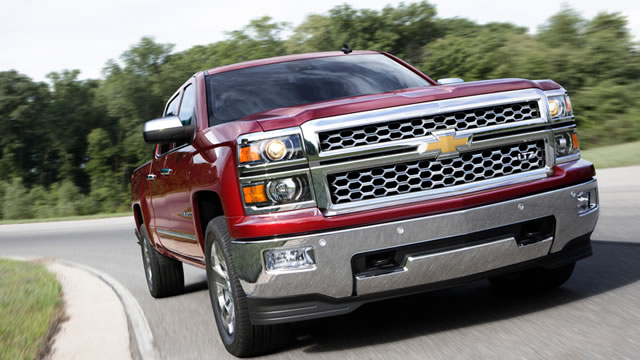
General Motors raised its full-year 2026 profit forecast after Q2 results beat expectations, with adjusted EPS of $3.57 vs. $3.20 consensus (up 41% YoY). While one-time charges from EV realignment weighed on net income, the earnings beat supported the guidance increase likely to move GM shares ~1–3%.
GM’s setup is more about capital-allocation credibility than near-term vehicle demand. By taking the EV reset charges now and still lifting forward profit expectations, management is signaling that the core North American ICE/truck franchise is still generating enough cash to self-fund the transition; that tends to support multiple expansion if investors believe the “bad news” on EV spending is being pulled forward rather than deferred. The market should distinguish between a transitory accounting hit and a structural reduction in future cash burn: if the latter is real, GM’s equity value can re-rate faster than the earnings print implies.
The second-order winner is GM versus the broader legacy OEM complex: disciplined EV pacing should improve return on invested capital across auto cyclicals and pressure rivals to prove their own path to EV profitability. Pure-play EV names and battery-material suppliers are the likely collateral losers over the next 1-3 months if this becomes another data point that the industry is prioritizing margins over unit growth; that raises the bar for volume-led narratives and can compress valuation in names that still need external capital. Suppliers with high EV mix exposure also face timing risk if OEM order books get pushed out rather than canceled.
Risk-wise, this trade works best on a 1-3 month horizon unless macro auto demand rolls over; the main falsifier is a sharp rise in incentives, inventory, or warranty/quality costs that forces GM to give back the guidance benefit. If the next quarter shows the profit improvement is driven by temporary mix and not durable cost control, the rally should fade. Conversely, if GM can hold guidance while U.S. SAAR softens, that would argue the stock deserves a higher steady-state multiple.
The contrarian view is that investors may be underestimating how positively the market rewards OEMs for admitting EV reality early. That could make GM the relative winner versus Ford and especially money-losing EV peers, even if absolute upside is modest. The move feels more constructive for GM’s valuation than for its growth story, so the cleanest expression is relative-value rather than a naked long.
AI-powered research, real-time alerts, and portfolio analytics for institutional investors.
Request TrialOverall Sentiment
mildly positive
Sentiment Score
0.35
Ticker Sentiment
