
From LAN to LLM: Intersignal Brings the LAN Party Spirit to Local AI
Source: PR Newswire
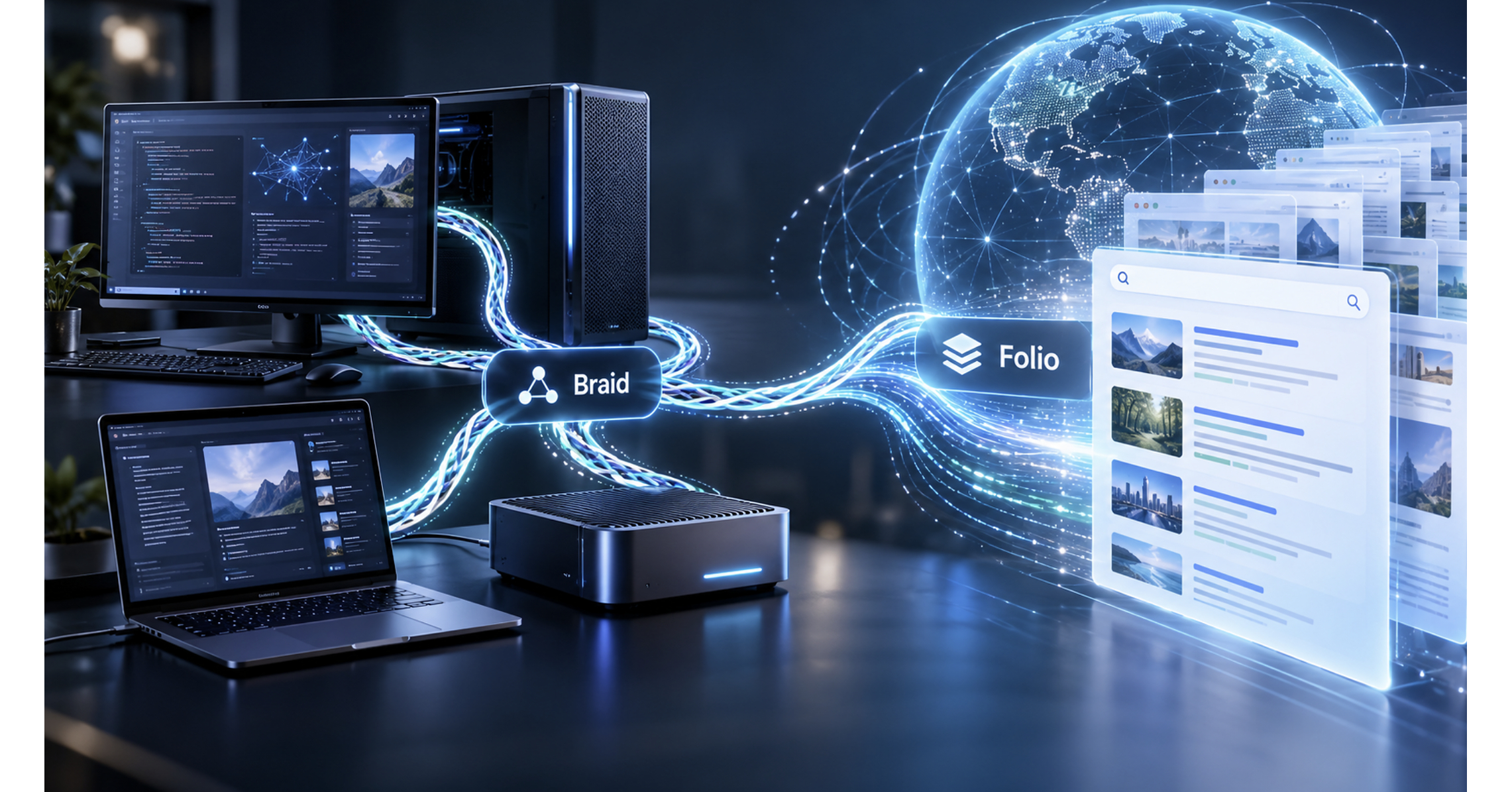
Intersignal announced expanded Folio operability in the main release of Braid, its free software for connecting local AI systems across multiple machines. The workflow lets users share context and work with local models, then review and selectively publish material to the open web while keeping publication decisions human-directed; the article gives no sales, financial, or market-reaction figures.
Analysis
No actionable public-equity signal from this launch alone: Intersignal has no supplied ticker mapping, and the release provides no adoption, retention, monetization, or hardware-attach data. The plausible upside is second-order: easier coordination of local AI systems could increase the utility of AI PCs and GPU workstations, supporting demand for accelerators and memory from vendors such as NVIDIA and AMD if workloads prove sustained. But orchestration itself does not establish incremental hardware demand, and local inference could displace some cloud-model usage at the margin for privacy-sensitive users. The larger strategic risk is that a free workflow feature is easy for operating-system, model-platform, or cloud incumbents to reproduce; the privacy proposition also has a trade-off, since connecting machines expands the security surface and selectively publishing generated material still requires review. Immediate market impact should be negligible. Over 1–3 months, the signal is whether independent users adopt it; over 6–18 months, only recurring use tied to hardware purchases or measurable cloud substitution would matter. Treat the announcement as a product claim, not evidence of a new category winner.
AllMind Terminal
AI-powered research, real-time alerts, and portfolio analytics for institutional investors.
Request TrialMarket Sentiment
Overall Sentiment
mildly positive
Sentiment Score
0.20
Key Decisions for Investors
- No trade on the announcement. Avoid extrapolating a product launch into near-term revenue for accelerator or PC suppliers.
- Set an adoption watch: seek independently verifiable active-user, repeat-use, and supported-hardware data, plus evidence that Braid/Folio drives incremental AI-PC or workstation purchases. Without those, keep the theme on watch rather than adding exposure.
- For cloud-versus-local positioning, do not short cloud providers on this signal. Reassess only if enterprise or developer usage data shows material workloads shifting off cloud inference; broad cloud demand and local use may coexist.
- Falsify the local-AI hardware upside if adoption remains limited, workflows are bundled by larger platforms, or AI-PC/workstation demand fails to improve despite wider software availability. A material security incident would also weaken the privacy-led adoption case.
More News
- World Bank warns of AI concentration risks as it lifts East Asia and Pacific growth outlook to 4.5%
- Security researcher claims to they found KVM guest-host escape flaw
- CH Robinson to Buy RXO for $5.8B in Bet on AI Model
- OKX debuts a platform that turns 50 currencies into digital dollars, betting emerging market investors want stablecoins
- SpaceX stock climbs to highest since June, returning Musk to trillionaire status
- Schneider Electric drops $22.6B on PTC as datacenter boom rains money on infra companies