
AI Needs a Governed Path, Not a Ban, Armor Founder Tells GovWare
Source: PR Newswire
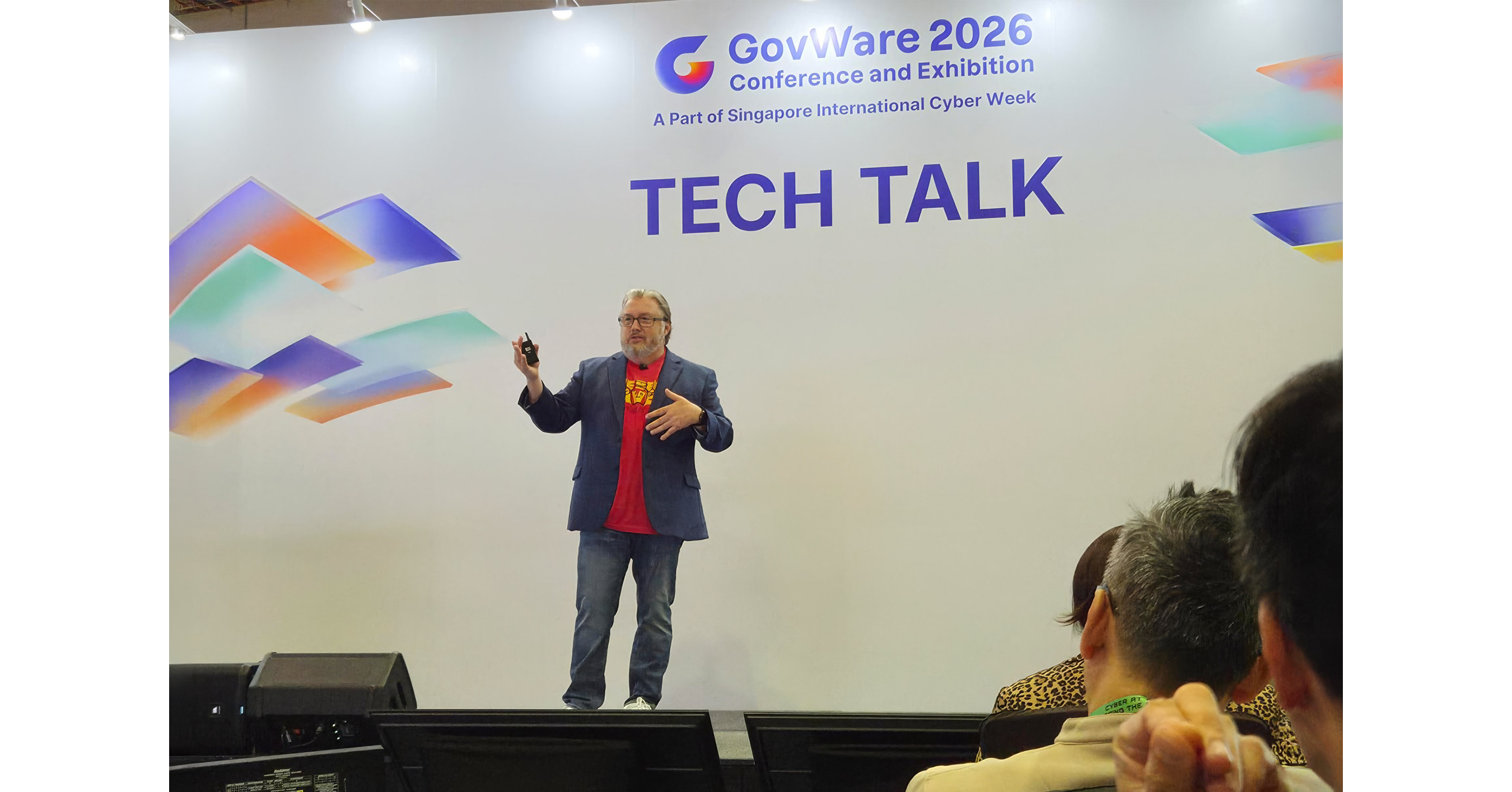
At GovWare 2026, Armor CEO Chris Drake urged CISOs to govern AI use through data classification, owned routing policies, scoped permissions and auditable records, rather than banning AI or relying on endpoint detection alone. He cited a February 2026 Protiviti survey in which 47% of large organizations reported incomplete visibility into employees’ AI-tool use. Drake said Armor built and uses its Sovereign AI platform to address customer-data controls and auditability; the article reports no financial results or market reaction.
Analysis
Investment read-through: this is a category-positioning argument, not evidence of material new demand. If enterprises shift from blocking AI to governing data access, model routing, agent credentials and audit trails, security budgets could migrate beyond endpoint detection toward identity, data governance, cloud/network telemetry and AI control planes. That broadens the addressable spend for established platforms such as Palo Alto Networks (PANW), CrowdStrike (CRWD) and Zscaler (ZS), but does not establish which vendor captures it; Microsoft may also bundle controls into existing enterprise agreements, limiting standalone pricing power.
The non-obvious constraint is organizational, not just technical: weak data classification and unclear risk ownership can stall deployment even when security tools are available. This favors vendors able to integrate with existing workflows and prove controls, while creating implementation and consulting work before recurring software revenue. Armor’s claims about its own platform are promotional; no adoption, retention, or independently verified customer economics are provided.
Timing: little basis for an immediate trade. Over 1–3 months, watch vendor disclosures for paid AI-security deployments, attach rates and actual budget line items—not announcements or survey concern. Over 6–18 months, governed agent execution could become a durable control layer, but bundling, fragmented standards and model-provider changes may compress margins. The bullish thesis weakens if AI-security spend fails to appear in reported results, or if customers rely on hyperscaler/workspace controls; it strengthens with measurable incremental revenue and enforceable customer requirements.
AllMind Terminal
AI-powered research, real-time alerts, and portfolio analytics for institutional investors.
Request TrialMarket Sentiment
Overall Sentiment
neutral
Sentiment Score
0.00
Key Decisions for Investors
- No directional position from this release alone. Treat the theme as a diligence trigger, not a demand signal; Armor’s commercial scale and product economics are unverified here.
- Watch PANW, CRWD and ZS for disclosed AI-governance revenue, attach rates, customer adoption and evidence that buyers fund controls separately from existing endpoint or cloud contracts. Avoid extrapolating from product launches.
- Prefer a relative-value watchlist over a broad cyber long: compare platform vendors with standalone AI-governance offerings and enterprise software bundlers such as Microsoft. Consider a pair only after evidence clarifies who captures incremental spend and whether bundling pressures specialist pricing.
- Falsify the sector-upside thesis if the next 1–3 quarters show AI features bundled without incremental monetization, weak customer conversion, or spending deferred because data classification and governance remain unresolved.
More News
- Anthropic's third-quarter revenue is said to hit $16.8 billion ahead of IPO
- SK Hynix plunges 8% amid Asia tech rout as Fed rate hike fears, AI funding worries mount
- Why is Samsung Electronics stock plunging today?
- Why is Advantest stock plummeting today?
- Japan, U.S. reach first chip deal under $550 bln investment plan
- Elon Musk says Trump is 'ultimately' responsible for any curbs on Ukraine's Starshield systems