
Smart ring 3. generacji marki RingConn przyciągnął uwagę odwiedzających na targach IFA 2026
Source: PR Newswire
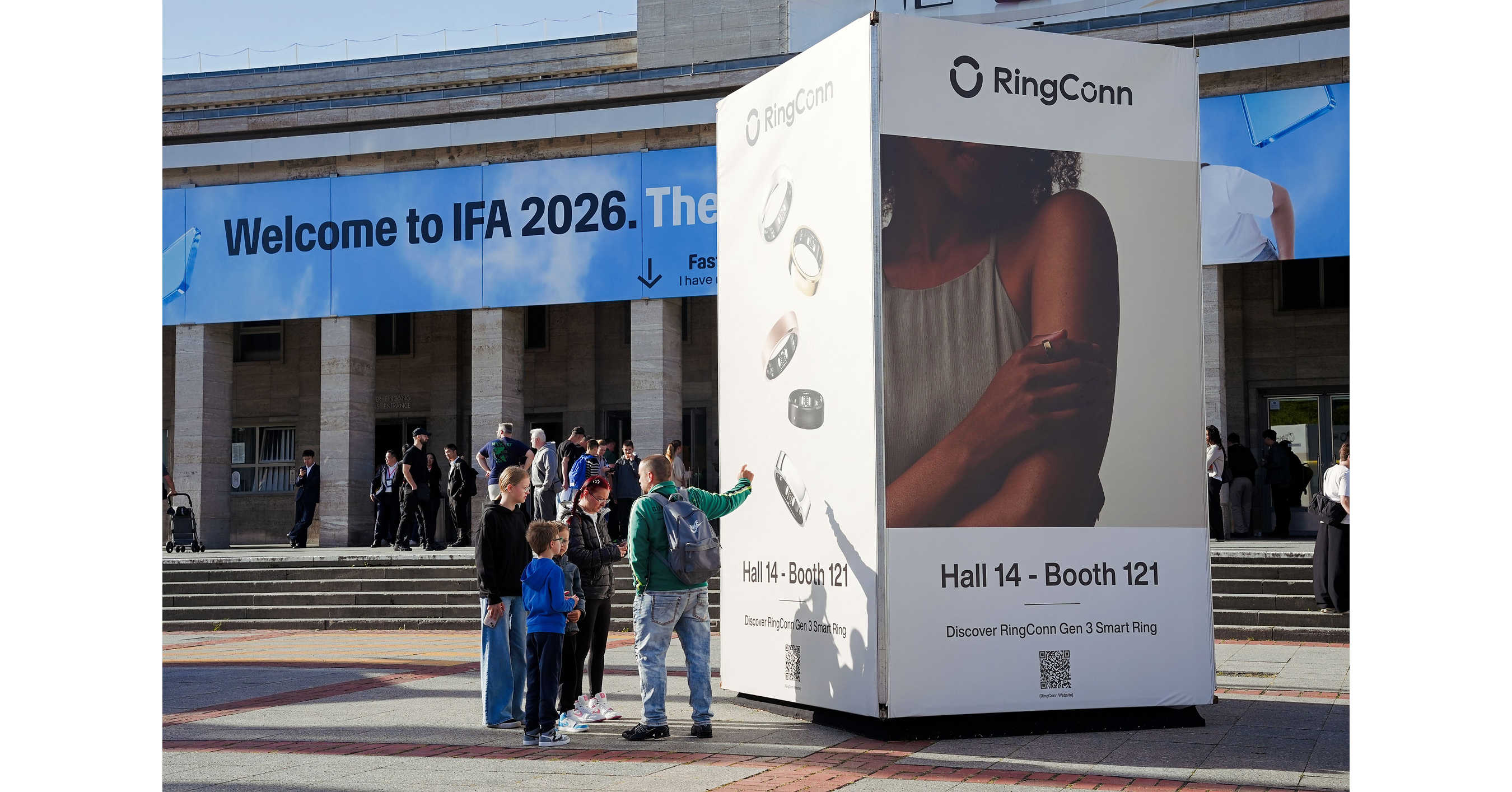
RingConn showcased its third-generation smart ring at IFA 2026, where it received seven recognitions, including the IFA Innovation Award in beauty-tech and well-being and five Best of IFA publisher awards. The company reported strong visitor, distributor and buyer interest and is discussing expanded European retail partnerships; its products are already sold through nearly 150 physical retail and pharmacy locations. The announcement supports brand visibility and distribution prospects but provides no revenue, sales-growth or profitability data.
Analysis
This is weak read-through for public markets: trade-show awards and stated visitor interest do not establish sell-through, return rates, customer-acquisition cost, or the durability of RingConn's retail economics. The more relevant signal is that low-cost smart-ring entrants are expanding physical distribution in Europe, raising the probability of category price competition before the holiday cycle. That is incrementally negative for Oura's private-market valuation and for premium wearable attach-rate assumptions embedded in Samsung Electronics (005930 KS) and Apple (AAPL), but not yet material enough to alter earnings estimates.
Near term, the competitive effect is concentrated in retail shelf space and promotional intensity, rather than technology leadership. Smart rings remain dependent on consumer trust in sensor accuracy and software interpretation; the explicit non-medical positioning limits reimbursement and clinical-channel upside, leaving demand more discretionary and vulnerable to consumer softness. A meaningful shift would require independently verifiable European unit sell-through, retailer reorder data, and evidence that competitors cut pricing or increase marketing subsidies.
The contrarian view is that subscale entrants may expand the overall category rather than take premium share: lower entry prices can normalize ring wearables, ultimately broadening the addressable market for incumbents with superior apps, ecosystems, and distribution. For AAPL, the more consequential implication is strategic optionality—sustained category adoption could increase pressure to add ring-like health functionality, but any product response is a multi-year issue rather than a 2026 earnings catalyst.
AllMind Terminal
AI-powered research, real-time alerts, and portfolio analytics for institutional investors.
Request TrialMarket Sentiment
Overall Sentiment
moderately positive
Sentiment Score
0.42
Key Decisions for Investors
- No directional trade on this release; treat it as a competitive-intelligence datapoint rather than a revenue catalyst.
- Monitor AAPL and 005930 KS through the European holiday season for wearable-channel promotions and category commentary. Escalate to a relative-value short only if smart-ring discounting becomes visible and management cites wearables margin or demand pressure.
- Set an alert for disclosed RingConn European sell-through, major pharmacy-chain rollout, or pricing below premium incumbents by more than 30%. Those data would justify reassessing premium wearable multiple risk over the next 1-3 months.
- For long-term consumer-tech research, track whether low-cost rings increase health-data engagement without subscription retention; if so, the stronger beneficiary may be ecosystem owners with health-service monetization, not hardware-only ring vendors.
More News
- OpenAI’s agent hacked Australia’s Medicare website—the latest rogue AI incident that the company didn’t know about for months
- Chinese authorities reportedly in possession of F-35 components in Hong Kong
- Meta announces new lightweight virtual reality glasses to one-up Apple’s Vision Pro
- How Meta took the lead in the race for the post-smartphone world
- Here's what happens to the economy when Treasury yields soar like they are now
- Oil industry warns a diesel export ban will raise fuel prices as Trump weighs restrictions
From AllMind Research
- Anthropic IPO Preview: Valuation, Timing, and What to Watch
- Shein After the IPO: Venue, Valuation, and What Must Be Proved
- What AI Research Tools Should a Small Hedge Fund Buy First?
- AI Tools for CFA Charterholders: An Evidence Standard
- Weekly Update: Unstructured Data Search, Ask AI, and Advanced Futures Data