
United Airlines Gears Up to Report Q3 Earnings: What's in the Cards?
Source: zacks.com
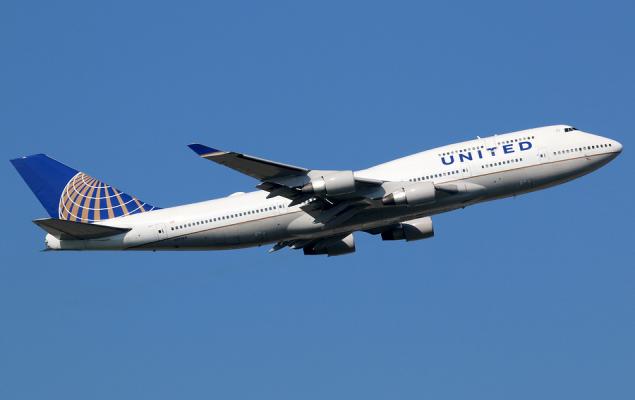
United Airlines is scheduled to report Q3 2026 results on Oct. 20; the consensus EPS estimate has fallen 18.54% in 60 days to $2.68, implying a 3.6% year-over-year decline, while revenue is projected to rise 17.2% to $17.84 billion. Elevated fuel prices—UAL’s outlook assumed about $3.69 per gallon—plus labor costs and reduced flying are expected to pressure margins; the Zacks model does not signal a conclusive earnings beat, with an Earnings ESP of +0.17% and Rank #5. Resilient bookings and premium and loyalty demand provide support, while UAL beat estimates in each of the past four quarters by an average 5.79%.
Analysis
The key risk is margin conversion, not demand: strong premium/loyalty mix can support revenue, but it does not automatically offset fuel inflation when capacity is reduced and fixed costs are spread over fewer seat miles. If United’s fuel assumption proves stale, earnings revisions may continue lower even on a revenue beat. Conversely, route cuts can be economically rational if they remove flights with weak marginal contribution; the tell is whether unit revenue and load factors improve enough to absorb the lost capacity.
Near term (Oct. 20), the estimate reset and fuel sensitivity create downside asymmetry if guidance disappoints, while the record of prior beats and resilient bookings could support a relief move. Over 1–3 months, monitor jet-fuel prices, forward bookings, and December/1Q27 capacity actions. Over 6–18 months, larger-gauge aircraft could ease unit costs, but that benefit is delayed and execution-dependent. A sustained oil-price decline is the clearest reversal catalyst; renewed escalation or weaker premium demand would compound pressure.
Contrarian angle: the market may over-focus on the quarterly EPS miss and underweight capacity discipline and premium mix. But treating revenue growth as proof of earnings resilience is equally risky: the decisive evidence is realized unit revenue versus CASM-ex and the updated fuel assumption, not bookings commentary alone. Freight names cited in the article are not clean hedges for airline fuel exposure; their earnings depend on separate freight-volume and pricing cycles.
AllMind Terminal
AI-powered research, real-time alerts, and portfolio analytics for institutional investors.
Request TrialMarket Sentiment
Overall Sentiment
mildly negative
Sentiment Score
-0.20
Ticker Sentiment
Key Decisions for Investors
- Avoid initiating an unhedged long UAL ahead of the Oct. 20 report. Consider a small, defined-risk bearish position only if option pricing is reasonable; do not use a numeric target without current price and implied-volatility data.
- On the release, test the thesis against CASM-ex, TRASM, realized fuel cost versus the $3.69/gallon planning assumption, and any revision to 4Q/1Q capacity. A revenue beat with weaker margin or lower guidance is not a bullish read-through.
- Falsification: reduce bearish exposure if fuel prices retreat materially and United holds earnings guidance while showing improving unit revenue relative to unit cost. Escalating oil, another guidance cut, or further capacity reductions without unit-revenue improvement would strengthen the downside case.
- Keep ODFL and CHRW as separate earnings setups, not automatic UAL offsets: verify their own freight-volume, pricing, and margin indicators before positioning.
More News
- United Airlines is making it harder to reach its top frequent flyer status in 2027
- Air France says it will follow Israeli rule barring crew from some nations
- Taiwan agrees to buy 30% of gas from Alaska LNG project, Trump says
- Oil rises amid growing Mideast tensions between Iran-backed Houthis and Saudi Arabia
- South Korean carmaker Hyundai plans 'strategic' investment of $15.5 billion in India by 2032
- Houthis Hit Saudi Aramco Headquarters in Missile Attack