
Withings Introduces StethO Sense, Bringing Heart and Lung Sound Analysis to BeamO
Source: PR Newswire
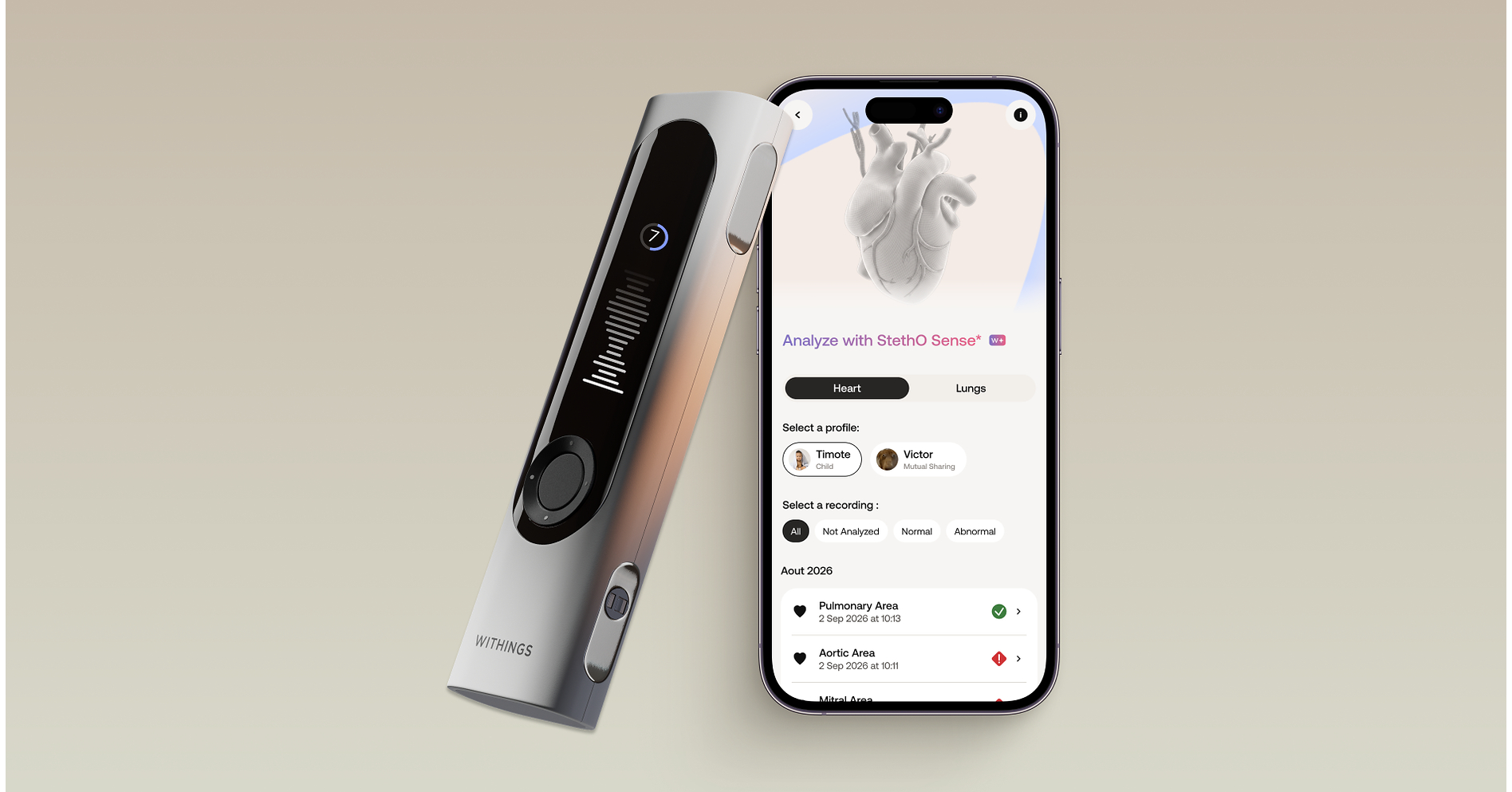
Withings launched StethO Sense within its Withings+ premium subscription, offering on-demand AI heart (eMurmur) and breathing (StethoMe) analysis for BeamO users starting Oct. 1, 2026. Heart analysis is described as FDA-cleared and designed to achieve ~90% sensitivity and specificity for pathologic murmur detection, while breathing insights provide a 0–100 Breathing Index score. Unlimited at-home analyses are included with Withings+, priced at $9.95/month or $99.50/year, and BeamO sold for $249.95 will include a 1-month Withings+ trial.
Analysis
This is more interesting as a monetization test than a product launch. If the paid membership converts even a modest slice of BeamO owners, the company shifts from selling a one-time device to capturing recurring high-margin software revenue, which is the only path to durable multiple expansion in connected health. If conversion is weak, the stock gets no rerate from AI branding and the hardware remains an episodic, low-defensibility sale.
The defensible piece is narrower than the marketing suggests: the clinically cleared heart-sound AI can support trust, but the breathing component is still largely a wellness feature in the U.S., so the most frequent use case has the least regulatory moat. That creates a second-order risk that copycats can match the consumer UX while incumbents with clinical distribution, like PHG or MASI, keep the deeper workflow relationship. The real competitive threat is not another stethoscope; it is consumer health ecosystems that can layer trend visualization onto broader sensor data without medtech compliance friction.
Over 1-3 months, the catalyst is trial-to-paid conversion and whether clinicians actually use the exported reports; absent that, this is mostly sentiment. Over 6-18 months, the investment case only works if the product reduces churn across the installed base and proves that families will pay for repeatable anxiety relief. Falsifiers are low retention, high false-positive complaints, or any regulatory tightening that forces the company to soften diagnostic language.
AllMind Terminal
AI-powered research, real-time alerts, and portfolio analytics for institutional investors.
Request TrialMarket Sentiment
Overall Sentiment
mildly positive
Sentiment Score
0.25
Key Decisions for Investors
- No immediate trade in IPDN or SNSGF; treat this as a watch item until subscription conversion, 90-day retention, and report-export usage are disclosed. A launch that fails to show paid attach would be a fade, not a buy.
- For a 1-3 month tactical basket, consider long PHG / short IRTC on the thesis that home screening expands consumer awareness faster than it displaces reimbursed ambulatory monitoring. Cover the short if IRTC commentary shows no volume sensitivity or if PHG fails to outperform on connected-care narrative.
- Add only on weakness to any broad medtech/home-monitoring proxy if management starts quantifying recurring software mix; headline-driven momentum alone is insufficient. Target a 10-15% rerate only if paid membership becomes a visible revenue line, not just a feature.
- Set alerts for FDA/FTC commentary around AI diagnostics and wellness claims. Any narrowing of the clinical positioning would cap upside quickly and would be the clearest reason to exit the thematic long.
More News
- Indonesian stocks plunge to six-year low as MSCI downgrade fears mount
- Putin reportedly suggests summit with Trump and Xi to decide fate of Ukraine
- China's CXMT sees shares drop over 6% as investors look past chipmaker's profit turnaround
- Asian stocks skid, Wall Street and bonds aided by oil slip
- Australia’s Cleanaway agrees to $6.5 bln EQT buyout bid; shares surge
- India’s Finance Minister blames easy exits and excess liquidity for equity market's underperformance