
SATELLAI Unveils Next Generation of AI-Powered Pet Intelligence at IFA 2026
Source: PR Newswire
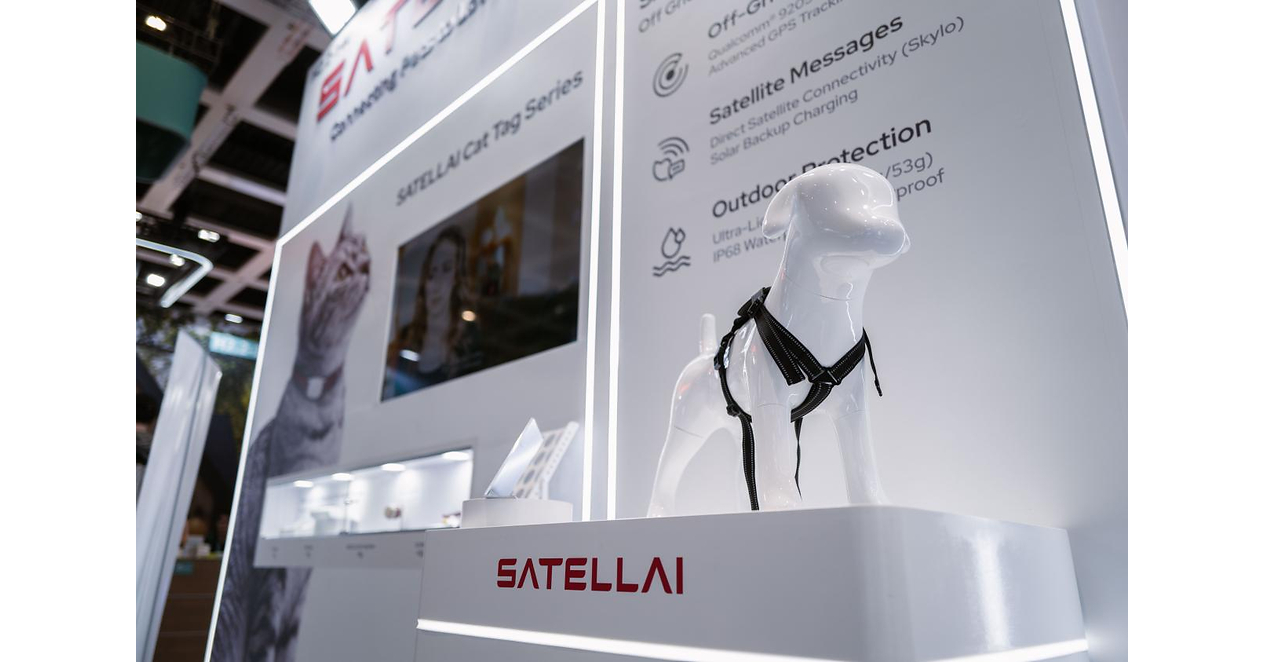
SATELLAI unveiled its next-generation Sense AI platform at IFA 2026 alongside the 4-gram Cat Tag and satellite-connected Tracker Ultra dog wearable. The company plans to launch the Cat Tag and LTE/GPS-enabled Cat Tag Pro in the U.S., Europe and Japan by the end of 2026, supported by collaborations with Deutsche Telekom IoT, Swift Navigation and Skylo. The announcements expand SATELLAI from pet tracking into AI-driven behavioral insights and globally connected pet wearables, though the release provided no revenue, pricing or sales outlook.
Analysis
This is immaterial to QCOM’s near-term earnings, but it reinforces a broader edge-AI connectivity design-win vector: low-power modem attach in specialized wearables can diversify IoT revenue away from mature handset cycles. The relevant KPI is not launch publicity but whether the device reaches retail scale and generates recurring connectivity revenue; absent disclosed unit commitments, this remains an ecosystem datapoint rather than a QCOM estimate revision catalyst.
The more actionable second-order implication is competitive pressure on incumbent pet-tracking vendors such as Tractive (private) and Whistle/FI-adjacent products: AI-generated behavioral alerts can support subscription ARPU and lower churn if consumers perceive health or safety utility. Conversely, natural-language “wellbeing” claims create elevated false-positive, privacy, and consumer-trust risk; a poor alert experience would raise support costs and compress the subscription economics that justify hardware subsidies.
Over the next 1-3 months, monitor disclosed carrier pricing, launch-market distribution, battery-life specifications, and satellite service economics. The satellite-connected form factor is likely niche rather than mass-market: recurring satellite fees and power constraints limit adoption, while cellular/Bluetooth cat products face a crowded low-cost market. Over 6-18 months, successful category expansion would modestly favor component and connectivity suppliers over standalone hardware brands, which bear customer-acquisition, warranty, and inventory risk.
Contrarian view: the market may overvalue “AI” labeling before there is evidence that behavioral inference improves retention or conversion. This product class needs longitudinal data, veterinary-adjacent credibility, and low false-alert rates; those are slow-moving advantages, not features that awards or prototypes establish. No direct trade is warranted from this announcement alone.
AllMind Terminal
AI-powered research, real-time alerts, and portfolio analytics for institutional investors.
Request TrialMarket Sentiment
Overall Sentiment
moderately positive
Sentiment Score
0.42
Ticker Sentiment
Key Decisions for Investors
- Maintain QCOM as a watch-list beneficiary, not a catalyst long: add only if management identifies meaningful wearable/industrial-IoT design-win backlog or IoT revenue acceleration at the next earnings update. Falsifier: IoT revenue remains flat-to-down despite expanding non-handset device launches.
- Do not establish a DTE position on this development; the connectivity relationship does not create a visible earnings bridge for the regulated utility. Treat any near-term price response as unrelated to the commercial collaboration.
- Monitor Skylo-related satellite connectivity adoption through public partners and QCOM IoT commentary over the next 6-12 months. A disclosed high-volume device program with recurring service attach would strengthen the thesis for satellite-enabled modem demand; without unit and pricing disclosure, remain neutral.
- For consumer-wearables exposure, prefer diversified platform suppliers over single-product pet-tech companies if private-market access arises: recurring-service economics remain unproven and hardware inventory risk is asymmetric ahead of a multi-region launch.
More News
- How to Split $10,000 Across 5 ETFs and Not Touch It for 20 Years
- Saudi Arabia intercepts missiles and drones as fighting with Houthis rages
- Here’s the ‘core economic flaw’ in the AI bull case as stock and bond trades unravel, according to a top economist
- How Pepsi fell behind in the cola wars—and then lost KFC
- 5 big analyst AI moves: ’Uniquely catalyst-rich’ months ahead for SpaceX
- The experience economy keeps defying expectations. Maybe we’ve been looking at it all wrong
From AllMind Research
- Anthropic IPO Preview: Valuation, Timing, and What to Watch
- Shein After the IPO: Venue, Valuation, and What Must Be Proved
- What AI Research Tools Should a Small Hedge Fund Buy First?
- 2026 Global Markets Outlook: Asset Allocation After the Great Disconnect
- Fintool Alternatives After the Microsoft Acquisition