
Seasats Deploys Fleet of Lightfish USVs for Maritime Border Security in the Gulf of America
Source: PR Newswire
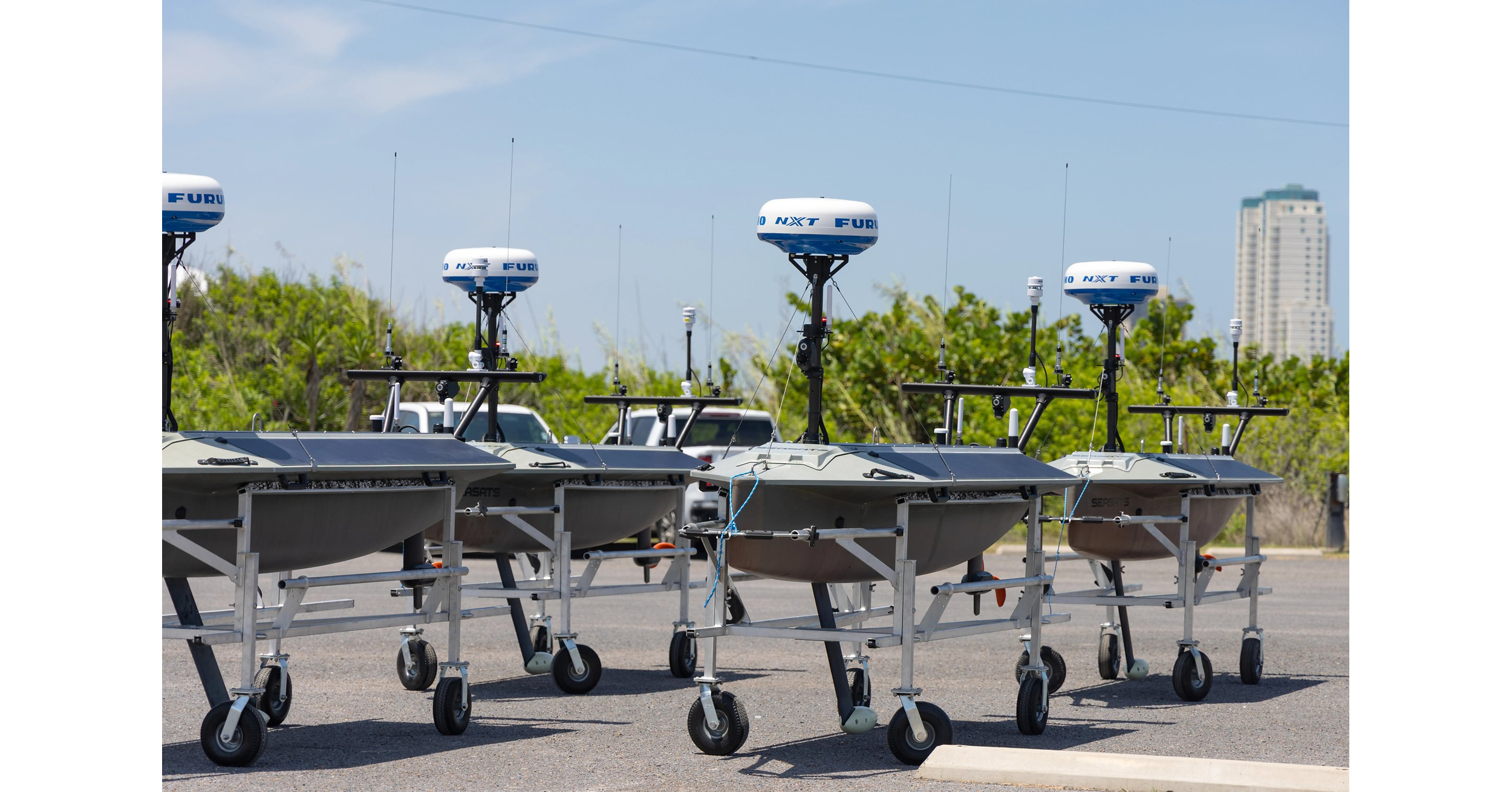
Seasats deployed a fleet of solar-powered Lightfish unmanned surface vessels in the Gulf of America to provide persistent autonomous surveillance for U.S. maritime border-security operations. The 11-foot, 340-pound vessels can remain on station for multiple months and carry modular electro-optical, infrared, signals-intelligence, and sonar payloads, extending a Rio Grande program operating since January 2026. The deployment expands the company’s homeland-security footprint and addresses surveillance gaps caused by limited availability and high operating costs of crewed cutters and aircraft; Seasats reports more than $100 million in U.S. government contracts.
Analysis
The investable read-through for LHX is indirect rather than contractual: its strategic investment in Seasats gives it an option on a low-cost autonomous-maritime architecture, but the current deployment is not evidence of material LHX revenue. The nearer beneficiary is the broader shift from exquisite, crew-intensive platforms toward attritable sensor networks, which favors primes able to integrate EO/IR, SIGINT, communications, command-and-control and autonomy software over hull manufacturers alone. LHX’s ISR portfolio is better positioned than traditional shipbuilders if follow-on programs emphasize distributed sensing rather than new crewed patrol assets.
Over the next 1-3 months, the catalyst is whether the deployment converts into a named procurement vehicle, stated fleet size, or a program-of-record pathway in DHS/DoD budget documents. A successful operational proof point could also pressure incumbents such as HII and GD toward partnerships or acquisitions in autonomous maritime systems; Teledyne (TDY) is a more direct public proxy through marine sensors, acoustic systems and unmanned-platform exposure. The key uncertainty is that persistent collection has limited value without reliable communications, target classification, and a funded interdiction response chain—areas where integration spending, rather than low-cost vessel volume, may capture the profit pool.
Consensus may overstate the immediacy of a border-security budget windfall. Small autonomous vessels can be bought through pilots and rapid-prototyping authorities for years without creating a scalable prime-contractor earnings stream; public evidence of unit economics, procurement quantities, and LHX content is absent. Structural upside over 6-18 months requires a requirement for networked Gulf surveillance to migrate into recurring operations, sustainment, data-fusion and secure-comms contracts; an operational failure, adverse weather attrition, or a policy shift toward crewed interdiction would weaken that path.
AllMind Terminal
AI-powered research, real-time alerts, and portfolio analytics for institutional investors.
Request TrialMarket Sentiment
Overall Sentiment
moderately positive
Sentiment Score
0.55
Key Decisions for Investors
- No standalone LHX trade on this announcement. Place an alert for disclosed LHX subcontract content, a DHS/DoD program-of-record designation, or a contract award above $25M; absent those data, earnings impact is likely immaterial relative to LHX’s scale.
- Maintain a 6-12 month relative-overweight bias toward LHX versus HII if defense procurement signals favor distributed ISR/autonomy over manned maritime platforms. Falsify if FY2028 budget submissions prioritize cutter, shipbuilding, or aircraft procurement without incremental autonomous-maritime funding.
- Watch TDY as the cleaner liquid second-order beneficiary: initiate only on evidence that sensor/payload procurement accompanies fleet expansion, with a 12-month target of mid-single-digit organic marine/instrumentation growth acceleration. Exit if deployments remain pilot-scale or awards are confined to vehicle procurement.
- For defense-sector exposure, prefer a small long LHX / short HII pair over an outright defense-beta position for 3-6 months, sized modestly. The thesis is software/sensor/content mix versus platform-capex dependence; cover if naval shipbuilding appropriations materially outperform ISR/autonomy funding or if LHX guidance fails to show ISR demand conversion.
More News
- Trump says Iran war could end after U.S. elections as Hormuz tensions persist
- G7 Leaders’ Statement on global energy security and market stability
- Trump vs Europe as US presses for release of emergency diesel stocks
- Anthropic warns government attitudes may hurt customer ties, IPO prospectus shows: Reuters
- EU Faces Trump Pressure to Release Fuel Reserves as Diesel Price Rises
- New aircraft carrier, 10,000 US troops: Is the Iran war about to escalate?