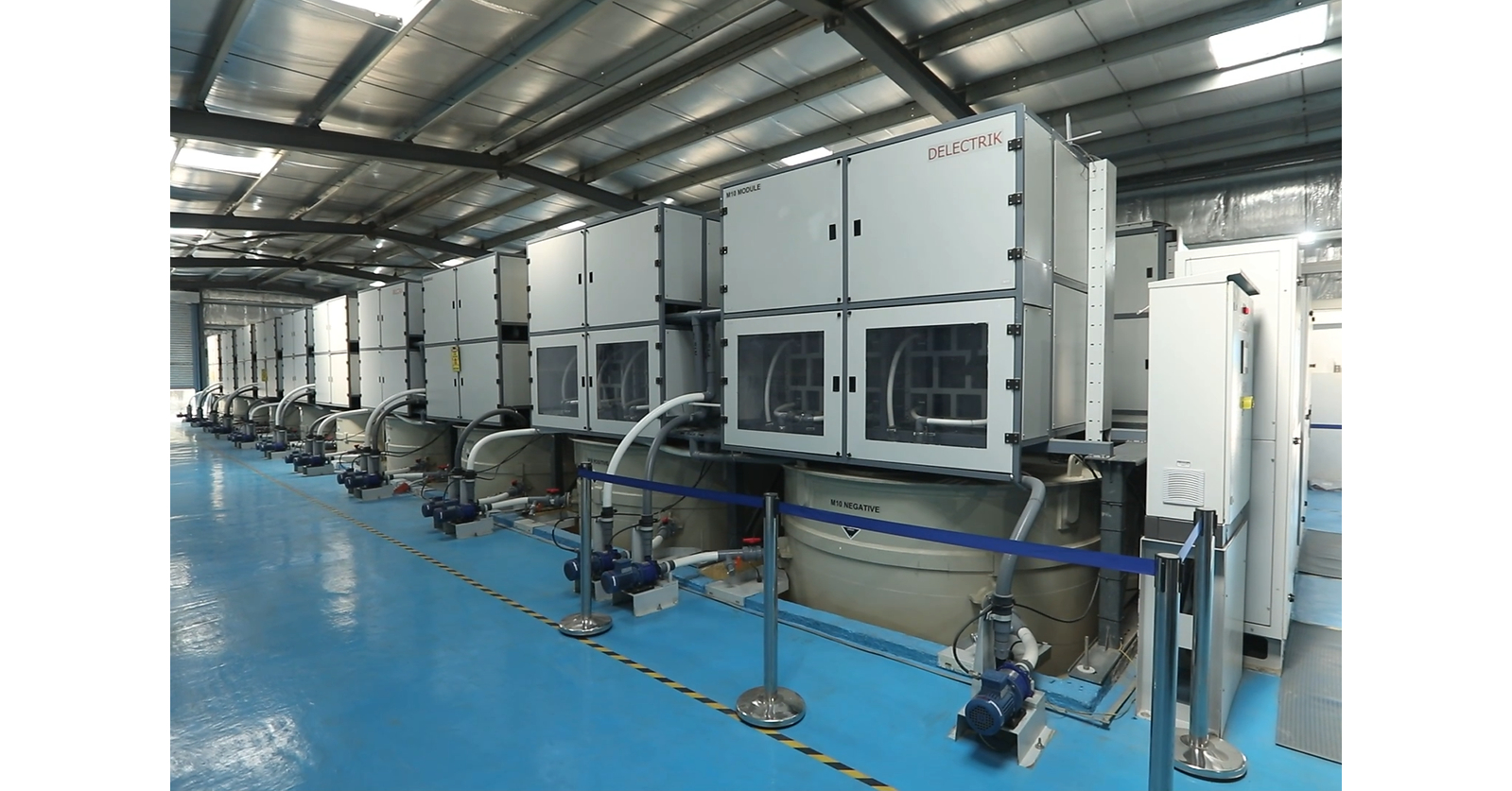
Delectrik Systems won a tender to deploy India’s first utility-scale vanadium redox flow battery, totaling 100 MWh, with installation planned for 2027 at NTPC’s Khavda Solar Park (targeting 30 GW by 2029). The project is positioned as a first non-lithium BESS deployment in India, leveraging Delectrik’s non-containerized architecture after a prior 3 MWh deployment in 2025 at Greater Noida. Delectrik is also targeting at least a 1 GWh order book in the next 12 months and expanding upstream vanadium oxide production and downstream “energy storage as a service.”
Near term, this is a proof-of-concept event more than an earnings event. The real market mechanism is bankability: if a domestic utility accepts non-lithium long-duration storage at scale, it lowers perceived execution risk for similar procurements across India and other emerging markets where fire safety, siting, and local-content requirements matter as much as raw $/kWh. The first beneficiaries are likely not the battery OEM alone but the EPCs, civil works, power-electronics vendors, and any vanadium supply chain that can credibly localize inputs; the first losers are lithium-ion incumbents that are most exposed to 4-10 hour stationary storage if flow batteries start winning on warranty and operational flexibility.
The catalyst path is slow. Over the next 1-3 months, I would expect little direct listed-equity read-through unless there are additional awards or financing disclosures; the stock reaction should be muted because one project does not establish cost leadership. Over 6-18 months, the key variable is whether performance data and repeat orders show a lower levelized cost of storage versus lithium alternatives after accounting for cycling, degradation, and balance-sheet intensity. The main falsifier is delay, underutilization, or a tariff structure that makes the chemistry look like a policy trophy rather than a competitive product.
Contrarian view: consensus may overstate the strategic importance of the announcement because "first of its kind" does not equal scalable. The more interesting second-order risk is commodity and working-capital exposure if the vertical integration into vanadium becomes part of the business model; that can improve security of supply, but it also turns a storage story into a metals story with more cyclicality. If the order-book claims are real, the better expression is to watch for follow-on MWh awards and disclosed pricing before paying up for any public proxy.
AI-powered research, real-time alerts, and portfolio analytics for institutional investors.
Request TrialOverall Sentiment
mildly positive
Sentiment Score
0.25
Ticker Sentiment
