
Is X-Energy Building a New Model for Industrial Nuclear Power?
Source: zacks.com
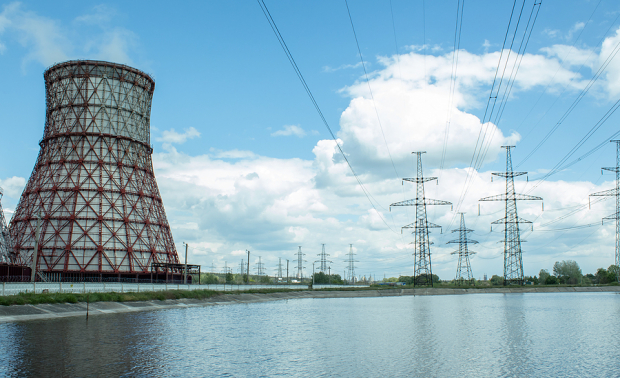
X-Energy and Centrica aim to deploy up to 6 GW of Xe-100 nuclear capacity in the U.K., with the reactor entering the U.K. Generic Design Assessment in September 2026; the review is expected to take about three years. Dow, Amazon and Centrica support a potential pipeline of 144 reactors, or approximately 11.5 GWe, contingent on customer elections. The strategic opportunity is offset by valuation and execution risks: XE trades at 12.87x forward sales versus a 4.95x industry average, shares have fallen 14.3% over three months, and the stock carries a Zacks Rank #4 (Sell).
Analysis
The key valuation issue for XE is not reactor demand but conversion of non-binding customer interest into financeable, contracted projects. Industrial heat can support higher realized pricing than merchant power because it displaces natural gas and decarbonization costs simultaneously, but customers will require firm delivered-heat economics, fuel availability, liability allocation and construction guarantees. The U.K. regulatory review creates a multi-year duration mismatch: XE carries a development-stage multiple today while meaningful site-specific revenue visibility is unlikely before the review is substantially de-risked.
Centrica (CNA) is the cleaner public-market beneficiary if advanced nuclear progresses: it can monetize customer relationships, trading capability and existing site optionality without bearing the same single-technology execution risk. For XE, the stated reactor pipeline should be discounted heavily until it is supported by binding offtake, EPC terms, government support and customer deposits; a nominal multi-GW pipeline can generate little equity value if project financing remains unavailable. Suppliers of HALEU fuel and nuclear-qualified components could become bottlenecks, making schedule risk—not demand—the binding constraint across XE, OKLO and SMR.
The near-term contrarian setup is that XE's relative weakness may reflect a legitimate multiple reset rather than an entry point. At a substantial sales premium to the broader industry, any delay in regulatory milestones, capital raise, or reduction in customer commitments can drive further compression even absent a technical setback. Conversely, a binding U.K. framework agreement with defined funding, a U.S. industrial project reaching final investment decision, or explicit HALEU supply contracting would be the first evidence that the valuation can be underwritten; these are 6-18 month catalysts, not days-to-weeks events.
AllMind Terminal
AI-powered research, real-time alerts, and portfolio analytics for institutional investors.
Request TrialMarket Sentiment
Overall Sentiment
mixed
Sentiment Score
0.05
Ticker Sentiment
Key Decisions for Investors
- Remain underweight XE for the next 3-6 months; do not treat the recent drawdown as sufficient valuation support. Reassess only after disclosure of binding offtake terms, customer-funded development payments, and a credible project-capital structure.
- Express relative advanced-nuclear risk through long CNA / short XE in equal dollar volatility-adjusted sizing over 6-12 months. CNA retains U.K. nuclear optionality with a diversified cash-flow base, while XE is more exposed to regulatory, financing and first-of-a-kind execution; cover the short if XE secures a financed, binding multi-reactor order or material non-dilutive government support.
- Avoid grouping XE, OKLO and SMR as interchangeable nuclear-beta longs. Build an alert around HALEU procurement awards, NRC/ONR design milestones and project FIDs; these are the sector-wide catalysts that can re-rate the peer group, while their absence should favor selective shorts or no exposure.
- For AMZN, treat nuclear procurement as a long-dated power-sourcing hedge rather than a near-term earnings catalyst. Add only if data-center power constraints begin translating into disclosed capacity delays or sharply higher power-purchase costs; those would make firm clean-power access materially more valuable to the equity narrative.
More News
- Meta's standoff with Amazon over Muse could be a sign of things to come
- Meta is having a ChatGPT moment with Muse. What is it and what makes it so special
- A rare Microsoft bear warms up to the stock. Here's what changed their mind
- Amazon Blocked Meta's AI Shopping Agent. Shopify Welcomed It -- and Gets Paid on Every Checkout.
- Why McDonald's is following Walmart and Amazon into the advertising business
- If Amazon doesn’t know how to eliminate carbon emissions, then who does?
From AllMind Research
- Anthropic IPO Preview: Valuation, Timing, and What to Watch
- Shein After the IPO: Venue, Valuation, and What Must Be Proved
- What AI Research Tools Should a Small Hedge Fund Buy First?
- AllMind Discusses Ontario's AI Economy with Minister Stephen Crawford and Supply Ontario CEO James Wallace
- AI Research Tools for SEDAR+, UK and ASX Filings