
India’s Record Bank Cash Surplus Fades as RBI Curbs Rupee Bets
Source: Bloomberg
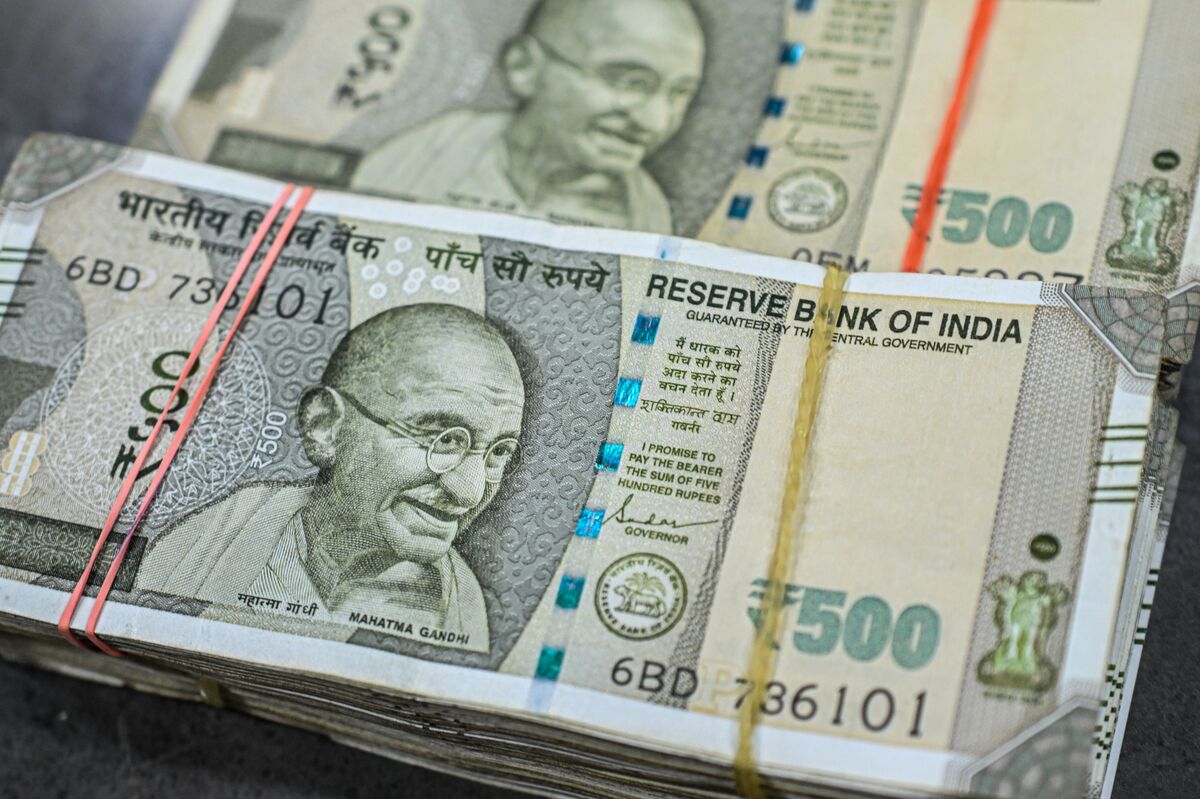
Excess cash at Indian lenders fell from a record 11 trillion rupees ($116 billion) in early September to 462 billion rupees as of Oct. 26, according to a Bloomberg Economics index. The decline comes as the RBI keeps liquidity tight to curb bets against the rupee.
Analysis
The key transmission is from FX defense into domestic credit conditions: sustained liquidity scarcity can lift marginal funding costs before any policy-rate change, squeezing lenders that rely more on wholesale funding and raising the hurdle rate for incremental credit. If tight conditions persist, weaker credit growth would be a second-order drag on rate-sensitive borrowers and consumption, while banks with more stable deposit bases may gain relative resilience. Near term, the rupee could benefit from a higher cost of shorting it, but that support is conditional: liquidity tightening is not a substitute for durable FX inflows or improved external balances.
The contrarian point is that aggregate surplus is a poor proxy for each bank’s funding position. Distribution, deposit competition, and RBI operations matter; the headline decline alone does not establish a system-wide funding squeeze or a durable change in policy. Over days to weeks, watch overnight and short-tenor funding rates and the rupee’s response. Over 1–3 months, persistence in tight funding could affect loan pricing and credit growth; over 6–18 months, the larger risk is weaker lending if FX pressure repeatedly forces liquidity restraint. A reversal in rupee pressure, renewed liquidity injections, or stable funding rates despite falling aggregate surplus would weaken the tightening thesis.
AllMind Terminal
AI-powered research, real-time alerts, and portfolio analytics for institutional investors.
Request TrialMarket Sentiment
Overall Sentiment
neutral
Sentiment Score
0.00
Key Decisions for Investors
- Do not chase a rupee rally solely on liquidity restraint. Consider tactical INR exposure only if the currency holds up alongside easing short-tenor funding stress; a renewed rise in FX hedging costs or persistent rupee weakness would falsify the near-term support case.
- Set an alert on overnight and short-tenor funding rates, RBI liquidity operations, and deposit pricing. If rates remain elevated and deposit competition broadens, favor banks with demonstrably stable deposit funding over wholesale-funded lenders; verify bank-level funding mix and deposit costs before putting on the pair.
- For rates, avoid adding duration on the assumption that the cash surplus decline is temporary. A conditional tactical position is to pay short-tenor INR overnight-indexed swaps if funding rates remain firm and RBI does not inject liquidity; exit if funding normalizes or the rupee stabilizes without further tightening.
- Treat this as a monitor-and-confirm signal rather than a broad banking-sector short: the supplied data do not show lender-level liquidity distribution, funding costs, or credit trends.
More News
- Fed expected to hold rates steady, but Warsh may point way to more hikes
- Analysis-Hold or sell? High Treasury yields spur US banks to rethink bond portfolios
- Indian investors rush to Nvidia, SpaceX, Apple as local trading apps roll out access to U.S. stocks
- Oil rebounds as Houthi attacks on Saudi Arabia overshadow diplomatic efforts
- RBNZ holds rates at 2.75% in split vote, signals further hikes likely
- Australia Q3 inflation quickens, bolstering RBA rate hike case