
Tech giant CEO announces she will attend Trump-Xi state dinner
Source: foxbusiness.com
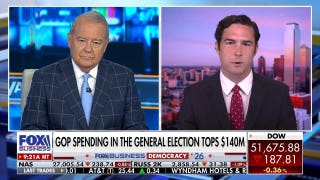
AMD CEO Lisa Su will attend President Trump's state dinner for Chinese President Xi Jinping alongside leaders from Nvidia, Apple, Tesla and OpenAI as AI and semiconductor policy dominate the two-day summit. The meeting comes amid U.S. restrictions on China's access to advanced AI chips and broader disputes over trade, intellectual property and rare-earth minerals. Su said the industry needs global technology stability while remaining aggressive in AI development and building trust safeguards.
Analysis
The dinner attendance itself is non-material; the tradable variable is whether the summit produces a narrowly defined export-control carveout, enforcement pause, or merely a communications framework. NVDA and AMD have the highest upside convexity to any clarification that expands legally shippable China AI-product configurations, but NVDA also carries the greatest reversal risk because its valuation already capitalizes a large fraction of global AI infrastructure demand. AAPL is a cleaner geopolitical détente expression: reduced supply-chain or consumer-retaliation risk can support its multiple without requiring a change in restricted-chip policy.
Over the next few days, expect headline-driven dispersion rather than a durable sector rerating. A statement emphasizing "security guardrails," IP enforcement, or reciprocal technology restrictions would favor domestic compute, networking and foundry spend while leaving China revenue impaired; that outcome is relatively more negative for NVDA than for AMD because NVDA has more China-related expectations embedded in investor positioning. TSLA is a secondary beneficiary only if talks ease broader bilateral friction; its China manufacturing and local competitive exposure mean tariff relief alone would not solve its margin problem.
The contrarian view is that a diplomatic thaw may be bearish for the highest-multiple AI leaders if it reduces the urgency of sovereign and corporate stockpiling. The market tends to treat export relaxation as incremental demand, but it can instead shift purchases from accelerated, front-loaded orders to normalized replacement cycles. The key 1-3 month catalyst is company commentary on China-compliant product mix, order visibility and supply allocation—not summit optics; a lack of disclosed commercial changes should fade any immediate rally.
AllMind Terminal
AI-powered research, real-time alerts, and portfolio analytics for institutional investors.
Request TrialMarket Sentiment
Overall Sentiment
mildly positive
Sentiment Score
0.20
Ticker Sentiment
Key Decisions for Investors
- Do not add directional exposure solely on summit headlines. Treat any 3-5% same-day move in AMD or NVDA without a written policy change as a fade/watch opportunity, not confirmation of a revenue revision.
- For a defined-policy easing outcome, prefer a 1-3 month long AMD / short NVDA relative-value position. AMD has more room for multiple and China-access optionality to be repriced, while NVDA faces greater risk that eased controls normalize demand pull-forwards; exit if NVDA materially outguides AMD on legally addressable China revenue or the spread moves 10% against entry.
- Maintain or initiate a modest long AAPL versus a broad semiconductor basket such as SOXX for 3-6 months if bilateral language includes supply-chain stability or tariff de-escalation. AAPL offers lower-beta exposure to improved cross-border operating conditions; invalidate on renewed China consumer restrictions, tariff escalation, or evidence of iPhone demand deterioration in China.
- Set an event alert for Commerce Department licensing language, revised entity-list rules, or explicit product-performance thresholds. Only on verifiable rule changes should investors consider bullish NVDA call spreads 2-4 months out; absent those details, the probability of monetizable incremental shipments is too uncertain for an outright options premium purchase.
More News
- As Trump and Xi meet, Chinese automakers could be a Pandora's box for U.S. auto industry
- Wall Street falls as oil prices, Treasury yields rise
- Trump calls AI oversight a ‘globalist scheme’ as Amodei and Altman head to the UN to ask for it
- Tesla Roadster reveal is creating a unique options opportunity, says Mike Khouw
- Morgan Stanley’s Jonas: Physical AI Could Multiply Global GDP
- From Anthropic to Robots: AI’s Next Frontier
From AllMind Research
- Anthropic IPO Preview: Valuation, Timing, and What to Watch
- Shein After the IPO: Venue, Valuation, and What Must Be Proved
- What AI Research Tools Should a Small Hedge Fund Buy First?
- 2026 Global Markets Outlook: Asset Allocation After the Great Disconnect
- Fintool Alternatives After the Microsoft Acquisition